
Backend Development: Server-Side Logic, API Design, and Data Architecture Explained
Backend development covers the server-side logic behind every application: databases, APIs, authentication, and the infrastructure guaranteeing scalability and security. Discover how the backend serves as the engine powering every modern web application.
Backend development (also called server-side development) encompasses all the technology and logic that runs behind the scenes of a web application. This includes the server, databases, APIs, authentication, business logic, and all processes that handle, validate, and store data without the user directly seeing them. The backend is the engine of every web application and determines how reliable, secure, and scalable the system functions as a whole.
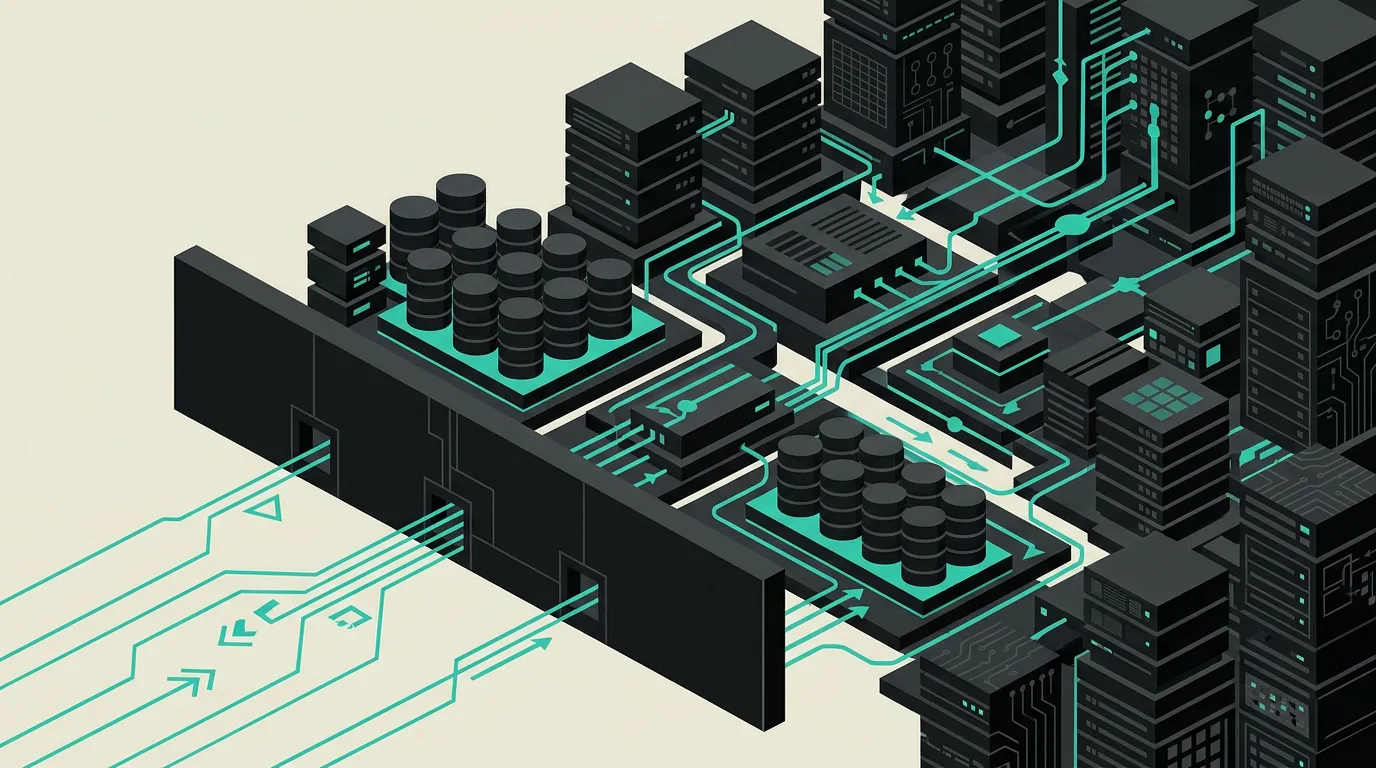
What is Backend Development: Server-Side Logic, API Design, and Data Architecture Explained?
Backend development (also called server-side development) encompasses all the technology and logic that runs behind the scenes of a web application. This includes the server, databases, APIs, authentication, business logic, and all processes that handle, validate, and store data without the user directly seeing them. The backend is the engine of every web application and determines how reliable, secure, and scalable the system functions as a whole.
How does Backend Development: Server-Side Logic, API Design, and Data Architecture Explained work technically?
Backend development involves designing and implementing server-side architectures that process data and execute business logic. Popular backend languages and runtimes include Node.js (JavaScript/TypeScript) for event-driven I/O, Python (Django, FastAPI) for rapid prototyping and data-intensive applications, Java (Spring Boot) for enterprise systems, Go for high-performance concurrent services, and Rust for systems where memory safety and speed are critical. The backend manages data storage via relational databases (PostgreSQL, MySQL) with ACID transactions or NoSQL databases (MongoDB, Redis) for specific access patterns. API design follows patterns like REST with resource-oriented endpoints or GraphQL for flexible data queries. Authentication and authorization are implemented via JWT tokens with short lifetimes and refresh rotation, OAuth 2.0 for third-party integrations, or session-based mechanisms with HttpOnly cookies. Middleware layers handle cross-cutting concerns such as structured logging with correlation IDs, centralized error handling, rate limiting per IP or API key, input validation, and CORS configuration. Caching strategies with Redis or in-memory caches at multiple levels (database query cache, application cache, CDN) drastically improve response times. Message queues like RabbitMQ and Apache Kafka facilitate asynchronous processing for tasks such as email delivery, image processing, data aggregation, and event-driven architectures. Containerization with Docker and orchestration with Kubernetes ensure reproducible, horizontally scalable deployments. Monitoring and observability through Prometheus metrics, Grafana dashboards, distributed tracing, and structured logging are essential for keeping production systems healthy and performant. Database migrations are managed through versioned scripts that run in the CI/CD pipeline, ensuring schema changes are safely and reproducibly rolled out across all environments. Input validation with libraries like Zod or Joi prevents invalid or malicious data from entering the application layer. Background jobs for tasks like report generation, email delivery, and data exports are processed via job queues (BullMQ, Celery) with retry logic and dead letter queues for failed tasks. API documentation via OpenAPI/Swagger specifications ensures frontend teams and external integration partners always work with current, machine-readable contracts.
How does MG Software apply Backend Development: Server-Side Logic, API Design, and Data Architecture Explained in practice?
MG Software builds backends primarily with Node.js and TypeScript, guaranteeing type safety from database to API response. We use Supabase (PostgreSQL) as our database with Row Level Security for fine-grained access control at the row level and database functions for complex business logic. Our APIs follow REST principles, are documented with OpenAPI, and validated with Zod schemas. Transactional emails are sent via Resend with structured templates. For more complex projects, we implement microservice architectures with Docker and Kubernetes. We integrate AI services via OpenAI and Anthropic, payment providers like Stripe and Mollie, and external systems through robust integrations with exponential retry logic, circuit breakers, and dead letter queues for fault handling. Every backend we deliver includes structured logging with correlation IDs, health check endpoints for monitoring, and automated database migrations that roll out through the CI/CD pipeline. Performance monitoring via Vercel Analytics and Supabase dashboards gives us real-time insight into response times and error rates.
Why does Backend Development: Server-Side Logic, API Design, and Data Architecture Explained matter?
The backend is the invisible engine that determines whether an application is reliable, secure, and scalable. Without a well-designed backend, payments fail, personal data leaks, systems crash under load, and data becomes inconsistent. Users only see the frontend, but their trust in a product depends on what happens behind the scenes: fast API response times, correct data processing, and watertight security. As a business grows, the backend must scale alongside it without requiring complete rewrites. This demands forward-thinking architectural design: loosely coupled services, horizontal scalability, and an observability strategy that signals problems before users notice them. An investment in backend quality pays for itself through less downtime, higher customer satisfaction, and lower operational costs. Companies that neglect backend quality feel it most acutely when they want to scale: technical debt accumulates, hotfixes break other functionality, and new features take progressively longer to build.
Common mistakes with Backend Development: Server-Side Logic, API Design, and Data Architecture Explained
Developers often forget to implement input validation and sanitization, leaving the application vulnerable to injection attacks and unexpected data. Database credentials and API keys are hardcoded in source code instead of being managed via environment variables or a secrets manager. Unit tests for critical business logic are frequently absent, causing regressions to be discovered only in production. Error handling is poorly thought out: generic error messages provide no useful information to the client while simultaneously leaking internal details that attackers could exploit. N+1 query problems are overlooked until the database buckles under load. Logging and monitoring are often treated as an afterthought, leaving the team blind during incidents. Another common mistake is the absence of database connection pooling, causing each request to open a new connection and overwhelming the database when traffic spikes hit the maximum connection limit. Teams also regularly forget to make database migrations idempotent, so a repeated execution breaks the schema.
What are some examples of Backend Development: Server-Side Logic, API Design, and Data Architecture Explained?
- An authentication system handling user registration, login, password recovery, and two-factor authentication via TOTP, including secure password storage via bcrypt hashing, JWT token validation with refresh rotation, and brute-force protection through rate limiting.
- An order processor for an e-commerce platform that atomically checks inventory via database transactions, processes payments through Stripe webhooks, sends confirmation emails via Resend, and synchronizes order data with an ERP system through background jobs in a message queue.
- A data aggregation service that fetches data from multiple external APIs every night via cron jobs, transforms it with validation and deduplication, and stores it in a data warehouse for reporting dashboards used by the management team the following morning.
- A real-time notification service using WebSockets and Server-Sent Events to provide thousands of concurrent users with live updates when new messages, orders, or alerts arrive, with graceful degradation to polling for older browsers.
- A multi-tenant SaaS backend using Row Level Security in PostgreSQL to isolate data per organization, with tenant-specific configurations, API key management, and usage-based billing that automatically triggers invoicing at the end of each month.
Related terms
Frequently asked questions
We work with this every day
The same expertise you are reading about, we put to work for clients across Europe.
See what we doRelated articles
What Is an API? How Application Programming Interfaces Power Modern Software
APIs enable software applications to communicate through standardized protocols and endpoints, powering everything from payment processing and CRM integrations to real-time data exchange between microservices.
What Is a REST API? Architecture, HTTP Methods, and Integration Best Practices
REST APIs use standard HTTP methods and resource-based URLs to exchange structured data between systems. Learn the six architectural constraints, security patterns, and design best practices behind the dominant API style powering modern web services.
SQL: The Universal Database Language with Practical Examples and Common Pitfalls
SQL is the universal language for querying, modifying, and managing relational databases. Learn how Structured Query Language works, from simple SELECT queries to complex joins and transactions that form the foundation of every data-driven application.
Firebase Alternatives That Give You More Control Over Your Backend
Firebase is convenient, but vendor lock-in and unpredictable pricing push teams away. Compare Supabase, Appwrite, PocketBase and more on features, cost and freedom.