
Reporting Automation Examples - Inspiration & Best Practices
Eliminate manual reports and keep stakeholders informed automatically. Reporting automation examples for finance, compliance documentation, and marketing analytics.
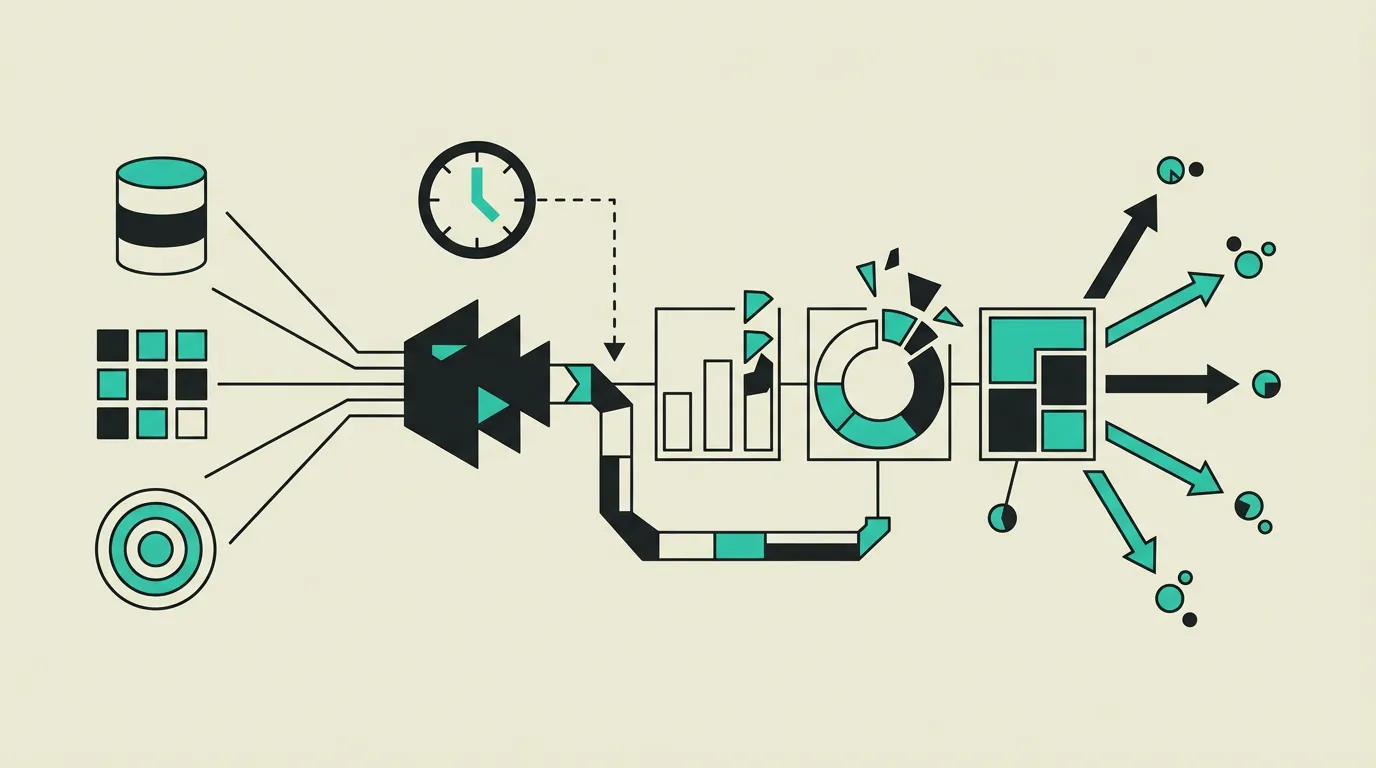
Manual reporting costs organisations dozens of hours weekly on data collection, formatting, and distribution. Employees copy figures from multiple source systems, paste them into spreadsheets, and then spend additional hours verifying that every number has been transferred correctly. Reporting automation eliminates this repetitive work entirely by automatically extracting data from source systems, generating reports according to fixed templates, and distributing them on schedule to the right recipients. The result is not only significant time savings but also more reliable reports without the human copy-paste errors that are inevitable in manual processes. Organisations that automate their reporting typically save 15 to 25 hours per week per department. Decision-makers gain faster access to current data, enabling them to make evidence-based decisions rather than relying on outdated figures. Modern reporting automation goes beyond generating PDF documents: it encompasses anomaly detection, predictive analytics, and conditional alerts that enable proactive action. In the examples below, we show how organisations across different sectors have transformed their reporting processes with measurable results.
Automated financial monthly reports
A mid-sized company with 200 employees automated their complete financial monthly reporting that previously required three working days each month to compile. The system automatically extracts data from the accounting package, CRM, and project management tool, consolidates the figures, and generates a professional PDF report with profit and loss statement, balance sheet, and cash flow overview. Every deviation from the budget is automatically flagged with colour coding and an explanatory note. The report is sent on the first business day of each month to the management team and board of directors. The finance manager who previously spent three days compiling now spends only half an hour reviewing the generated report. The error rate in reports dropped from an average of 3.5% to virtually zero thanks to the automated data processing.
- Automatic data extraction from accounting software, CRM, and project management tools via secure API connections
- Consolidated financial reports including charts, trend analyses, and comparison with previous periods
- Scheduled distribution on the first business day of each month to a configurable recipient list
- Variance analysis that automatically flags significant budget deviations with colour-coded indicators
- Automatic detection of unusual line items or sudden shifts in cost patterns that require attention
Sales pipeline reporting for a B2B company
A B2B software company with a sales team of 30 people automated their weekly sales pipeline reporting that was previously compiled manually by three sales managers. The system pulls real-time data from HubSpot, calculates conversion rates per pipeline stage, forecasts expected revenue for the current quarter, and identifies deals that have been sitting in the same stage for more than two weeks. Every Monday morning at 08:00, managers receive a personalised report with their team statistics, individual performance metrics, and concrete action items. Senior management receives an aggregated overview comparing progress against quarterly targets. The automation saves the sales team a combined eight hours per week that they now dedicate to selling activities. Quarterly forecast accuracy improved by 22% thanks to consistent data-driven calculations.
- Real-time HubSpot integration that processes every pipeline change directly into the reporting data
- Automatic deal stagnation detection that alerts when deals remain in the same stage for too long
- Revenue forecast based on historical conversion rates and weighted pipeline value per sales stage
- Personalised weekly reports per sales manager with individual KPIs and team benchmarking
- Automatic comparison of actual sales results with quarterly targets and annual objectives
Compliance reporting for a pharmaceutical company
A pharmaceutical company with three production sites automated their quarterly compliance reports that must be submitted to regulatory authorities. The system automatically collects production data, quality control results, temperature logs, and deviation records from the QMS, then validates all data against GMP regulatory criteria before generating the report. Previously, a team of four employees spent three weeks per quarter manually compiling these reports. Now the base document is generated automatically and the team spends only two days on verification and approval. The risk of missing data or formatting errors has been reduced to virtually zero, which significantly lowers the chance of follow-up questions from regulators. The complete report is generated in the exact required format including correct section references.
- Automatic data collection from QMS, production systems, and temperature monitoring across multiple facilities
- Built-in validation rules that verify data against GMP standards and ICH guidelines before report generation
- Report generation in the exact format required by regulators, including correct section references and appendices
- Complete audit trail of all data changes, report versions, and approvals by authorised personnel
- Digital signature workflow for Quality Assurance approval prior to submission to regulatory authorities
Marketing attribution reporting for an e-commerce company
An e-commerce company with an annual marketing spend exceeding half a million euros automated their marketing attribution reporting by combining data from Google Analytics 4, Meta Ads, Google Ads, and their Shopify webshop into a single overview. The system automatically calculates ROAS per channel, customer acquisition costs per product category, and lifetime value per acquisition channel based on cohort analyses. Daily reports are shared at 09:00 in the marketing Slack channel with key shifts and alerts for anomalous patterns. Monthly deep-dive analyses with segmentation and LTV calculations are sent as interactive PDFs to management. The marketing team discovered through these reports that their YouTube campaigns generated 40% higher lifetime value than initially assumed, leading to a strategic budget reallocation.
- Multi-channel data aggregation from GA4, Meta Ads, Google Ads, and the e-commerce platform via automated connectors
- Automatic ROAS and CAC calculation per marketing channel, campaign, and product category on a daily basis
- Daily Slack notifications with key metrics, week-over-week comparison, and automatic alerts for significant anomalies
- Monthly cohort analysis calculating actual lifetime value per acquisition channel across multiple time periods
- First-touch and multi-touch attribution models calculated in parallel for complete marketing funnel insight
Operational KPI reporting for a logistics company
A logistics company with a fleet of 80 vehicles and three distribution centres automated their daily operational KPI reporting. The system combines data from the TMS, WMS, and onboard vehicle computers into an integrated operational overview. Occupancy rates, delivery reliability, average delivery times, and fuel consumption per route are automatically calculated and compared against established benchmarks. Department heads receive a concise report every morning highlighting the five most significant deviations from the previous day with concrete improvement actions. Management receives a weekly aggregated report with trend analyses spanning longer periods. Through rapid detection of deviations, the company improved their delivery reliability from 91% to 97% within six months.
- Integrated data collection from TMS, WMS, and vehicle telematics for a complete operational picture
- Daily calculation of delivery reliability, occupancy rates, and efficiency ratios per distribution centre
- Automatic deviation detection that identifies and prioritises the five most important improvement areas daily
- Comparison of current KPIs against historical benchmarks, seasonal corrections, and quarterly targets
- Automatic escalation to management when critical KPIs underperform for multiple consecutive days
Key takeaways
- Reporting automation saves organisations an average of 15 to 25 hours per week on manual data collection, formatting, and verification.
- Automated reports eliminate human copy-paste errors and guarantee consistent, reliable data with every reporting cycle.
- Scheduled distribution at fixed intervals ensures decision-makers always receive the information they need on time.
- Anomaly detection and variance analysis in automated reports enable proactive management rather than reactive course correction.
- Multi-source data aggregation combines information from different systems into a more complete picture than individual reports can provide.
- Compliance reporting benefits most from automation because strict format requirements and validation rules are applied flawlessly every time.
- Personalised reports per recipient increase relevance and ensure each stakeholder receives exactly the insights pertinent to their role.
- The investment in reporting automation typically pays for itself within three to six months through time savings and improved decision-making.
How MG Software can help
MG Software automates your complete reporting processes from data source to distribution to the end user. We begin with a thorough analysis of your current reporting needs, data sources, and distribution channels to determine the optimal automation plan. We then build the API integrations with your existing systems, design professional report templates that match your brand identity, and configure scheduled generation at your preferred intervals. Our solutions include built-in data validation so you can trust the accuracy of every generated report. For organisations with compliance obligations, we implement full audit trails and approval workflows. From simple weekly overviews to complex multi-source compliance reports, we deliver reliable automation that structurally saves your team hours every week.
Frequently asked questions
Which data sources can be integrated for automated reporting?
Virtually any data source with an API or database connection can be integrated into automated reporting workflows. This includes accounting packages such as Xero and QuickBooks, CRM systems like HubSpot and Salesforce, marketing platforms including Google Ads and Meta, ERP systems, and custom databases. We build the connectors needed and ensure robust error handling when a source is temporarily unavailable. Data is refreshed with every run so reports always contain the most current information.
In which formats can reports be generated?
We support a wide range of output formats including PDF, Excel, PowerPoint, HTML, and interactive web dashboards. Each format has its own strengths: PDF is ideal for formal reports to directors and regulators, Excel for stakeholders who want to run their own analyses, and interactive dashboards for teams that work with data daily. Reports can be automatically distributed via email, Slack, Microsoft Teams, or stored in a document management system.
How is data quality ensured in automated reports?
We build multiple layers of data validation into every automated reporting process. The first layer checks whether all expected data sources are reachable and delivering complete data. The second layer verifies data for consistency, plausibility, and cross-referencing between sources. When deviations such as missing values or unusual outliers are detected, the report is automatically flagged and the responsible person is alerted for manual review before distribution takes place.
How long does it take to implement reporting automation?
Implementation timelines depend on the number of data sources, complexity of the reporting logic, and desired output format. A straightforward report with two to three data sources and PDF output is typically operational within four to six weeks. More complex projects involving multiple sources, conditional logic, and interactive dashboards take eight to twelve weeks. We work in sprints so you see interim results within the first few weeks and can provide feedback on progress.
Can reports contain conditional content based on the underlying data?
Yes, our reporting solutions support conditional logic that adapts report content based on the data. For example, a monthly report can show only cost items that exceed the budget, or a sales report can include additional detail for regions underperforming against targets. This ensures recipients are immediately directed to the matters requiring their attention, without having to sift through pages of irrelevant data themselves.
What is the difference between a dashboard and an automated report?
A dashboard provides real-time interactive insight where the user filters and navigates through data themselves. An automated report is a document generated at fixed intervals with a predetermined format that is automatically sent to recipients. Both complement each other: dashboards for daily operational use, automated reports for periodic management information and compliance documentation. We often build a combination that together forms a complete information platform.
How do you handle changes to source systems after delivery?
Source systems are regularly updated, which can affect API endpoints and data structures. We build our connectors modularly so that changes to one data source do not disrupt the entire reporting process. Monitoring automatically alerts when a connector encounters errors due to a changed API. We also document all integrations so that maintenance and updates can be carried out quickly and safely without reporting interruptions.
What does reporting automation cost at MG Software?
The investment varies depending on the scope and complexity of the project. A basic solution with two to three data sources and automated PDF reports starts from approximately 8,000 euros. More extensive projects with multiple sources, interactive dashboards, and compliance features range between 15,000 and 35,000 euros. The payback period is typically short: with savings of 15 hours per week, the investment is recouped within three to four months.
Want to build something like this?
From concept to launch. We deliver custom software that works for your customers and team.
 Discuss your project