
SaaS Platform Examples - Inspiration & Best Practices
Five real SaaS platform examples, from multi-tenant HR tools to construction apps with offline sync. Learn the architecture behind scalable subscription businesses.
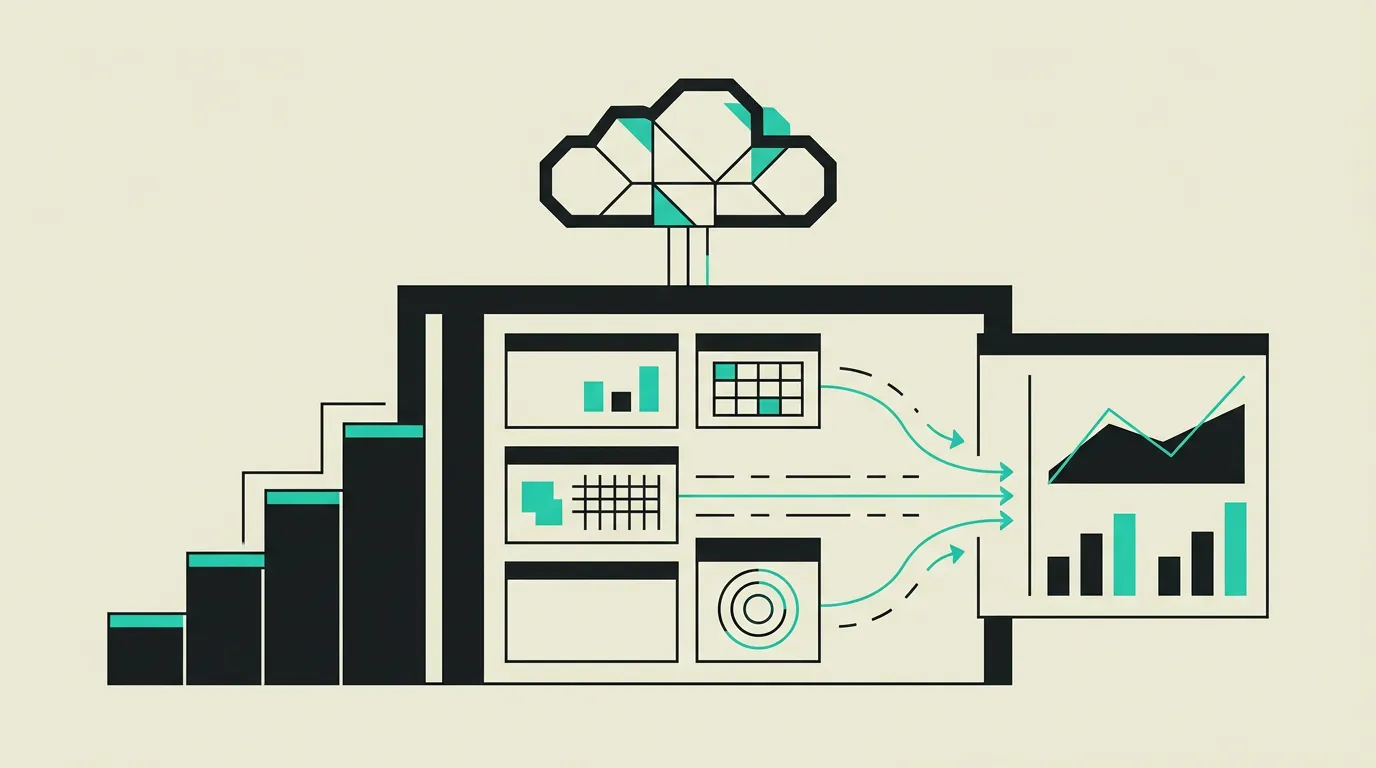
SaaS platforms have become the standard for modern business software, with the market growing by more than 15% annually. By delivering software as a service through the cloud, companies can scale faster, generate predictable recurring revenue, and serve customers worldwide without complex on-premise installations. Building a successful SaaS platform requires thoughtful decisions about architecture, security, scalability, and user experience. Multi-tenant databases, robust API layers, and auto-scaling infrastructure form the technical foundation, while intuitive onboarding and clear pricing models determine commercial success. Many companies underestimate the complexity of aspects such as data isolation between customers, GDPR compliance, and managing hundreds of tenant environments on a single shared platform. In these examples, we show how various organisations have turned their SaaS vision into working platforms that serve thousands of users daily. Each example highlights a different industry and technical challenge, so you can draw targeted inspiration for your own SaaS journey.
HR management platform for SMEs
An HR tech company developed a SaaS platform enabling SMEs to manage their entire workforce administration digitally through a single application. The platform includes leave tracking, payroll processing, onboarding workflows, performance reviews, and document management for employment contracts. Thanks to a multi-tenant architecture with row-level security, hundreds of companies share the same infrastructure while their data remains strictly separated. The self-service interface allows HR managers to customise workflows, generate reports, and automatically archive compliance documents without technical expertise. Within the first year after launch, they acquired 180 paying customers, partly due to a freemium model that lowered the barrier for small businesses.
- Multi-tenant architecture with row-level security guaranteeing complete data isolation between hundreds of tenant environments
- Self-service workflow builder enabling HR managers to configure and adjust processes without technical knowledge
- Automated payroll processing seamlessly integrated with popular accounting packages for accurate financial administration
- Role-based access control with SSO support via SAML and OpenID Connect for secure enterprise access management
- Freemium pricing model with automated upsell triggers that increased the conversion rate to paid plans
Project management SaaS for construction firms
A startup built a niche SaaS platform specifically for the construction industry where standard project management tools fall short. Project managers plan tasks, share blueprints, log hours, and manage subcontractors through one central platform designed for use on construction sites. The offline-first architecture ensures that workers can continue working fully without an internet connection. Changes are stored locally and automatically synchronise once connectivity is restored, ensuring no data is lost. The time tracking feature uses GPS verification to confirm presence on the construction site. The platform grew to 60 paying construction companies within eight months of launch.
- Offline-first architecture with local storage and automatic synchronisation upon reconnection without any data loss
- Document management with version control specifically designed for blueprints, permits, and safety certificates
- Time tracking with GPS verification confirming on-site presence for accurate project administration and billing
- Integration with popular accounting and invoicing systems via REST API for automated financial processing
- Subcontractor portal providing external parties with limited access to project information and relevant documents
Analytics-as-a-Service for e-commerce
A data analytics company launched a SaaS analytics platform giving e-commerce businesses real-time insight into customer behaviour, conversion rates, and revenue trends without needing to build their own data infrastructure. The platform processes millions of events per day through an event-streaming architecture based on Apache Kafka and presents results in fully configurable dashboards. Customers can build custom reports via a drag-and-drop interface without SQL knowledge and set up automatic alerts for anomalous patterns. The white-label option enables agencies and resellers to offer the platform under their own brand. On average, customers identify improvement opportunities within the first month that lead to 5 to 15% higher conversion rates.
- Event-streaming architecture based on Apache Kafka reliably processing and storing millions of events per day
- Drag-and-drop report builder enabling users to create custom analyses and dashboards without SQL knowledge
- Automatic anomaly detection using machine learning that flags unusual patterns before they impact revenue
- White-label capability allowing agencies and resellers to offer the platform under their own brand and domain
- Ready-made integrations with Shopify, WooCommerce, and Magento for rapid onboarding within a few hours
Appointment platform for healthcare
A healthtech startup developed a SaaS platform enabling healthcare providers to manage their entire appointment scheduling online while complying with strict privacy requirements. Patients book their own appointments via an accessible web interface, receive automatic reminders via SMS and email, and can contact their doctor through built-in video consultation functionality. The platform fully complies with HIPAA and GDPR requirements and integrates with existing EHR systems via HL7 FHIR standards for seamless data exchange. Thanks to the automated reminders, the no-show rate at connected practices dropped by an average of 32%, directly improving healthcare provider productivity.
- HIPAA and GDPR-compliant data processing with encryption, access logging, and data processing agreements
- Integration with EHR systems via HL7 FHIR for seamless exchange of patient data and appointment information
- Built-in video consultation functionality with end-to-end encryption for secure remote consultations
- Automated reminders via SMS and email that reduced no-show rates by an average of 32% across connected practices
- Waitlist management that automatically notifies patients when a time slot becomes available due to cancellation
White-label course platform for training institutes
An edtech company built a white-label SaaS platform enabling training institutes to offer their own branded learning environment without developing software themselves. The platform supports video lessons with adaptive streaming, interactive quizzes, digital certificates, and detailed progress tracking per participant. Each organisation receives its own subdomain with fully customised branding, colours, and logo, while the underlying infrastructure is shared for cost efficiency. SCORM compatibility enables easy import of existing course content. The API allows institutes to connect the platform with their own website and student administration. The platform now serves more than 40 training institutes with a combined 25,000 active students.
- White-label configuration with custom subdomain, branding, colours, and logo for a fully branded learning environment
- SCORM-compatible content management supporting import of existing course content without redevelopment
- Automated certificate generation upon successful completion with digital verification via unique certificate codes
- API for integration with external LMS systems, student administration, and training institute websites
- Adaptive video streaming that automatically adjusts quality based on participant bandwidth for smooth playback
Key takeaways
- Multi-tenant architecture with row-level security is essential for scalability and cost efficiency in SaaS platforms.
- Niche SaaS solutions that solve specific industry problems often achieve higher conversion than generic tools.
- Compliance and security must be built into the architecture from day one, not treated as an afterthought.
- White-label capabilities significantly broaden your market by enabling partners, resellers, and agencies as sales channels.
- A solid API layer enables integrations with existing systems and increases platform adoption among potential customers.
- Offline-first architecture is essential for SaaS products used in locations with limited or unstable internet connectivity.
- A freemium or trial model lowers the entry barrier and lets potential customers experience your platform value before committing.
How MG Software can help
MG Software has extensive experience designing and building scalable SaaS platforms that are ready for growth. From initial architecture and multi-tenant database design to subscription management, onboarding flows, and API integrations, we guide you through the entire journey from concept to production. Our team has built SaaS platforms for industries ranging from healthcare to construction and from e-commerce to education. We advise on optimal pricing strategies, design scalable technical architectures, and implement the security measures that match the requirements of your target market. Our expertise in cloud-native technologies ensures your platform grows with your customer base without compromising on performance, availability, or security.
Frequently asked questions
How much does it cost to build a SaaS platform?
SaaS platform costs vary significantly depending on complexity and desired functionality. An MVP to quickly test the market starts from 30,000 to 50,000 euros, while a fully featured platform with advanced features and integrations can cost 100,000 euros or more. We always recommend starting with an MVP focused on the core value proposition and iteratively expanding based on actual user feedback and market validation.
How long does SaaS platform development take?
An MVP is typically ready for launch within three to four months. A full-featured platform with all planned features takes six to twelve months. The exact timeline depends on the complexity of your business logic, the number of integrations with external systems, and the desired user experience. We work in two-week sprints so you continuously see progress and can adjust course along the way.
What technologies does MG Software use for SaaS development?
We work with modern cloud-native technologies such as Next.js and React for the frontend, Node.js for the backend, and PostgreSQL as the database. For scalability, we use containerisation with Docker and orchestration via Kubernetes where needed. Payment integrations are built with Stripe or Mollie depending on your market and requirements. Real-time functionality is built using WebSockets and event-streaming technologies.
How does multi-tenant architecture work and is it secure?
In multi-tenant architecture, multiple customers share the same application and infrastructure while their data remains strictly separated through row-level security at the database level. This is the industry standard for SaaS platforms because it is cost-efficient and simplifies maintenance. Each customer only has access to their own data and cannot see or access data belonging to other customers. Major SaaS platforms such as Salesforce and Slack use the same approach.
Can you also help with launching and marketing our SaaS platform?
We primarily focus on the technical development and architecture of your platform. However, we do advise on onboarding flows that increase activation rates, pricing models suited to your target audience, and analytics that give you insight into user behaviour. For marketing and growth, we collaborate with specialised SaaS marketing partners whom we can recommend based on your industry and target market.
How is scalability ensured as our customer base grows?
We design SaaS platforms with scalability as a core principle. The architecture uses horizontal scaling where additional server capacity is automatically added under increasing load. Database queries are optimised for multi-tenant workloads and caching strategies ensure fast response times even with thousands of concurrent users. We continuously monitor performance and proactively advise on optimisations as your platform grows.
Do you also provide maintenance and further development after delivery?
Yes, most SaaS platforms we build are also supported after launch with ongoing maintenance, security updates, and feature development. We offer flexible maintenance contracts where you purchase a fixed number of hours per month for bug fixes, updates, and minor improvements. Larger feature development is planned in separate sprints based on your product roadmap and business priorities.
Want to build something like this?
From concept to launch. We deliver custom software that works for your customers and team.
 Discuss your project