

ai
Agentic AI Explained: Architecture, Use Cases and Real-World Examples
Agentic AI enables autonomous agents to plan, reason and execute complex tasks without continuous human guidance. Learn about the architecture behind tool-use, memory systems and multi-agent collaboration in modern AI workflows.
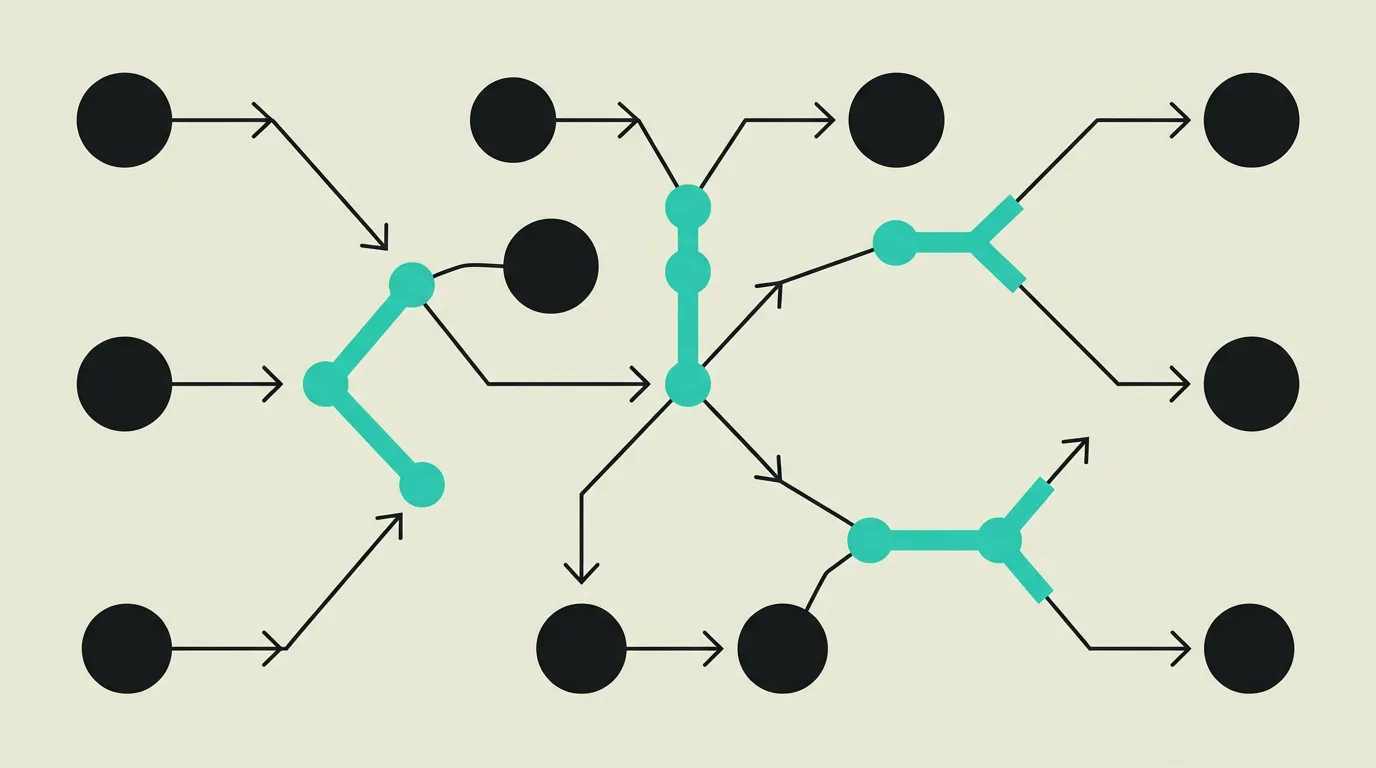
What is Agentic AI Explained: Architecture, Use Cases and Real-World Examples?
Agentic AI refers to AI systems that can autonomously pursue goals, make decisions, and execute actions without continuous human guidance. Unlike reactive AI models that respond to isolated prompts, agentic AI systems decompose objectives into subtasks, select appropriate tools, evaluate intermediate results, and adapt their approach based on environmental feedback. This encompasses both single-agent setups handling sequential workflows and multi-agent architectures where specialized agents coordinate to tackle complex, cross-functional challenges.
How does Agentic AI Explained: Architecture, Use Cases and Real-World Examples work technically?
Agentic AI combines large language models (LLMs) with planning, memory, and tool-use capabilities to handle complex tasks autonomously. The core architecture revolves around a reasoning loop (commonly called the "observe, think, act" cycle) where the model breaks down a goal into manageable subtasks, selects available tools (API calls, code execution, web search), evaluates the outcomes, and adjusts its strategy accordingly. Frameworks like LangGraph, CrewAI, and AutoGen enable developers to build multi-agent systems where specialized agents collaborate on shared objectives. Core concepts include ReAct (Reasoning + Acting), chain-of-thought planning, and function calling through standardized tool interfaces. Memory is a critical component of agentic systems. Working memory maintains context for the current task, while persistent memory (typically implemented through vector databases) retains past interactions and learned patterns across sessions. Tool-use extends agent capabilities beyond text generation: they can invoke API endpoints, run code in sandboxed environments, modify files, query databases, and orchestrate other AI models. In 2026, enterprise platforms have embraced agentic AI for customer support triage, automated code review, data pipeline orchestration, and supply-chain optimization. Architectural patterns such as supervisor agents (a coordinator delegating subtasks to specialists) and swarm architectures (peers communicating without a central controller) offer different levels of oversight and scalability. The primary challenge remains guardrails: constraining agent autonomy so operations stay within predefined boundaries. Comprehensive observability, structured audit trails, sandboxed execution environments, and rate limiting protect against runaway loops and unintended side effects. Human-in-the-loop checkpoints provide a safety net for high-stakes decisions. Standardized tool protocols are emerging to simplify integrations: Anthropic's Model Context Protocol (MCP) provides a universal JSON-RPC interface for connecting agents to external tools, while Google's Agent-to-Agent (A2A) protocol enables cross-vendor agent interoperability. Evaluation suites including AgentBench, SWE-bench, and WebArena measure agent performance on realistic tasks spanning coding, web navigation, and scientific reasoning. Production deployments increasingly adopt model routing strategies, where a lightweight orchestrator delegates simpler subtasks to cost-efficient models and reserves frontier models for complex reasoning steps, reducing overall inference costs significantly. Structured output formats like JSON mode and constrained decoding ensure agents produce machine-parseable results that downstream systems can consume reliably.
How does MG Software apply Agentic AI Explained: Architecture, Use Cases and Real-World Examples in practice?
At MG Software, we leverage agentic AI to automate repetitive development and research tasks. Our AI agents analyze codebases, generate test suites, write documentation, and propose architectural improvements based on existing patterns within a project. For our clients, we build tailored agent workflows that streamline business operations with built-in guardrails and human approval gates for sensitive actions. In practice, we deploy agentic workflows for automated code quality reviews, structured pSEO content generation driven by data templates, and production environment monitoring where agents proactively detect anomalies and draft resolution proposals. Every deployment includes comprehensive logging, cost tracking, and a strictly scoped toolset to prevent unintended behavior. We connect agents to client ecosystems through MCP connectors and custom API adapters, and deliver real-time performance dashboards that surface token consumption, task success rates, and average completion times so stakeholders can quantify ROI from the first week of production use.
Why does Agentic AI Explained: Architecture, Use Cases and Real-World Examples matter?
Agentic AI represents a fundamental shift in how organizations approach automation. Traditional rule-based workflows break down when conditions are unpredictable or require judgment calls. Agentic systems handle precisely these scenarios by reasoning through ambiguity and adapting on the fly. This unlocks automation for knowledge work that previously required dedicated human effort, from analyzing complex documents to coordinating cross-functional processes and troubleshooting technical issues. For businesses, the impact translates to lower operational overhead, faster cycle times, and the ability to scale specialized expertise without proportional headcount growth. Early adopters gain a compounding advantage as their agents improve with each iteration and accumulated context. As organizational knowledge accumulates in agent memory systems, the competitive moat deepens over time, making it progressively harder for late adopters to replicate the institutional intelligence that early-moving organizations have embedded in their automated workflows.
Common mistakes with Agentic AI Explained: Architecture, Use Cases and Real-World Examples
Teams often treat agentic AI like a chatbot with extra steps and skip guardrails once a prototype works. They underestimate the importance of tool permissions, miss the need for comprehensive audit trails, and neglect human approval gates on sensitive actions. Another frequent mistake is ignoring cost monitoring: an agent caught in a retry loop can generate thousands of API calls and rack up unexpected bills within minutes. Expecting deterministic behavior without rigorously testing failure modes, edge cases, and prompt injection resistance leads to fragile deployments that fail under real-world conditions. Additionally, teams frequently adopt multi-agent architectures when a single agent would suffice, introducing unnecessary inter-agent communication overhead and debugging complexity without measurable improvement in task quality or throughput.
What are some examples of Agentic AI Explained: Architecture, Use Cases and Real-World Examples?
- A customer support platform where an agentic AI system triages incoming tickets by analyzing urgency and customer sentiment, retrieves relevant knowledge base articles, drafts a response tailored to the customer's language and context, and sends it after human approval. The agent tracks resolution patterns over time and refines its draft quality based on supervisor feedback, cutting average resolution time by over half.
- A DevOps agent that parses CI/CD failure logs from GitHub Actions or Jenkins pipelines, traces the root cause in the source code using static analysis and git history, proposes a targeted fix with accompanying unit tests, and opens a pull request for review. The agent adapts its suggestions to match the repository's coding conventions and linting rules before submission.
- A data analysis agent that generates optimized SQL queries on demand for a business analyst, refreshes interactive dashboards with the latest figures from the data warehouse, detects statistical anomalies automatically, and produces a narrative summary highlighting trends, seasonal patterns, outliers, and actionable recommendations. The agent handles follow-up questions in natural language to iteratively deepen the analysis.
- A procurement agent that monitors supplier pricing feeds across multiple vendors in real time, compares quotes against historical benchmarks and contractual terms, flags pricing anomalies or delivery risk indicators, and prepares a detailed purchase recommendation with cost projections and supporting data for the operations manager to approve before committing spend.
- A documentation agent that scans recent code commits across repositories, identifies new or changed functionality through diff analysis, generates updated API documentation with code examples and parameter descriptions, and submits the draft for technical review before publishing. The agent maintains version history and highlights breaking changes that require migration guides for downstream consumers.
Related terms
Further reading
Frequently asked questions
What is the difference between agentic AI and regular AI chatbots?
A regular chatbot responds to one prompt at a time without memory or the ability to use tools. Agentic AI, on the other hand, can plan multiple steps, invoke external tools (APIs, databases, search), evaluate intermediate results, and adjust its strategy. The difference is comparable to someone answering a question versus someone independently completing an entire project from start to finish.
Is agentic AI safe to use in business processes?
When properly implemented, yes. The key is establishing guardrails: restrict which tools an agent can access, define clear boundaries for autonomous actions, and implement human-in-the-loop for critical decisions. Logging, observability, and regular audits of agent decision patterns are essential for monitoring behavior and catching issues before they escalate.
What frameworks are used for agentic AI?
Popular frameworks in 2026 include LangGraph (from LangChain) for complex state machines, CrewAI for role-based multi-agent collaboration, Microsoft's AutoGen for conversational agents, and OpenAI's Agents SDK for tool-calling workflows. Cloud platforms like AWS Bedrock Agents and Google Vertex AI Agent Builder also provide managed solutions for enterprise deployments.
How much does it cost to deploy agentic AI?
Costs depend on workflow complexity, the chosen LLM, and task volume. A simple single-agent flow using GPT-5.4 mini might cost a few cents per task. More complex multi-agent systems with several tool calls per run can reach a few dollars per session. Infrastructure costs for hosting, vector storage, and observability tooling add to the total. Most organizations start with a focused pilot that validates ROI before scaling.
Can agentic AI work with existing enterprise software?
Absolutely, and that interoperability is one of its strongest features. Agentic AI connects to existing tools through APIs, webhooks, and function calling, integrating with CRM systems, databases, project management platforms, and communication tools. The agent treats these systems as tools in its workflow. Setting clear permission scopes ensures the agent only accesses functionality relevant to its assigned task.
How do you test and validate an agentic AI system?
Testing agentic systems requires evaluating both individual tool calls and end-to-end workflows. Teams build evaluation datasets with expected outcomes for common scenarios, run regression tests after prompt or model changes, and simulate edge cases like API failures or ambiguous inputs. Sandbox environments allow agents to execute freely without affecting production data, while automated scoring compares agent output against ground truth.
What is the difference between single-agent and multi-agent architectures?
A single-agent architecture uses one AI model that handles all subtasks sequentially within a shared context window. A multi-agent architecture distributes work across specialized agents, such as a research agent, a writing agent, and a review agent, each contributing domain-specific expertise. Multi-agent setups excel at complex tasks but require additional design for inter-agent communication, conflict resolution, and output coordination.
This concept in your system?
We work with this every day. In a one-hour conversation you know whether it is a portal, an integration or a rebuild.