
Auth0 vs Clerk: Enterprise Auth or Developer-First Identity?
Okta-backed RBAC with 7,000+ integrations or beautiful pre-built React auth components? Auth0 and Clerk target fundamentally different auth needs.
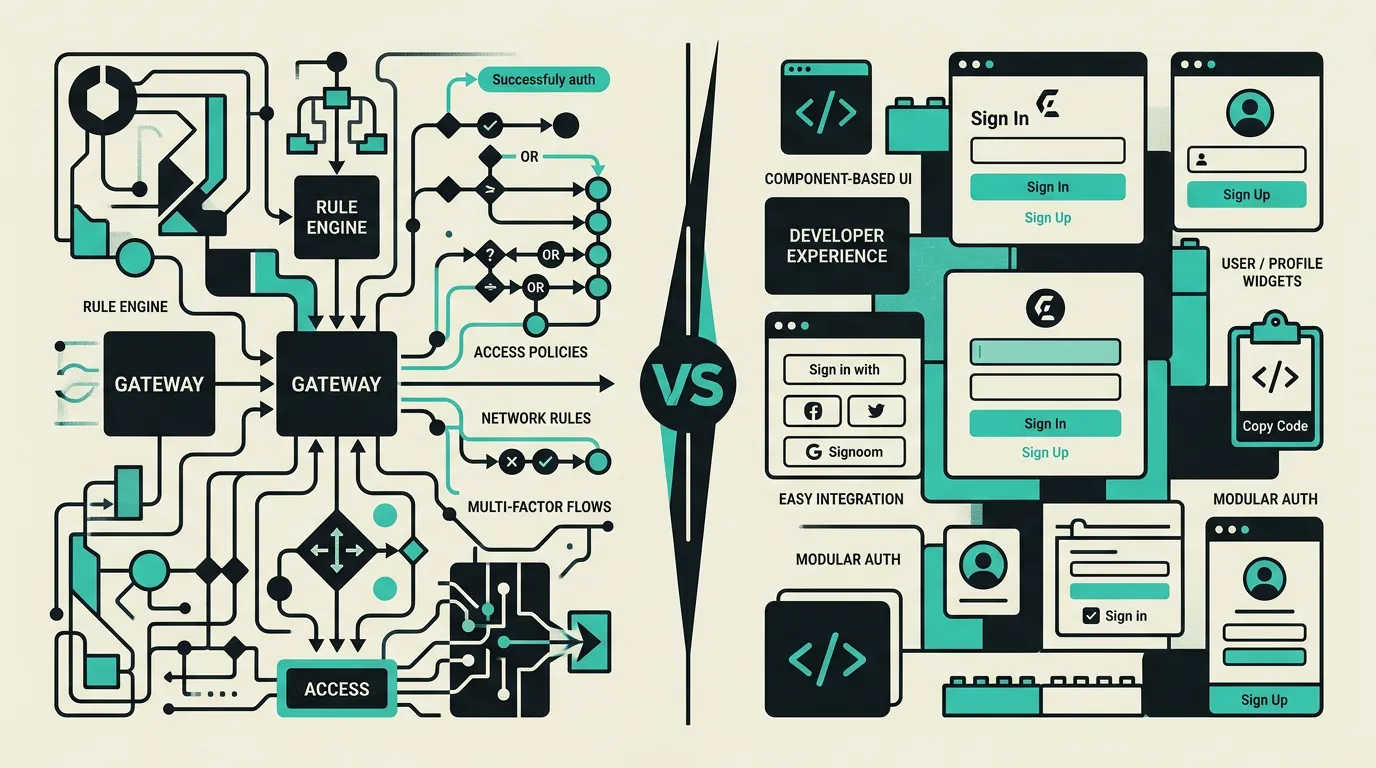
Auth0 and Clerk serve different segments of the authentication market, each with distinct strengths that make them irreplaceable for their target audience. Auth0 is the undisputed choice for enterprise environments where complex authorization with fine-grained permissions, compliance certifications, and a broad integration ecosystem with 7,000+ connections are essential. Clerk has captured a significant portion of the modern web application market with a superior developer experience for React and Next.js. Clerk's pre-built components save weeks of development time and deliver a polished user experience immediately, while Auth0 provides the depth and compliance certifications that enterprise customers in regulated sectors need. Your choice ultimately depends on the complexity of your authorization requirements, your compliance needs, and your technical stack.
Background
Authentication is one of the most critical and simultaneously most underestimated parts of any web application. A wrong choice can lead to security vulnerabilities, poor user experience, or weeks of wasted development time. The choice between an enterprise-grade platform like Auth0 and a developer-focused solution like Clerk determines not only the security of your application, but also the speed at which your team can implement, maintain, and extend authentication. In 2026, we see a clear trend where startups and scale-ups choose Clerk for the developer experience, while enterprises continue to prefer Auth0 for compliance certifications and the broad integration ecosystem.
Auth0
An enterprise-grade authentication and authorization platform owned by Okta, used by more than 18,000 organizations worldwide for securing applications and APIs. Auth0 offers extensive RBAC (Role-Based Access Control), fine-grained permissions, machine-to-machine authentication via client credentials flow, over 7,000 integrations via the Okta ecosystem, and advanced security features like breached password detection, adaptive MFA, bot detection, and attack protection. The platform serves both B2C and B2B use cases with Organizations support for multi-tenant architectures.
Clerk
A modern authentication platform purpose-built for React and Next.js applications that has fundamentally improved the developer experience of authentication. Clerk delivers beautiful, fully styled and customizable UI components for sign-in, sign-up, user management, and organization management. The platform provides an exceptional developer experience with simple SDK integration via npm packages, a user-friendly real-time dashboard, built-in user profile pages, webhook integrations, and support for modern frameworks like Next.js, Remix, Expo, and Astro.
What are the key differences between Auth0 and Clerk?
| Feature | Auth0 | Clerk |
|---|---|---|
| Target audience | Enterprise and large organizations with complex auth and compliance requirements | Startups and modern web applications built with React, Next.js, or other modern frameworks |
| UI components | Universal Login with limited customization, Lock widget, and custom login pages | Full pre-built React components (SignIn, SignUp, UserButton, UserProfile, OrganizationSwitcher) |
| RBAC & authorization | Advanced RBAC with fine-grained permissions, Organizations for B2B multi-tenant | Roles and permissions with Organizations since 2024, growing but less deep than Auth0 |
| Machine-to-machine | Full M2M authentication with client credentials flow and API authorization | Limited M2M support, primary focus on user authentication and session management |
| Integrations | 7,000+ integrations via Okta ecosystem, enterprise SSO, LDAP, and Active Directory | Focus on modern web ecosystem: Next.js, Remix, Expo, Astro with webhooks for custom integrations |
| Pricing | Free up to 25,000 MAU with limited features, then usage-based with enterprise tiers | Free up to 10,000 MAU with more standard features, then $0.02/MAU with Pro plan |
| Developer experience | Extensive documentation and SDKs for 30+ languages, but more complex setup | Superior DX with npm install, copy-paste components, and real-time dashboard preview |
| Compliance | SOC 2 Type II, HIPAA-ready, GDPR-compliant, BAA available, FedRAMP-ready | SOC 2 Type II certified, GDPR-compliant, growing compliance offering |
When to choose which?
Choose Auth0 when...
Choose Auth0 when your organization requires complex authorization rules with fine-grained permissions, manages multiple tenant environments via Organizations, or needs enterprise SSO integrations with existing SAML/OIDC providers and LDAP/Active Directory. Auth0 is also the right choice when machine-to-machine authentication is a core requirement, when you operate in a regulated sector requiring HIPAA BAA or FedRAMP, or when your organization already invests in the Okta ecosystem.
Choose Clerk when...
Choose Clerk when building a modern React or Next.js application where developer experience and speed of integration matter most. Clerk excels when you need beautiful pre-built auth UI components, a managed user dashboard, and want to launch a polished sign-in flow within hours rather than days. Also choose Clerk for SaaS products that need to go to market quickly without investing weeks in custom auth implementation.
What is the verdict on Auth0 vs Clerk?
Auth0 and Clerk serve different segments of the authentication market, each with distinct strengths that make them irreplaceable for their target audience. Auth0 is the undisputed choice for enterprise environments where complex authorization with fine-grained permissions, compliance certifications, and a broad integration ecosystem with 7,000+ connections are essential. Clerk has captured a significant portion of the modern web application market with a superior developer experience for React and Next.js. Clerk's pre-built components save weeks of development time and deliver a polished user experience immediately, while Auth0 provides the depth and compliance certifications that enterprise customers in regulated sectors need. Your choice ultimately depends on the complexity of your authorization requirements, your compliance needs, and your technical stack.
Which option does MG Software recommend?
At MG Software, we use Clerk as our primary authentication solution for new projects built with Next.js. The seamless integration via a simple npm install, the beautiful production-ready UI components, and the user-friendly real-time dashboard make Clerk ideal for the modern web applications we build. We have reduced authentication implementations from weeks to hours thanks to Clerk's developer experience. For enterprise clients with complex B2B multi-tenant requirements, existing Okta integrations, or compliance frameworks like HIPAA, we recommend Auth0. Our experience shows that Clerk significantly reduces time-to-market without compromising on security or user experience.
Migrating: what to consider?
Migrating from Auth0 to Clerk requires exporting user data via the Auth0 Management API and importing into Clerk via their user import tools. Password hashes can be transferred if you use bcrypt in Auth0. Custom RBAC rules built in Auth0 Actions need to be rebuilt using Clerk's permissions system. Social login providers (Google, GitHub, etc.) must be reconfigured. Plan two to four weeks depending on the complexity of your authorization logic and the number of integrated systems.
Frequently asked questions
Is Clerk secure enough for production applications?
Yes, Clerk is SOC 2 Type II certified and provides enterprise-grade security including MFA (TOTP and SMS), bot detection, brute force protection, session management with device tracking, and GDPR compliance. The platform is used by thousands of production applications and offers comparable security standards to Auth0 for most use cases. For regulated sectors requiring specific certifications like HIPAA BAA, Auth0 currently offers more options.
Can I migrate from Auth0 to Clerk?
Yes, Clerk provides migration tools for transferring users from Auth0. The process involves exporting user data via the Auth0 Management API, importing user records into Clerk, and reconfiguring social login providers. Password hashes can be transferred if you use bcrypt. Keep in mind rebuilding complex RBAC rules implemented in Auth0 Actions. Plan two to four weeks for a complete migration.
Which platform is cheaper for a startup?
For startups, Clerk is typically more cost-effective and transparent in pricing. Auth0 offers 25,000 free MAUs but significantly limits features on the free plan, including the absence of custom domains and RBAC. Clerk offers 10,000 free MAUs but includes more features by default including Organizations and custom domains on the Pro plan. At scale beyond 100,000+ MAU, the difference narrows, but Clerk's pricing remains more predictable.
How quickly can I integrate Clerk into a Next.js project?
Integrating Clerk into a Next.js project typically takes less than an hour for basic authentication. The integration consists of an npm install, adding a ClerkProvider to your layout, placing SignIn/SignUp components, and configuring middleware for route protection. Auth0 requires more configuration with callback URLs, token management, and manual UI building, which typically takes half a day to a full day for comparable functionality.
Does Clerk support B2B multi-tenant applications?
Yes, Clerk supports B2B multi-tenant applications via Organizations since 2024. You can create organizations, invite members, assign roles, and isolate per-organization data. Auth0 Organizations is however more deeply integrated with features like connection-level isolation, custom branding per organization, and fine-grained permissions that are more granular. For complex B2B scenarios with dozens of organizations, Auth0 is currently the more complete solution.
What are Auth0's key security features?
Auth0 offers extensive security features including adaptive MFA that assesses risk per login attempt, breached password detection that warns users when their password has leaked, bot detection via CAPTCHA integration, brute force protection, anomaly detection, and attack protection. Additionally, Auth0 offers compliance certifications including SOC 2 Type II, HIPAA BAA, ISO 27001, and privacy frameworks like GDPR and CCPA.
Which authentication platform does MG Software recommend?
For new projects built with Next.js or React, we recommend Clerk for its superior developer experience, beautiful pre-built components, and fast time-to-market. We use Clerk daily for our own projects. For enterprise clients in regulated sectors with complex B2B multi-tenant requirements, HIPAA needs, or existing Okta investments, we recommend Auth0. The choice ultimately depends on your specific security requirements and technical stack.
We build production software with this stack
Our developers work with these tools daily for clients across Europe. Price estimate within 24 hours.
 Discuss your project