
Payment Integration Examples - Inspiration & Best Practices
Stripe, Mollie, and marketplace payouts in practice. Payment integration examples with SCA compliance, recurring billing, and split-payment architecture.
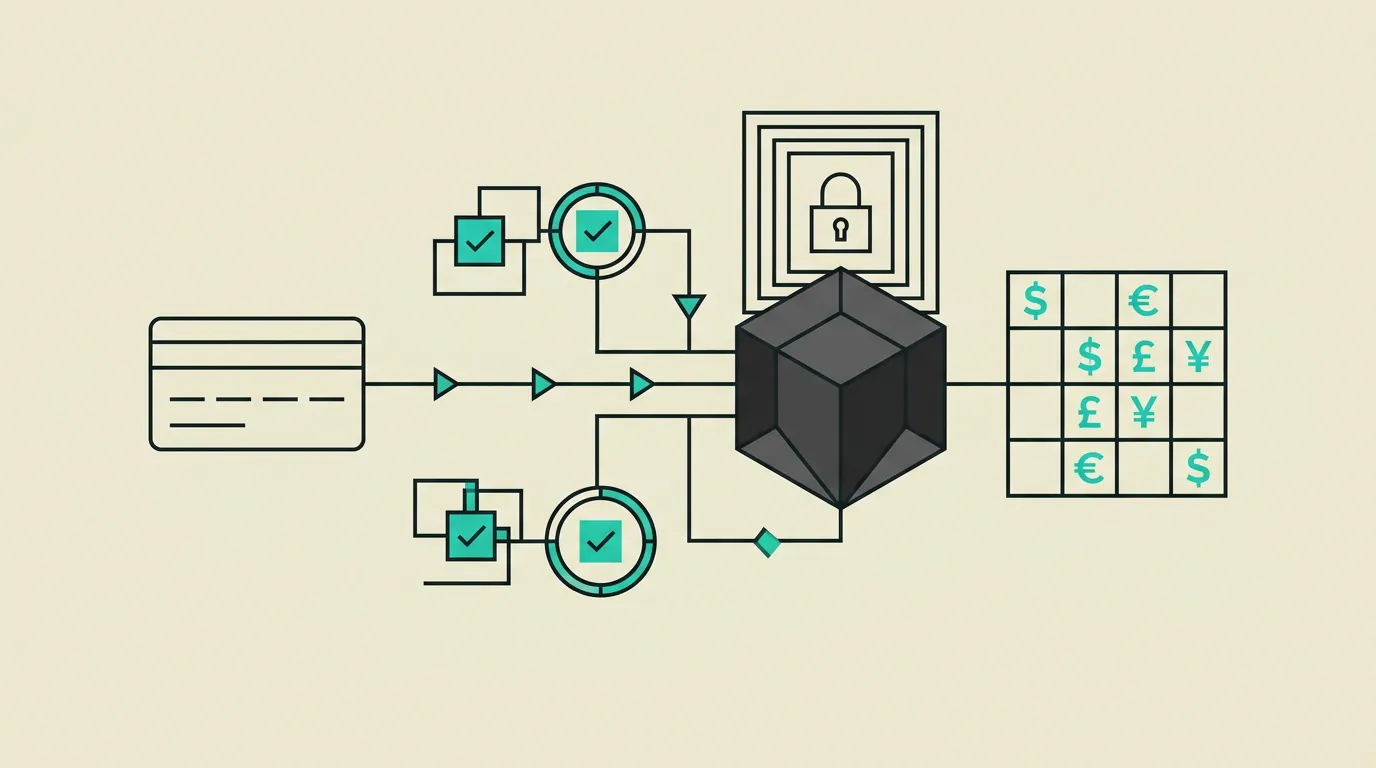
Payment integrations are a crucial component of any digital service that processes transactions, and errors in this process directly cost revenue. Whether it involves one-time payments in a webshop, recurring subscriptions for a SaaS platform, or complex marketplace payouts with commission calculations, a reliable and secure payment infrastructure is essential for your revenue and customer satisfaction. Modern payment service providers such as Stripe, Mollie, and Adyen offer powerful APIs that enable virtually any payment scenario to be implemented. The challenge lies not in the technical capabilities but in making the right architectural choices: which PSP fits your business model, how do you handle failed payments without losing customers, and how do you ensure PCI-DSS compliance. Businesses that professionally set up their payment infrastructure see an average of 15 to 25% fewer abandoned checkouts and significantly higher customer retention for subscription models. Below we showcase concrete examples of successful payment integrations across various scenarios.
Multi-PSP payment infrastructure for a webshop
A major Dutch webshop with annual revenue exceeding five million euros implemented a multi-PSP strategy with Mollie as primary and Adyen as fallback payment service provider. When the primary PSP experiences an outage, the system automatically and invisibly switches to the backup provider, virtually eliminating revenue loss due to technical issues. The integration supports iDEAL, credit card, PayPal, Klarna, and Apple Pay through one unified abstraction layer that makes it transparent to the application which PSP processes the transaction. Thanks to this approach, checkout availability remained above 99.95% over the past year, even during peak periods like Black Friday and the holiday season.
- Multi-PSP failover architecture that automatically switches to the backup provider when the primary PSP experiences outages
- Unified abstraction layer addressing multiple payment methods and PSPs through one consistent API interface
- Automatic PSP switching during outages without any impact on the customer checkout experience
- Support for iDEAL, credit card, PayPal, Klarna, Apple Pay, and Bancontact for maximum checkout conversion
- Real-time monitoring of transaction success rates per PSP with automatic alerting when percentages decline
Subscription management with Stripe Billing for a SaaS platform
A SaaS company with 2,000 business customers integrated Stripe Billing for their complete subscription administration. The system manages monthly and annual plans, automatically calculates proration for mid-cycle plan changes, processes automatic renewals, and handles failed payments through a smart retry schedule that calculates the optimal moment for each retry attempt. Customers manage their subscription, payment method, and invoice details independently via a Stripe-powered customer portal. The smart dunning functionality recovered an average of 28% of initially failed payments, amounting to tens of thousands of euros in retained annual revenue that would otherwise have been lost to involuntary churn.
- Stripe Billing integration with flexible monthly, annual, and usage-based subscription plans
- Automatic proration for upgrades and downgrades guaranteeing fair billing without manual intervention
- Smart dunning with an intelligent retry schedule that calculates the optimal collection moment per customer
- Self-service portal where customers independently manage their subscription, payment method, and invoice details
- Webhook integration informing the application in real time about payment statuses, renewals, and cancellations
Marketplace payout system with split payments
An online marketplace for freelance services with 800 active sellers implemented a split-payment system via Stripe Connect. With every transaction, the amount is automatically divided between the seller and the platform based on the agreed commission. Sellers receive their payout automatically to their bank account after a configurable holding period that provides protection against returns and chargebacks. The system also correctly handles returns and chargebacks with automatic reversals to the appropriate party. Automated KYC verification through Stripe ensures new sellers are quickly onboarded while meeting all legal identification requirements.
- Stripe Connect for automated split payments correctly dividing commission and seller amounts per transaction
- Configurable commission percentages per product category and holding periods per seller level
- Automatic KYC verification of sellers via Stripe ensuring compliance with identification requirements
- Chargeback and return handling with automatic reversals that correctly adjust the commission
- Seller dashboard with real-time insight into transactions, pending payouts, and expected payout dates
B2B invoicing with direct debit for a service provider
A B2B service provider with 350 business customers implemented an automated invoicing system with SEPA Direct Debit via Mollie. Invoices are automatically generated based on delivered services and logged hours, professionally formatted and sent to the customer, and automatically collected after the payment term expires. For failed collections, the system initiates an escalation procedure with automated payment reminders, alternative payment options such as an iDEAL payment link, and ultimately a signal to the finance department for manual follow-up. The administrative burden for the finance department decreased by 70% after implementation as manual invoice processing and payment follow-up were fully automated.
- SEPA Direct Debit integration via Mollie for automated collection after the payment term expires
- Automated invoice generation based on registered service delivery with professional formatting and branding
- Escalation procedure for failed collections with automated reminders and alternative payment options
- Accounting integration that automatically creates journal entries for invoicing, payments, and credits
- Customer portal where business clients independently view their invoice history, payment status, and mandate details
Key takeaways
- A multi-PSP strategy with automatic failover protects your revenue against technical outages of individual payment providers.
- Smart dunning and intelligent retry mechanisms for failed payments can recover up to 30% of otherwise lost subscription revenue.
- Split payments and automated payouts are essential for marketplace business models where multiple parties share in the revenue.
- PCI-DSS compliance is mandatory when processing card payments: always use tokenisation and avoid direct contact with card data.
- A unified abstraction layer between your application and the PSP makes it possible to switch providers without modifying application code.
- Automated invoicing with SEPA direct debit saves the finance department dozens of hours per month on manual payment follow-up.
- Self-service portals where customers manage their own subscriptions and payment methods significantly reduce support workload.
How MG Software can help
MG Software implements payment integrations that are secure, reliable, and scalable, tailored to your specific revenue model. From simple checkout flows for webshops to complex marketplace payouts with split payments and subscription management with smart dunning, we integrate the right payment service providers and build the business logic that maximises your revenue. We advise on optimal PSP selection based on your market, transaction volumes, and desired payment methods. Our PCI-DSS conscious approach guarantees that payment data is processed securely at all times. After delivery, we monitor payment performance and advise on optimisations to continuously improve conversion and success rates.
Frequently asked questions
Which payment service provider is best for European businesses?
Mollie is very popular in Europe thanks to excellent local payment method support, transparent pricing, and simple integration. Stripe offers more advanced features for subscription models, marketplaces with split payments, and international expansion. Adyen is strong for larger enterprises with high transaction volumes. We advise based on your specific needs, revenue model, and growth strategy which provider or combination is the best fit.
How do you ensure payment data security?
We never directly process card data in your application. By using tokenisation via the PSP, card data is securely stored with the payment provider and your system only receives a token as reference. Our implementations follow PCI-DSS guidelines for maximum security. Additionally, we implement SCA (Strong Customer Authentication) in accordance with the European PSD2 directive for all relevant transactions.
Can you migrate an existing payment integration to a different PSP?
Yes, we have extensive experience with PSP migrations. By building an abstraction layer between your application and the PSP, the transition can happen in phases without downtime for your customers. Existing customer mandates and stored payment methods can in many cases be migrated to the new provider. We guide the complete migration process including testing and monitoring after the switchover.
How does smart dunning work for failed subscription payments?
Smart dunning is an automated process that retries failed payments at the optimal moment. Instead of immediately showing a hard error message, the system analyses when the probability of a successful retry is highest, for example after a salary payment date. Additionally, the system sends friendly notifications to the customer with the option to update their payment method. This prevents involuntary churn due to expired cards or temporary insufficient funds.
What does a payment integration cost at MG Software?
A standard payment integration with one PSP and basic checkout functionality starts from 5,000 to 8,000 euros. More complex projects with multi-PSP failover, subscription management, or marketplace payouts range between 15,000 and 40,000 euros depending on scope. Additionally, the PSP itself charges transaction fees typically between 0.25% and 1.5% per transaction depending on the payment method and volume.
Do you also support international payment methods?
Yes, through PSPs like Stripe and Adyen we support a wide range of international payment methods. These include credit cards (Visa, Mastercard, Amex), local methods such as Bancontact (Belgium), SOFORT (Germany), iDEAL (Netherlands), and digital wallets like Apple Pay and Google Pay. We advise which payment methods are relevant for your target markets and configure them in your checkout.
How do you test payment integrations before going live?
We test extensively in the PSP sandbox environment using test cards and simulations of all possible scenarios: successful payments, declines, timeouts, chargebacks, and 3D Secure flows. Additionally, we perform end-to-end tests that run through the complete payment process from checkout to accounting. Only when all scenarios are handled correctly do we switch to the production environment.
Want to build something like this?
From concept to launch. We deliver custom software that works for your customers and team.
 Discuss your project