

software development
Event-Driven Architecture Explained: Patterns, Tools and Practical Trade-offs
Event-driven architecture lets systems communicate through asynchronous events instead of direct API calls. Learn the core patterns (event notification, event sourcing, CQRS), when to choose Kafka versus RabbitMQ, and how to handle eventual consistency in production.
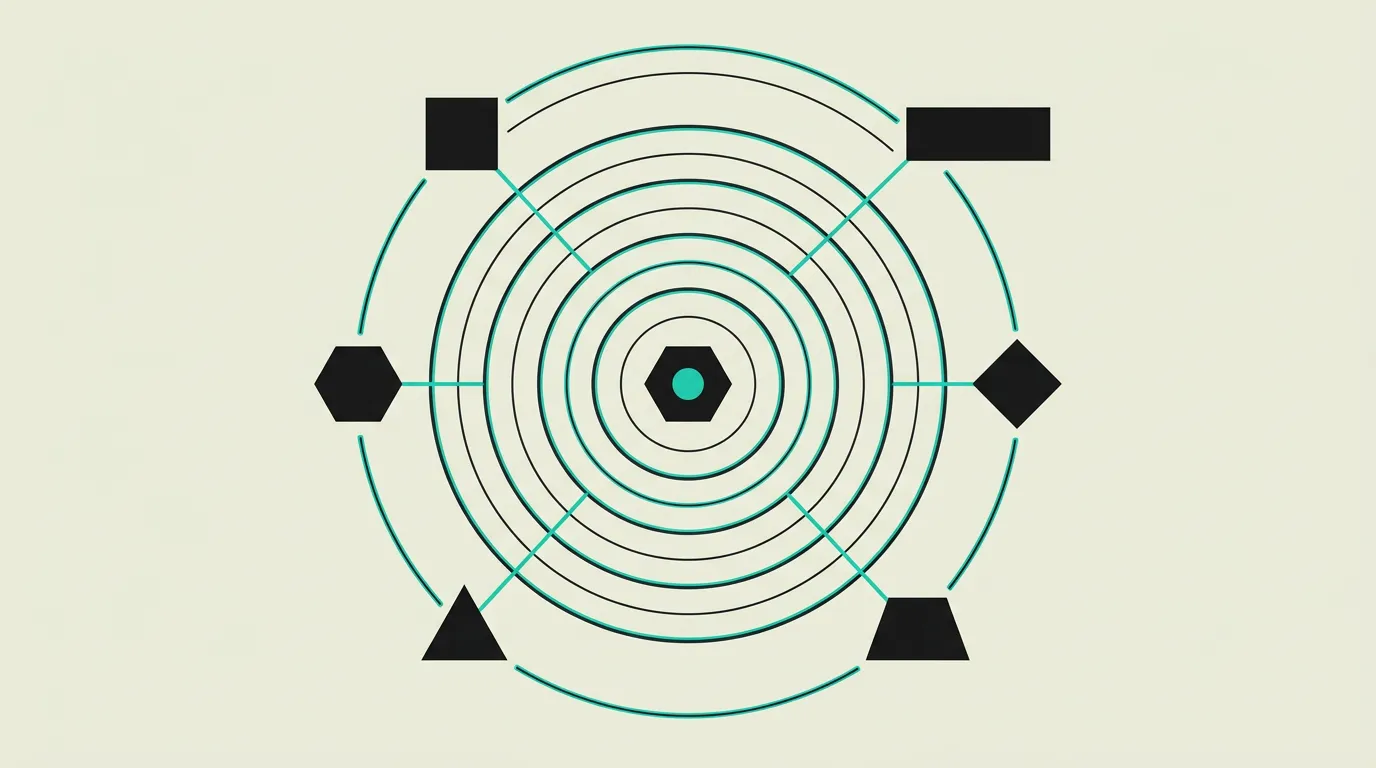
What is Event-Driven Architecture Explained: Patterns, Tools and Practical Trade-offs?
Event-driven architecture (EDA) is a software architecture pattern where systems communicate by producing and consuming events rather than making direct synchronous calls. An event represents a significant state change (such as "order placed" or "payment received") that other services react to independently. This pattern decouples the sender from all receivers, allowing systems to scale, deploy, and evolve independently of one another.
How does Event-Driven Architecture Explained: Patterns, Tools and Practical Trade-offs work technically?
EDA decouples producers (services that publish events) from consumers (services that react to events) through an event broker or streaming platform. The three core patterns are: Event Notification (lightweight signals that something happened, where consumers fetch details themselves), Event-Carried State Transfer (events contain the full data payload so consumers need no callbacks), and Event Sourcing (storing the complete state history as an immutable sequence of events rather than just the current state). Message brokers and streaming platforms like Apache Kafka, RabbitMQ, Amazon EventBridge, NATS, and Google Pub/Sub facilitate event distribution with varying delivery guarantees. Kafka dominates in 2026 for high-throughput event streaming with durable storage, partitioning, and replay capabilities. RabbitMQ provides traditional message queue functionality with complex routing (exchanges, bindings) and lower per-message latency. CQRS (Command Query Responsibility Segregation) is often combined with EDA to separate read and write models, allowing each to be optimized for its specific workload. Eventual consistency is inherent to EDA: services become consistent over time but not immediately, which has direct implications for UX design. Idempotent event handlers are critical for correctly processing duplicate events without causing data corruption. Saga patterns (choreography, where events drive the process, or orchestration, where a coordinator directs it) manage distributed transactions across multiple services. Schema registries like Confluent Schema Registry ensure event contracts remain consistent as services evolve independently. The increased complexity of debugging and testing in asynchronous systems makes distributed tracing (OpenTelemetry), structured logging, and dead-letter queues essential for production operations. Correlation IDs propagated through the entire event chain enable teams to trace a single user action across dozens of services. The transactional outbox pattern ensures database writes and event publication happen atomically, eliminating inconsistencies between local state and the event broker. Change Data Capture (CDC) through tools like Debezium automatically publishes database changes as events without modifying application code. Event mesh architectures connect multiple brokers across regions and cloud providers into a distributed fabric that routes events based on topics and subscription filters. Backpressure mechanisms protect consumers from overload during unexpected traffic spikes, and consumer lag monitoring alerts operations teams when processing falls behind the production rate.
How does MG Software apply Event-Driven Architecture Explained: Patterns, Tools and Practical Trade-offs in practice?
At MG Software, we apply event-driven architecture in systems that require scalability and loose coupling between services. We build event-driven workflows for order processing, real-time notification systems, and cross-service data synchronization. We use message queues for reliable asynchronous communication and implement idempotent handlers, dead-letter queues, schema validation, and comprehensive structured logging for operational reliability. For every project, we evaluate whether event-driven is the right fit, or whether synchronous communication would be simpler and more effective for the specific requirements at hand. For one e-commerce client, we built an event-driven order processing pipeline that decoupled the checkout flow into independent stages: payment processing, inventory reservation, shipping label generation, and customer notification. Each stage runs as an autonomous service communicating through events, allowing the system to scale individual components based on load. We use OpenTelemetry for end-to-end event tracing and implement circuit breakers to prevent cascading failures when a downstream service is temporarily unavailable.
Why does Event-Driven Architecture Explained: Patterns, Tools and Practical Trade-offs matter?
Event-driven architecture enables systems to scale independently and process work asynchronously, which is crucial for real-time features and high-throughput scenarios. Without EDA, tightly coupled services create bottlenecks and cascading failures when load increases. For growing businesses, EDA makes it possible to add new functionality by simply attaching another consumer to an existing event stream, without modifying the services that produce events. This significantly accelerates time-to-market for new features and reduces the risk of regressions in existing functionality. In a landscape where real-time data processing is becoming the norm, EDA provides the architectural foundation for capabilities like live dashboards, instant notifications, and streaming analytics. Organizations that embrace event-driven thinking build systems that are more resilient to growth, traffic spikes, and the increasing complexity of modern software ecosystems where dozens of integrated services must collaborate reliably.
Common mistakes with Event-Driven Architecture Explained: Patterns, Tools and Practical Trade-offs
A frequent mistake is adopting event-driven patterns for every CRUD operation, quickly losing track of ordering, duplicate deliveries, and compensating actions. Teams forget to implement idempotent consumers and dead-letter queues, allowing a failed handler to silently corrupt data. Eventual consistency is underestimated while the UI is built assuming strong consistency, leading to confusing screen states for users. Another common pitfall is neglecting event schema versioning, where a change in event structure unexpectedly breaks all downstream consumers simultaneously. Teams also underestimate the observability requirements of asynchronous systems: without distributed tracing and structured logging, diagnosing the root cause of failures becomes nearly impossible when an event has been routed through five or more services. Invest in end-to-end tracing with correlation IDs across the full event chain from day one.
What are some examples of Event-Driven Architecture Explained: Patterns, Tools and Practical Trade-offs?
- An e-commerce platform where placing an order publishes an "OrderCreated" event that is independently consumed by the inventory service (update stock), the payment service (initiate charge via Stripe or Adyen), the notification service (send confirmation email and push notification), and the analytics service (log conversion and revenue data). Each service processes the event at its own pace, and a failure in one does not block the others.
- An IoT platform where sensor data from thousands of industrial devices arrives as events and feeds real-time operational dashboards, threshold-based alerting for anomaly detection, and time-series databases for historical trend analysis. Independent consumer groups enable each downstream system to process at its own rate without affecting the others.
- A banking application using Event Sourcing to store every transaction as an immutable event, making the full account history reproducible at any point in time and ensuring audit compliance for financial regulators. In case of a dispute, the bank can reconstruct the exact account state at any historical date by replaying all events up to that moment.
- A SaaS platform that logs user actions as events (feature usage, errors, session data) and distributes them via an event bus to analytics, billing, and customer success tooling without the core service needing knowledge of each downstream system. New integrations are added by simply attaching another consumer to the existing event topic without modifying the producer.
- A logistics tracking system where each status change (packed, shipped, in transit, at sorting facility, delivered) generates an event that streams to the customer portal, the notification service, and the warehouse management system simultaneously. Customers receive proactive delivery updates without needing to refresh the tracking page manually.
Related terms
Further reading
Frequently asked questions
What is the difference between event-driven and request-response communication?
In request-response (synchronous) communication, the calling service sends a request and waits for a direct response before proceeding. In event-driven (asynchronous) communication, the producer publishes an event and continues immediately; consumers react independently on their own schedule. Synchronous calls are simpler to reason about but create tight coupling, while EDA decouples services at the cost of eventual consistency that must be explicitly designed for.
When should you choose Kafka versus RabbitMQ?
Choose Kafka for high-throughput streaming, durable long-term event storage, replay capabilities, and scenarios with multiple consumer groups reading the same event stream. Choose RabbitMQ for traditional message queuing with complex routing rules (exchanges, bindings), lower per-message latency requirements, and simpler operational setups. Both are production-proven tools; the decision depends on your workload characteristics and delivery guarantee needs.
How do you prevent duplicate event processing?
Implement idempotency keys in your event handlers so that processing the same event twice produces the same result. Use deduplication logic in consumers based on a unique event ID or correlation ID. Where supported, enable exactly-once semantics at the broker level. Design your state mutations to be naturally idempotent where possible, such as using "set value to X" instead of "increment value by Y".
What is Event Sourcing and when should you use it?
Event Sourcing stores the complete state of an application as an immutable sequence of events rather than just the current state. Every change is recorded as a persistent event. This provides full audit trails, the ability to reconstruct state at any historical point, and temporal queries that reveal how data changed over time. Use it when auditability, historical analysis, or regulatory compliance are requirements.
How do you handle eventual consistency in the user interface?
Design the UI so users are not surprised by delayed updates. Use optimistic UI patterns that provide immediate visual feedback while the event is processed in the background. Show "processing" status indicators where appropriate, and implement polling or WebSocket connections to refresh the UI once downstream services have completed their work. Communicate clearly when data is not yet finalized.
What are dead-letter queues and why are they important?
A dead-letter queue (DLQ) is a separate queue where events are moved after they fail processing multiple times. Without a DLQ, failed events either disappear silently or block the main queue, causing the entire pipeline to stall. DLQs allow teams to inspect failed events, diagnose the root cause, fix the issue, and replay the events without any data loss, making them essential for production reliability.
How do you manage event schema changes without breaking consumers?
Use a schema registry (such as Confluent Schema Registry) that centrally manages event schemas and enforces backward compatibility rules. Apply the principle of backward-compatible changes: add new fields as optional, never remove required fields in a single step, and use explicit schema versioning. This prevents a structural change in one service from simultaneously breaking all downstream consumers and enables independent deployment of services.
From the blog
This concept in your system?
We work with this every day. In a one-hour conversation you know whether it is a portal, an integration or a rebuild.