
Data Migration Examples - Safe Transitions to New Systems
Migrate 2M+ records with zero downtime. Data migration examples covering legacy ERP to cloud, database mergers, and e-commerce re-platforming with SEO intact.
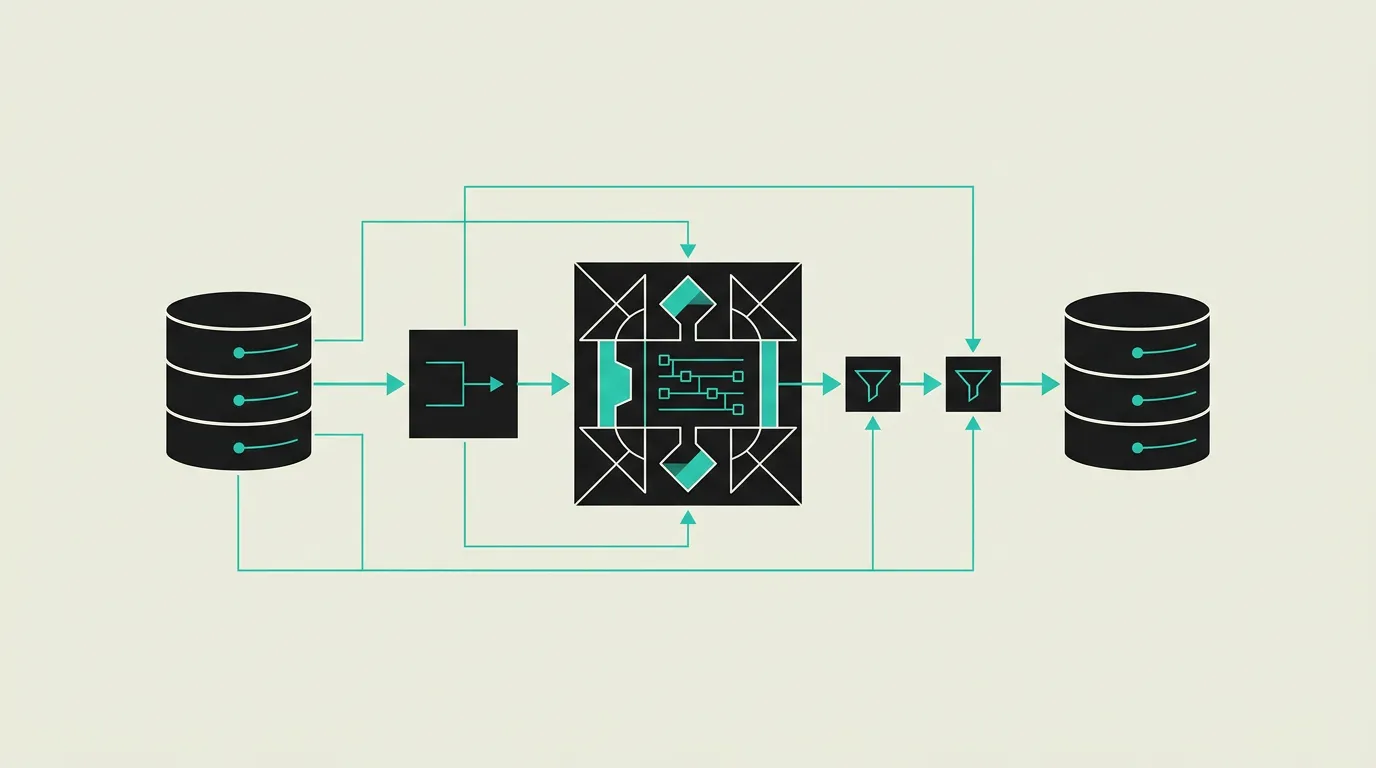
Data migration is one of the most underestimated components of any system replacement or cloud transition. Many organisations invest months selecting a new platform but allocate too little time for safely and completely transferring their existing data. The consequence: delays, incomplete datasets, and in the worst case, permanent data loss. A careful migration approach with validated ETL pipelines, thorough testing, and a clear rollback strategy makes the difference between a smooth transition and a costly failure. At MG Software, we treat data migration as a full project with its own planning, test cycles, and acceptance criteria, not as an afterthought handled at the last moment. We begin every migration with an extensive data audit that maps the volume, quality, and dependencies of the source data. Below we share three migration projects, each with a unique starting point and target system. Each example illustrates the technical complexity, risks, and strategic decisions involved in a successful data migration.
Legacy ERP to cloud-based system
A manufacturing company with 180 employees migrated from a 15-year-old on-premise SAP R/3 system to a modern cloud-based ERP platform. The biggest challenge was source data quality: over fifteen years, thousands of inconsistent records had accumulated, from duplicate supplier entries to fields repurposed for unintended uses. Prior to the migration, we conducted an extensive data cleaning phase that identified and merged 23,000 duplicate records. The actual migration of over 2 million records was executed via a custom ETL pipeline in Python that transformed, validated, and wrote data in batches of 10,000 records. Each batch was verified with checksums and row counts to detect data loss. The cutover was performed during a planned weekend with a parallel test environment as fallback, and on Monday the company was running entirely on the new system without a single hour of unexpected downtime.
- Pre-migration data cleaning phase identifying and merging 23,000 duplicate records
- Custom ETL pipeline in Python transforming and validating data in batches of 10,000 records
- Automatic data validation with checksums and row counts after each migration batch
- Rollback strategy with parallel test environment and point-in-time recovery capability
- Phased migration that only decommissions the production system after full validation of the target
- Zero unexpected downtime: cutover executed during planned weekend with full production on Monday
Multi-database consolidation for merger
Following a merger between two mid-size consulting firms, three different customer databases needed to be consolidated into one unified platform. One firm used Salesforce, the other ran a custom-built CRM in PostgreSQL, and there was also an Excel file with 4,000 contacts from joint projects. The core challenge was deduplication: the same customer could exist in all three sources with different spellings, phone numbers, and address formats. We developed a fuzzy matching algorithm that compares records on name, email address, chamber of commerce number, and address with configurable weighting per field. The algorithm identified 8,200 potential duplicates, of which 7,100 were automatically merged and 1,100 were manually reviewed by the project team. All data formats were standardised to a uniform model with validated phone number formats, normalised addresses, and consistent company names. The complete transformation history is recorded in an audit trail that makes it traceable which source records were combined for each merged record.
- Fuzzy matching algorithm with configurable per-field weighting for duplicate customer record detection
- Automatic merging of 7,100 duplicates and manual review of 1,100 borderline cases
- Standardised data formats including phone, address, and company name normalisation
- Migration from three heterogeneous sources: Salesforce, custom PostgreSQL CRM, and Excel
- Complete audit trail showing source records and transformations for each merged record
- Validation interface for the project team to approve or reject borderline cases with one click
E-commerce platform migration with SEO preservation
A web shop with 12,000 products and a monthly revenue exceeding 400,000 euros migrated from WooCommerce to a headless e-commerce architecture with Shopify as the backend and a Next.js storefront. Beyond the technical product data migration, preserving organic search traffic was the biggest concern: the shop generated 60% of its revenue through Google and could not afford any ranking loss. All products, categories, customer accounts, and three years of order history were transferred via a custom migration script that transformed WooCommerce exports to the Shopify product model. An automated URL mapping linked every old WooCommerce URL to its new Shopify equivalent, resulting in over 14,000 301 redirects. After migration, we ran an automated validation checking every product page for correct metadata, working images, and accurate pricing. Three months post-migration, Google Search Console showed organic traffic had actually increased by 8% rather than declined, partly because the faster Next.js frontend significantly improved Core Web Vitals scores.
- URL mapping and 14,000+ 301 redirects for complete preservation of SEO value and organic traffic
- Custom migration script transforming WooCommerce exports to the Shopify product model
- Product data transformation including variants, metadata, images, and customer reviews
- Automated post-migration validation of metadata, images, and pricing on all product pages
- Migration of customer accounts and three years of order history for a seamless customer experience
- Organic traffic increased 8% three months post-migration thanks to improved Core Web Vitals
Key takeaways
- A phased migration strategy with parallel systems reduces risk and allows rollback if problems occur during the transition.
- Automatic data validation after each batch is essential to guarantee data integrity and detect errors before they propagate.
- For e-commerce migrations, SEO preservation is crucial: plan URL mappings and redirects before migration to retain organic traffic.
- Invest in a data cleaning phase before migration to prevent polluted data from ending up in the new system.
- Fuzzy matching algorithms are indispensable for database consolidations to detect duplicate records despite spelling variations.
- A complete audit trail of all transformations is useful not only for debugging but also required for compliance in regulated industries.
- Run the migration multiple times in a staging environment before migrating production data so the team is familiar with the process.
- Schedule the cutover during a low-activity period and communicate clearly in advance to all involved teams and end users.
How MG Software can help
MG Software guides complex data migrations from the initial data audit through to the final validation checks after go-live. Our process starts with a thorough analysis of your source data, mapping volume, quality, dependencies, and risks. Based on this analysis, we develop a migration plan with a timeline, rollback strategy, and acceptance criteria signed off by all stakeholders. We build custom ETL pipelines that transform, validate, and load data into the target system, including automatic checks after each step. Every migration project is rehearsed multiple times in a staging environment before production data is migrated. Timelines range from 3 weeks for straightforward migrations to 4 months for enterprise projects involving multiple source systems and complex data transformations.
Frequently asked questions
How long does a data migration take?
The timeline depends on data volume, the number of source systems, and the complexity of data transformations. A straightforward migration between two systems with a limited dataset takes 2 to 4 weeks including testing. Medium-complexity migrations with multiple sources and data cleaning needs typically take 6 to 10 weeks. Complex enterprise migrations with millions of records, legacy systems, and strict compliance requirements take 2 to 4 months. The data audit phase at the beginning, usually 1 to 2 weeks, is crucial for determining the actual complexity and creating a realistic schedule.
What happens if errors occur during migration?
We always work with a rollback strategy that makes it possible to return to the previous state without data loss. Every migration step is reversible, and we create full backups prior to each phase. When errors occur in a specific batch, that batch is automatically isolated and reprocessed after the root cause has been identified. Our monitoring system detects anomalies in real time, such as missing records or failed validations, and automatically pauses the migration for critical errors. After resolving the issue, the process resumes exactly where it left off without needing to restart.
Is it possible to migrate without downtime?
Yes, with a phased migration strategy and parallel systems, zero-downtime migration is achievable. In this approach, the new system runs alongside the old one, and changes in the source data are synchronised to the target system in real time via change data capture. Once all data is migrated and validated, traffic is redirected to the new system without users noticing anything. This approach requires more technical preparation but is essential for business-critical systems that need 24/7 availability. We advise per situation whether zero-downtime migration is necessary or whether a planned maintenance window suffices.
How do you guarantee data quality after migration?
Data quality is checked at multiple points throughout the process. Before migration, we perform a data audit mapping inconsistencies, missing values, and duplicate records. During migration, our ETL pipeline validates every record against predefined rules and checksums. After migration, we run comprehensive acceptance testing where sample records in the target system are compared against source data. Interested end users are involved in validation so they can confirm the data looks correct in their daily workflows. This multi-layered validation process minimises the chance that data issues are only discovered after go-live.
Do you support migrations to all cloud platforms?
We have experience with migrations to the most common cloud platforms and SaaS solutions. This includes AWS, Google Cloud, Azure, Supabase, Shopify, Salesforce, and various industry-specific platforms. The choice of target platform determines the approach: each system has its own import mechanisms, API rate limits, and data model. We advise based on your requirements which platform best fits and build migration tooling specifically for that source-target combination. For platforms where we have less experience, we run a proof of concept upfront to identify risks.
What does a data migration cost?
Costs are determined by data volume, the number of source systems, and the complexity of transformations. A straightforward migration between two systems starts from a few thousand euros. Migrations involving data cleaning, deduplication, and multiple sources typically range between 8,000 and 25,000 euros. Enterprise migrations with millions of records, complex transformations, and strict compliance requirements can be higher. We always provide a quote based on the data audit so you receive a reliable estimate before the project starts.
How do you handle sensitive data during migration?
Securing sensitive data is a top priority in every migration project. All data transfers occur over encrypted connections, and we never work with production data on personal devices or unsecured environments. Personal data is anonymised wherever possible in test and staging environments. For migrations subject to GDPR, we document all processing activities and ensure the processing register is updated. Access to the migration environment is restricted to the project team via multi-factor authentication and all access logs are retained.
Want to build something like this?
From concept to launch. We deliver custom software that works for your customers and team.
 Discuss your project