
Custom E-commerce Platform Examples for Businesses
Three examples of custom-built e-commerce platforms: a B2B webshop with customer-specific volume pricing, a personalised fashion webshop, and a subscription model for fresh products. Including technical approach, integrations, and measurable results.
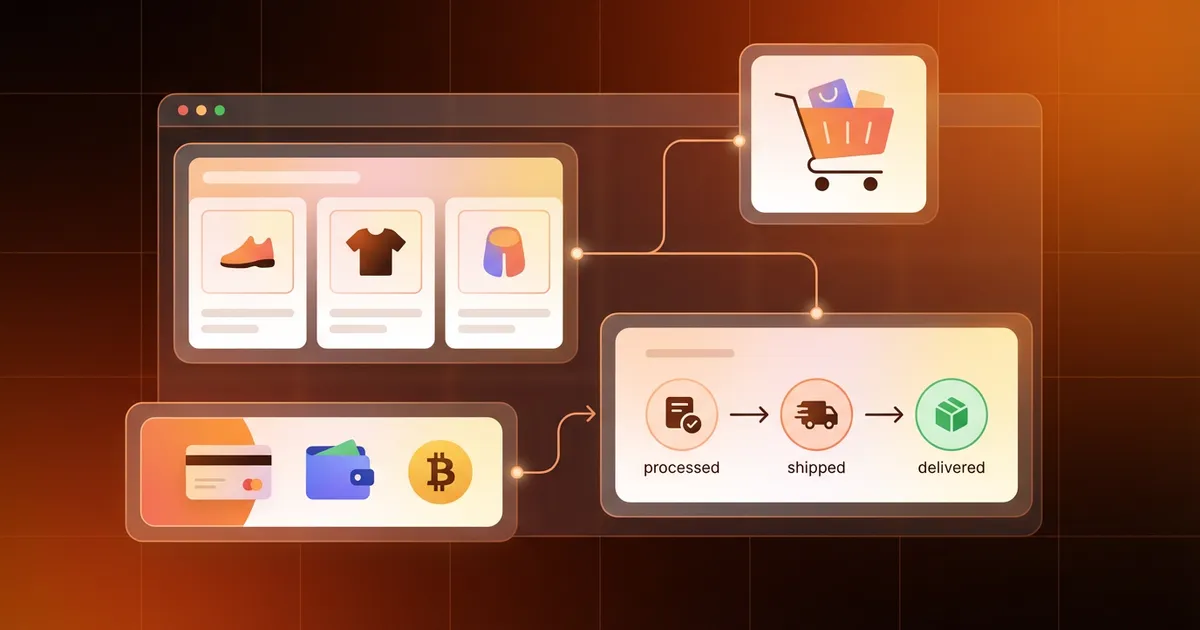
Standard e-commerce platforms like Shopify and WooCommerce work excellently for straightforward webshops with a limited product range and uniform pricing. But as soon as businesses need specific pricing models, complex product configurations, or deep system integrations, these platforms reach their limits. Customer-specific volume pricing pulled live from an ERP system, personalised recommendations based on purchase behaviour, or a flexible subscription model with weekly adjustable packages: these are scenarios that standard solutions were not designed for. Customising a standard platform through plugins often leads to stability issues, slow loading times, and security risks when plugins are not properly maintained. A custom e-commerce platform provides the flexibility to build exactly the features your business model requires, without compromises on performance or scalability. You have full control over the frontend experience, backend logic, and integrations with external systems. MG Software has built e-commerce solutions for both B2B and B2C companies across diverse industries: from technical wholesalers with thousands of products and customer-specific pricing agreements to fashion brands with personalised shopping experiences and food companies with subscription models. Below we present three concrete examples, each with a different business model, unique technical challenges, and measurable results that demonstrate what a custom e-commerce platform can deliver.
B2B webshop with customer-specific pricing and volume discounts
A technical wholesaler with 1,200 business customers and a catalogue of 15,000 products had an outdated ordering system that did not support customer-specific pricing. Each customer had their own price list with volume discounts in the ERP system, but these were not available in the online ordering environment. Customers had to order by phone or email, causing the sales team to spend significant time on order entry that could have been automated. Approximately 85 percent of orders were repeat orders for the same products, ideal for a self-service ordering portal. We built a B2B webshop that pulls real-time pricing data from the ERP system and displays the correct net prices, volume discounts, and available products per logged-in customer. The system supports quick order forms based on product codes for experienced procurement staff, one-click repeat orders from order history, and an approval workflow for orders above a configurable amount with notification to the responsible buyer. Invoicing and stock status are synchronised live with Exact Globe. For products temporarily out of stock, the system shows expected delivery dates and suggests alternative products. Online orders grew from 15 to 62 percent of total order volume within six months.
- Real-time customer-specific pricing and volume discounts directly from the ERP system per logged-in user
- Quick order form based on product codes and repeat orders from order history
- Approval workflow for orders above a configurable amount with notification to the purchasing manager
- Live stock status and delivery times synchronised with the ERP system
- Result: online orders grew from 15% to 62% of total order volume within six months
- Integration with Exact Globe for product data, pricing, inventory, and invoicing
Fashion e-commerce with personalised recommendations
A Dutch fashion brand with its own collection and 40,000 monthly visitors wanted to personalise the webshop based on browsing and purchase behaviour to increase conversion and average order value. The existing Shopify platform offered insufficient capabilities for the desired personalisation and integration with their loyalty programme. The standard recommendation widgets were too generic and the loyalty programme ran on a separate platform disconnected from the checkout. We developed a custom webshop with a recommendation engine that shows personalised suggestions based on viewed products, previous purchases, sizes, and style preferences on the homepage, category pages, and in the shopping cart. The loyalty programme is integrated into the checkout process so customers can redeem points as discounts directly, which stimulates repeat purchases. Product pages feature a dynamic size guide that shows the likely best fit based on previous purchases, reducing the number of returns. Return processing happens through a self-service portal with automatic label generation and immediate inventory restocking. After launch, the conversion rate increased from 2.1 to 3.4 percent and average order value grew by 18 percent.
- Recommendation engine based on browsing behaviour, purchase history, and style preferences
- Integrated loyalty programme with points redeemable as discount during checkout
- Dynamic size guide showing the likely best fit based on previous purchases
- Self-service return portal with automatic label generation and inventory restocking
- Result: conversion rate increased from 2.1% to 3.4% and average order value grew by 18%
- Built with Next.js, headless commerce architecture, and Algolia for search functionality
Subscription commerce for organic food products
An organic food company wanted to launch a subscription model where customers receive a curated package of fresh products delivered weekly or biweekly. The platform needed to support flexible subscriptions where customers can compose their own package, change delivery days, schedule holiday pauses, and modify or cancel their subscription at any time. Existing subscription platforms offered insufficient flexibility for these requirements and could not integrate with the company's warehouse system. We built an e-commerce platform with a visual package builder where customers select products from the available seasonal range, a clear subscription management portal for managing deliveries and preferences, and automated pick list generation that provides the warehouse with daily order requirements. The system automatically calculates the optimal delivery route based on postal codes and delivery days to minimise logistics costs. When products are unavailable due to seasonal factors or supply issues, customers are automatically informed and offered a comparable alternative. After six months, customer retention stood at 78 percent and customers added an average of 2.3 extra products to their base package.
- Visual package builder allowing customers to determine the contents of their subscription
- Flexible subscription management with options for frequency, pauses, and delivery day changes
- Automated pick list generation and route optimisation for the warehouse and delivery team
- Automatic customer notification for product unavailability with alternative product suggestions
- Result: 78% customer retention after six months and an average of 2.3 extra products per order
- Payments via Mollie with support for direct debit and iDEAL
Key takeaways
- Custom e-commerce platforms enable customer-specific pricing and complex product rules that standard software cannot provide.
- B2B webshops require functionality like quick order forms, approval workflows, and ERP integration that goes beyond standard B2C platforms.
- Personalisation based on user behaviour increases both conversion rate and average order value.
- Subscription models require flexible management and proactive communication about changes to maintain high customer retention.
- Headless commerce architectures provide maximum frontend flexibility without compromising backend logic.
- Real-time synchronisation with ERP and warehouse systems prevents inventory issues and delivery time discrepancies.
How MG Software can help
MG Software designs and builds e-commerce platforms that fit your specific business model, whether it involves B2B with customer-specific pricing, personalised B2C experiences, or subscription commerce. We start every project with a thorough analysis of your product catalogue, pricing structure, customer segments, and the systems the platform needs to integrate with. Based on this analysis, we design an architecture that meets your current needs while leaving room for growth. From product management with complex variants and configurations and payment integration via Mollie, Stripe, or Adyen to fulfilment automation with pick lists and route optimisation and self-service customer portals for returns and account management: every component is custom built. We build with modern technologies such as Next.js and headless commerce architectures that guarantee fast loading times and SEO-friendly pages. The average timeline for an e-commerce project ranges from eight to sixteen weeks, depending on the number of integrations and the complexity of the product model. After delivery, we offer maintenance contracts covering security updates, monitoring, and continued development.
Frequently asked questions
What does a custom e-commerce platform cost?
Costs depend heavily on complexity and the number of integrations. A basic custom webshop with product catalogue, shopping cart, and payment processing starts from approximately 15,000 euros. B2B platforms with ERP integration, customer-specific pricing, and ordering workflows range between 25,000 and 60,000 euros. Subscription platforms with fulfilment integration and flexible subscription management fall in a similar range. We always create a detailed quote based on a concrete scope analysis.
Why choose custom instead of Shopify or WooCommerce?
Shopify and WooCommerce are excellent for standard webshops, but reach their limits with customer-specific pricing, complex product configurations, or deep ERP integrations. A custom platform offers full control over functionality and scalability, without dependency on third-party plugins that can break during updates.
How is payment processing handled?
We integrate with European payment providers such as Mollie, Stripe, and Adyen. This includes iDEAL, credit card, Bancontact, SEPA direct debit, and other relevant payment methods. All payment data is processed via the provider's hosted checkout, so your platform never stores sensitive payment information.
Can the platform integrate with our ERP system?
Yes, ERP integration is a core part of our e-commerce projects. We build connections with systems such as Exact Online, SAP Business One, Microsoft Dynamics, and Afas. Product data, pricing, inventory, and order data are synchronised in real-time or at regular intervals.
How do you handle SEO for e-commerce?
We build e-commerce platforms with SEO as a foundation: clean URL structures, optimised metadata, structured data (schema.org) for products, and automatic sitemaps. Product pages are server-side rendered for optimal search engine indexing and fast loading times. Additionally, we implement technical optimisations such as lazy loading of images, width and height attributes for CLS prevention, and canonical tags to prevent duplicate content issues.
Do you support multiple languages and currencies?
Yes, we build multi-language and multi-currency support at platform level. This includes automatic language detection based on browser settings and location, translated product content per market, and currency conversion based on current exchange rates or fixed price lists per market. The CMS supports managing translations per language, and new markets can be added without technical changes to the platform.
How is the webshop maintained after delivery?
We offer maintenance contracts covering security updates, server monitoring, bug fixes, and minor adjustments. Larger developments such as new features or integrations are planned on a sprint basis. The code is delivered fully documented following industry standards, so your own team or an external party can handle maintenance independently if preferred.
Want to build something like this?
From concept to launch. We deliver custom software that works for your customers and team.
 Discuss your project