
Marketplace Platform Examples Built for Real Businesses
Three custom marketplace platform examples: a skilled trades marketplace for construction, a B2B trading platform for industrial parts, and a freelance services platform with escrow payments. Including revenue models, technical choices, and measurable growth.
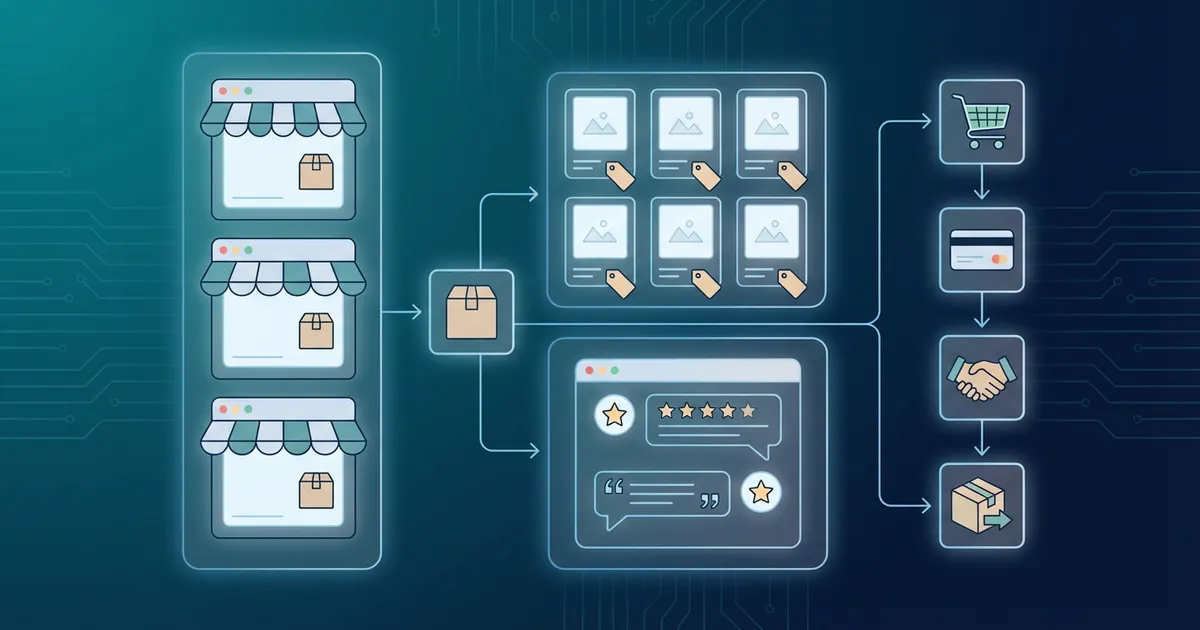
A marketplace platform connects suppliers and buyers in one central location, but the technical and organisational challenges go far beyond building a simple catalogue with search functionality. Building trust between unknown parties, implementing secure payment settlement with escrow functionality, designing fair commission structures, and maintaining the quality of listings: these are core challenges that every marketplace model must solve before it can grow. Standard e-commerce software is not designed for the complexity of two-sided platforms where multiple sellers each manage their own products, prices, and terms, while buyers expect a consistent and trustworthy purchasing process. Moreover, every new marketplace faces the classic chicken-and-egg problem: without suppliers there are no buyers, and without buyers suppliers will not register. The technical architecture must therefore not only be functionally robust but also facilitate growth through invitation flows, referral mechanisms, and SEO-optimised profile pages. MG Software builds marketplace platforms that find the right balance between ease of use for suppliers and buyers, secure transactions, and a scalable architecture ready for growth. We have built platforms for the construction sector, industrial trade, and freelance services. Below we present three examples from these sectors, each with a different revenue model, different audiences, and measurable results.
Skilled trades marketplace for the construction sector
A construction industry association wanted to launch a platform where contractors and project owners can find and hire skilled professionals for projects ranging from small jobs to major renovations. Finding reliable tradespeople was a recurring problem in the sector: project owners had no central overview of available professionals and relied on word-of-mouth recommendations. The platform needed to filter professionals by trade, availability, region, and certifications, while simultaneously building trust between unknown parties. We built a marketplace with comprehensive profile pages for specialists including portfolio with photos of previous work, reviews from former clients, and verification of business registration and relevant industry certificates. Project owners post a job with description, location, and budget, after which the matching algorithm selects suitable specialists based on trade, availability, and region and sends them a notification. Specialists can then submit a quote. Upon completion, both parties leave a review that strengthens trust on the platform. An escrow payment system holds the agreed amount until the project owner approves the work, protecting both parties. In the first three months, 450 specialists registered and 120 successful matches were completed.
- Profile pages with portfolio, client reviews, and verified certifications per specialist
- Matching algorithm that suggests specialists based on trade, availability, and region
- Escrow payment system that holds funds until the project owner approves the completed work
- Commission model with automatic settlement and monthly payouts to specialists
- Result: 450 registered specialists and 120 successful matches in the first three months
- Business registration verification via API and automatic certificate expiration monitoring
B2B trading platform for industrial parts
A technical trading company wanted to set up an online marketplace where manufacturers and buyers of industrial parts can trade directly, bypassing traditional distributor chains. The procurement process in this sector was time-consuming: buyers had to individually contact suppliers for prices and delivery times, and comparing quotes happened manually in spreadsheets. The platform needed to support complex product specifications with filterable technical parameters, volume-based tiered pricing, and RFQ functionality (Request for Quotation) for custom parts that do not fit in a standard catalogue. We developed a B2B marketplace with detailed product catalogues per supplier including technical datasheets, filter options on specifications such as material, tolerance, and surface treatment, and an integrated RFQ system allowing buyers to send quote requests to multiple suppliers simultaneously. The platform automatically generates comparison overviews of received quotes in a clear matrix of price, delivery time, and conditions. A supplier quality rating system based on delivery time, product quality, and communication helps buyers select reliable partners. Average procurement time per order decreased from five days to eight hours.
- Detailed product catalogues with technical specifications and filter options per parameter
- RFQ system allowing buyers to send quote requests to multiple suppliers simultaneously
- Automatic quote comparison with clear matrix of price, delivery time, and conditions
- Supplier rating system based on delivery time, quality, and communication
- Result: average procurement time per order decreased from five days to eight hours
- Invoice integration with standard payment terms and automatic reminders
Services marketplace with escrow payments
A startup wanted to build a platform where freelance professionals offer their services to SMEs: from graphic design and web development to bookkeeping and legal advice. The trust problem between unknown parties was the biggest challenge, especially at higher amounts where clients hesitated to pay upfront and freelancers were reluctant to start without payment guarantees. Existing freelance platforms were too internationally focused and lacked functionality specific to the Dutch market, such as iDIN verification and business registration linking. We built a marketplace with an escrow payment system where funds are only released after client approval, protecting both parties. The platform supports milestone payments for larger projects, so freelancers receive interim payments upon completion of agreed deliverables. An integrated messaging system keeps all communication centralised and serves as evidence in any disputes. The platform charges an 8 percent commission on transactions and offers premium profiles and sponsored placements as additional revenue streams for freelancers seeking extra visibility. Within six months, 1,200 freelancers had registered and transaction volume reached 180,000 euros.
- Escrow payment system with release upon client approval of delivered work
- Milestone payments for larger projects with interim payouts to freelancers
- Integrated messaging system that centrally logs all communication for dispute resolution
- Premium profiles and sponsored placements as additional revenue stream alongside commissions
- Result: 1,200 freelancers registered and a transaction volume of 180,000 euros in six months
- Automatic identity verification via iDIN and business registration linking for corporate accounts
Key takeaways
- Two-sided marketplaces require specific functionality for both suppliers and buyers with separate dashboards and workflows.
- Escrow payment systems are essential for building trust between unknown parties on a platform.
- A robust rating system encourages quality and helps users select reliable counterparties.
- RFQ functionality is indispensable for B2B marketplaces where custom pricing and bulk volumes play a role.
- Commission models must be carefully calibrated to the transaction value to be both attractive and profitable.
- Identity and certification verification increases platform credibility and reduces risk for users.
How MG Software can help
MG Software designs and builds marketplace platforms that handle the complexity of two-sided markets. We start every marketplace project with an analysis of your target audiences, revenue model, and the core mechanisms that enable trust and growth. From matching algorithms that connect the right suppliers with the right buyers and escrow payment systems that protect both parties to commission structures that are attractive yet profitable and rating systems that encourage quality: we build all the components needed to launch a trustworthy and scalable platform. We also help solve the chicken-and-egg problem by building in technical growth mechanisms such as referral programmes, invitation flows, and SEO-optimised profile pages that generate organic traffic. The timeline for a marketplace project ranges from ten to twenty weeks, and we recommend starting with an MVP and iterating based on user feedback. After launch, we offer maintenance, monitoring, and continued development so your platform can grow alongside your market.
Frequently asked questions
What does it cost to build a marketplace platform?
A basic marketplace with profiles, search functionality, and payment settlement starts from approximately 20,000 euros. Platforms with escrow payments, RFQ systems, matching algorithms, and extensive rating systems range between 35,000 and 75,000 euros. The investment depends on the complexity of the revenue model, the number of user roles, and the desired integrations. We always start with a thorough scope analysis to provide a reliable quote.
How does an escrow payment system work?
With an escrow payment, the buyer deposits the amount into an intermediary account managed by the platform. The money is only released to the seller after the buyer confirms that the product or service has been delivered satisfactorily. In case of disputes, the platform acts as mediator. We implement this via Mollie or Stripe Connect.
How do you attract both suppliers and buyers?
We build the platform, but the go-to-market strategy is collaborative. Technically, we support this with SEO-optimised profile pages, invitation flows for suppliers, and referral programmes. Many successful platforms solve the classic chicken-and-egg problem by first attracting a critical mass of suppliers before activating the demand side.
How is quality maintained on the platform?
We implement multiple quality mechanisms: identity and certification verification at registration, a rating system after each transaction, automatic flagging of profiles with repeatedly low scores, and a reporting function for abuse. Platform administrators receive dashboards with quality metrics.
Which commission model works best?
The optimal commission model depends on your market. For services, commissions of 5% to 15% per transaction are common. For products, this is lower, around 3% to 8%. We can also implement hybrid models with fixed monthly fees for suppliers combined with a lower transaction commission.
Can we manage the platform ourselves after delivery?
Yes, we deliver a comprehensive admin dashboard where your team manages users, transactions, disputes, and platform settings. The dashboard includes reports on transaction volume, user growth, commission revenue, and quality metrics. You can also moderate users, approve content, and adjust platform configurations. We train your admin team at delivery and provide comprehensive documentation.
How long does it take to build a marketplace?
An MVP version with core functionality can be launched in ten to twelve weeks. A fully equipped platform with escrow payments, matching algorithms, rating systems, and extensive admin tools typically takes fourteen to twenty weeks. We recommend starting with an MVP and iterating based on real user feedback, so you invest in functionality that is proven to meet actual user needs.
Want to build something like this?
From concept to launch. We deliver custom software that works for your customers and team.
 Discuss your project