
Sentry vs Datadog in 2026: Real Cost at 10M Events, Error Depth and When Teams Run Both
Sentry starts at $26/month, Datadog at $15 per host. We run both in production for 30+ clients and compare actual cost at 10M events/month, error tracking depth, APM features and self-hosting options.
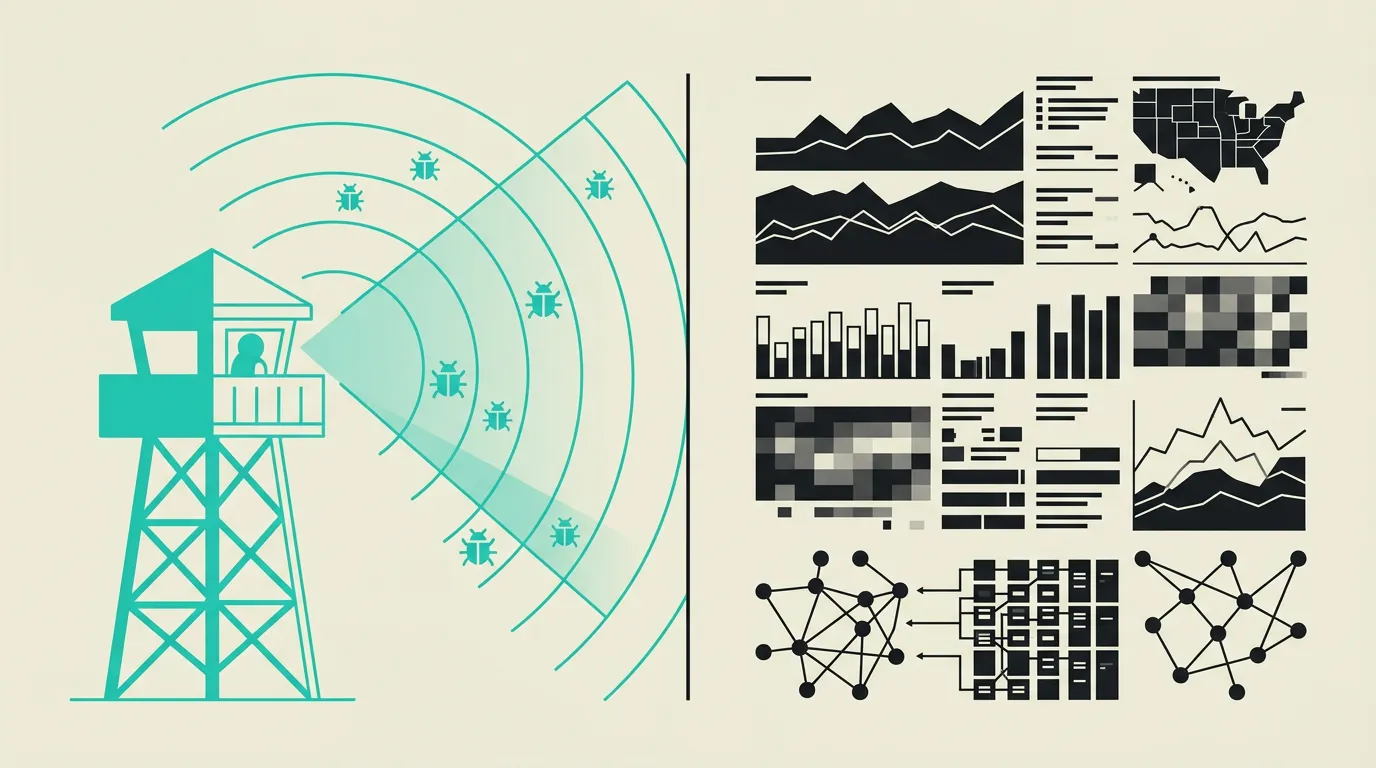
Sentry and Datadog complement each other more than they directly compete, although their functionality increasingly overlaps in performance monitoring and distributed tracing. Sentry is the undisputed leader in error tracking: no other platform offers comparable depth in debugging application errors with session replay that shows exactly what users did, breadcrumbs that document the path to the error, and intelligent issue grouping that bundles thousands of identical errors together. Datadog provides the full observability picture: from server metrics and container monitoring to log management and distributed traces across microservices. Many organizations in 2026 use both platforms: Sentry for application-level error tracking and debugging, and Datadog for infrastructure monitoring and log management. Your choice depends on whether you primarily need to find and fix errors in application code or require full end-to-end observability across your entire stack.
Background
Modern web applications require both detailed application-level error tracking and broad infrastructure monitoring to quickly identify and resolve production incidents. Most teams must choose where to allocate their monitoring budget, as combining multiple platforms can drive costs up significantly. Sentry and Datadog are functionally complementary, but the growing overlap in performance monitoring and distributed tracing makes it increasingly important to deliberately decide which platform receives your primary investment. In 2026, we see a clear trend where development teams choose Sentry for its unmatched error tracking depth, while DevOps and platform teams prefer Datadog for the broad observability across the entire infrastructure stack.
Sentry
The leading error tracking and performance monitoring platform with an open-source core, used by over 100,000 organizations including Disney, Microsoft, and Cloudflare for finding and resolving application errors. Sentry provides real-time error tracking with detailed stack traces and breadcrumbs, session replay for visually reproducing exactly what users did when an error occurred, performance monitoring with distributed tracing across services, release health tracking to measure the impact of new deployments, and a powerful alerting engine with Slack, PagerDuty, and webhook integrations. The platform integrates with over 100 frameworks and languages and is particularly popular among frontend and full-stack developers thanks to official SDKs for React, Next.js, Vue, Angular, and Node.js.
Datadog
A comprehensive observability platform covering the full monitoring spectrum, used by over 26,000 organizations for end-to-end visibility into their applications and infrastructure. Datadog offers Application Performance Monitoring (APM) with distributed tracing, log management with intelligent indexing and search capabilities, infrastructure monitoring for servers, containers, and cloud services, real-time metrics dashboards with custom alerting, synthetic monitoring for proactive availability checks, and security monitoring with threat detection. The platform is designed for DevOps teams and SREs needing complete observability across their entire infrastructure and application stack from a single unified dashboard.
What are the key differences between Sentry and Datadog?
| Feature | Sentry | Datadog |
|---|---|---|
| Focus | Error tracking and performance monitoring with unmatched depth in application errors and debugging | Full-stack observability: APM, logs, infrastructure, metrics, and security monitoring in one platform |
| Error tracking | Best-in-class: detailed stack traces, breadcrumbs, session replay, intelligent issue grouping and ownership | Error tracking available as part of APM but less deep and less specialized than Sentry for debugging |
| Infrastructure | Limited to the application layer; no server metrics, container monitoring, or cloud infrastructure monitoring | Extensive: server metrics, container monitoring, Kubernetes observability, cloud integrations for AWS/GCP/Azure |
| Log management | No built-in log management functionality; this falls outside the platform's core focus area | Full log management with intelligent indexing, full-text search, and log-to-trace correlation for debugging |
| Open-source | Open-source core fully self-hostable via Docker, with a paid cloud version for managed hosting | Fully proprietary SaaS platform without self-hosting option or open-source components available |
| Pricing | Generous free tier with 5,000 errors/month, Team plan from $26/month with predictable pricing model | Free 14-day trial, then per host/GB/event per product; can quickly scale to thousands of euros monthly |
| Session replay | Built-in session replay showing exactly what the user did when an error occurred, essential for debugging | Session replay available as separate product (RUM) but less tightly integrated with error tracking than Sentry |
| Alerting | Smart alerting with issue grouping, ownership rules, Slack/PagerDuty integrations, and escalation policies | Extensive alerting across all products with monitors, composites, anomaly detection, and on-call management |
When to choose which?
Choose Sentry when...
Choose Sentry when fast error resolution in your application code is the highest priority and you need detailed stack traces, breadcrumbs, and session replay to efficiently reproduce and fix bugs. Sentry is the right choice when your budget is limited and the generous free plan of 5,000 errors per month is sufficient to get started, when you want to track release health to measure the impact of deployments, or when you value an open-source solution that you can optionally self-host for complete data sovereignty and control.
Choose Datadog when...
Choose Datadog when you need full end-to-end observability across infrastructure, applications, and logs from a centralized platform. Datadog is the right choice when your DevOps team manages complex microservice architectures with Kubernetes, when correlating logs, metrics, and distributed traces is essential for diagnosing production incidents, or when you need proactive monitoring via synthetic tests and automated anomaly detection for SLA enforcement. Also choose Datadog when security monitoring and compliance reporting is a requirement for your organization.
What is the verdict on Sentry vs Datadog?
Sentry and Datadog complement each other more than they directly compete, although their functionality increasingly overlaps in performance monitoring and distributed tracing. Sentry is the undisputed leader in error tracking: no other platform offers comparable depth in debugging application errors with session replay that shows exactly what users did, breadcrumbs that document the path to the error, and intelligent issue grouping that bundles thousands of identical errors together. Datadog provides the full observability picture: from server metrics and container monitoring to log management and distributed traces across microservices. Many organizations in 2026 use both platforms: Sentry for application-level error tracking and debugging, and Datadog for infrastructure monitoring and log management. Your choice depends on whether you primarily need to find and fix errors in application code or require full end-to-end observability across your entire stack.
Which option does MG Software recommend?
At MG Software, we use Sentry as our primary error tracking platform for every project we build. The deep error context with detailed stack traces, session replay that enables us to visually reproduce bugs, and the seamless integration via the official @sentry/nextjs SDK with our Next.js/React ecosystem make Sentry indispensable for quickly finding and resolving production bugs. The open-source nature aligns with our preference for transparent tooling whose source code we can inspect. For clients with complex infrastructure managing servers, Kubernetes clusters, or multi-cloud deployments, we combine Sentry with Datadog or Grafana Stack for infrastructure monitoring and log management. This combination delivers the best of both worlds: superior error tracking for developers and full observability for DevOps teams.
Migrating: what to consider?
Moving from Sentry to Datadog for error tracking involves replacing Sentry SDKs with Datadog APM agents in your applications. Datadog's error tracking is less granular than Sentry's, so evaluate beforehand whether you lose critical debugging context such as session replay, breadcrumbs, and intelligent issue grouping. Many teams keep Sentry alongside Datadog rather than fully replacing it, because Sentry's specialized error tracking cannot be fully replicated in Datadog. When migrating from Datadog to Sentry, you focus only on error tracking; infrastructure monitoring must then be set up via an alternative platform such as Grafana Stack.
Frequently asked questions
Can I use Sentry and Datadog together?
Yes, that is a common and recommended combination for organizations with both development and DevOps teams. Sentry excels at error tracking at the application level with session replay, breadcrumbs, and issue grouping, while Datadog handles infrastructure monitoring, log management, and distributed tracing across microservices. Both platforms offer integrations to exchange data. Keep in mind the combined costs and establish clear agreements about which platform is responsible for which monitoring use case to avoid confusion.
Is self-hosted Sentry a good alternative?
Sentry can be self-hosted via Docker Compose, providing full control over your data and eliminating monthly costs. However, this requires significant operational management: PostgreSQL and Redis database maintenance, Kafka for event processing, scaling as usage grows, security updates, and monitoring Sentry itself. The system requirements are substantial: minimum 8 GB RAM and 20 GB storage for a small installation. For most teams, the cloud version with the free Developer plan (5,000 errors per month) is the best and simplest starting position.
How expensive does Datadog get at scale?
Datadog can become considerably expensive at scale because each feature has a separate pricing model. Infrastructure monitoring charges per host per month, APM is based on ingested spans, log management on indexed volume per GB, and RUM on sessions. It is not uncommon for mid-sized companies with 50+ hosts to pay €5,000-20,000+ per month. Enterprise contracts offer discounts but require annual commitments. Carefully evaluate which Datadog features you actually need and consider alternatives like Grafana Stack for specific monitoring needs.
Which platform is better for a Next.js application?
Sentry is the clearly better choice for Next.js applications. It offers an official @sentry/nextjs SDK with automatic instrumentation of server components, API routes, middleware, and client-side errors. Session replay works seamlessly in the browser and shows exactly what users did when an error occurred. Release tracking integrates with your CI/CD pipeline. Datadog offers APM for Node.js but lacks the deep Next.js-specific integration, server component tracing, and specialized frontend debugging capabilities that Sentry provides.
How do the free tiers compare?
Sentry offers a free Developer plan with 5,000 errors per month, 1 GB of attachments, and basic session replay, which is plenty for small to medium projects. Datadog offers a 14-day free trial after which each product must be paid for separately; there is no permanent free tier for production use. For startups and small teams, Sentry's free tier is significantly more generous and provides a sustainable foundation to grow with. Additionally, you can fully self-host Sentry for free via Docker for unlimited usage.
What is the difference between Sentry and Datadog for performance monitoring?
Sentry's performance monitoring focuses on the application layer: transactions, database queries, API calls, and frontend rendering with direct linking to errors and session replay. Datadog's APM offers broader distributed tracing across microservices, infrastructure correlation with host metrics, and log-to-trace linking for end-to-end debugging. For purely application-level performance profiling, Sentry is more focused and easier to interpret. For complex distributed systems with dozens of microservices, Datadog's APM provides more context across the entire request chain.
Which monitoring platform does MG Software recommend?
We use Sentry as our standard error tracking platform for all projects. The @sentry/nextjs SDK, session replay, and release health tracking are indispensable in our daily workflow for quickly finding and fixing bugs. For clients with complex infrastructure, we combine Sentry with Datadog or Grafana Stack. For most web applications and SaaS products, Sentry as a standalone platform is sufficient for effective error monitoring. For larger organizations with dedicated DevOps teams, we recommend the Sentry plus Datadog combination for complete observability.
We build production software with this stack
Our developers work with these tools daily for clients across Europe. Price estimate within 24 hours.
 Discuss your project