

ai data
Text-to-Speech (TTS) Explained: How Neural Speech Synthesis Works in Practice
Text-to-speech converts written text into natural-sounding speech using neural networks. Learn how modern TTS pipelines work, which providers like ElevenLabs and OpenAI TTS lead the market, and where the technology creates the most business value.
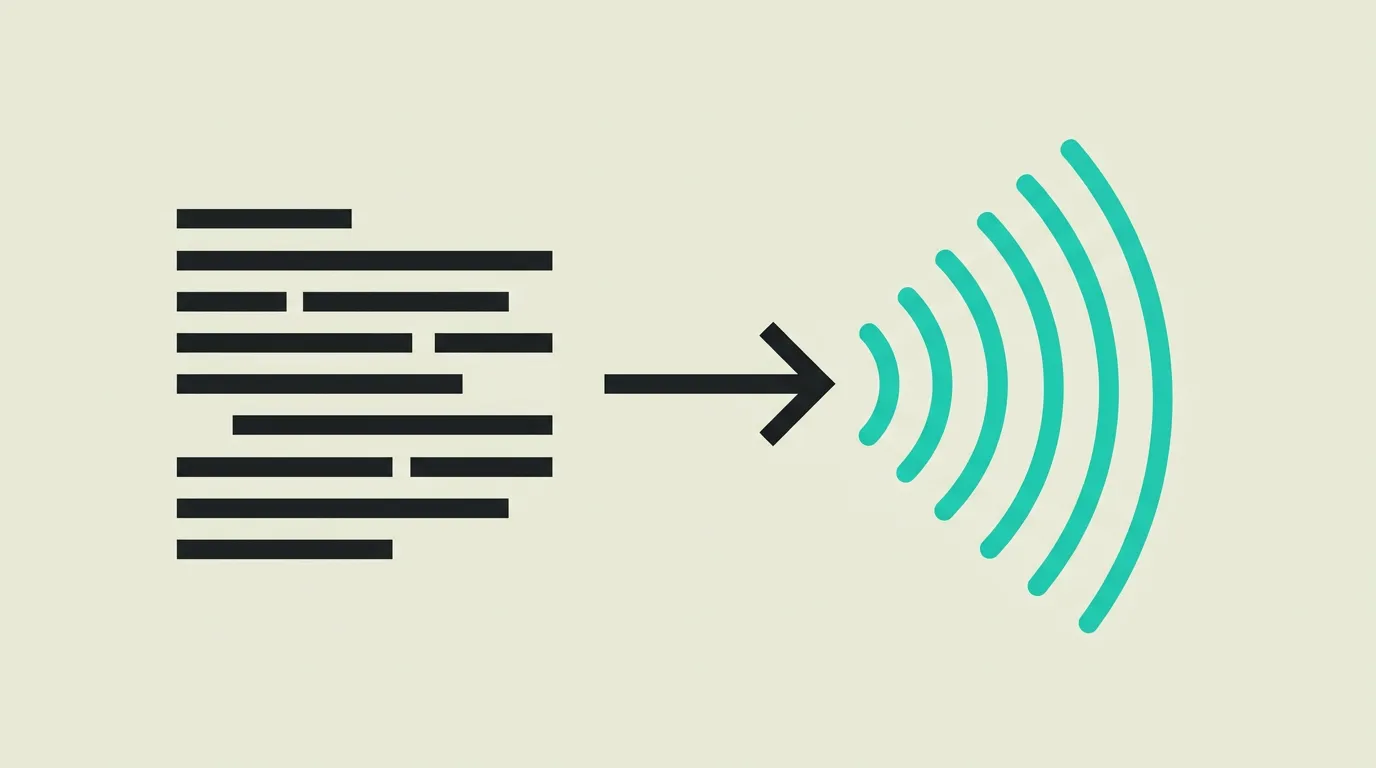
What is Text-to-Speech (TTS) Explained: How Neural Speech Synthesis Works in Practice?
Text-to-speech (TTS) is technology that converts written text into spoken audio through computational speech synthesis. Modern TTS systems use deep neural networks to produce voices that are nearly indistinguishable from human speech, with natural intonation, rhythm, and emotional expression. The technology is essential for digital accessibility, voice-first interfaces, and automated audio content production at scale.
How does Text-to-Speech (TTS) Explained: How Neural Speech Synthesis Works in Practice work technically?
A modern TTS pipeline consists of multiple stages. First, the input text is normalized: abbreviations, numbers, dates, and special characters are converted to their spoken form. Next, a prosody model generates the intonation, stress, pauses, and speaking rate appropriate for the context. Finally, a neural vocoder (such as WaveNet, WaveRNN, or HiFi-GAN) converts the acoustic representation into an audible waveform. Leading providers in 2026 include ElevenLabs (known for expressive, clonable voices), OpenAI TTS (integrated into their API ecosystem), Google Cloud Text-to-Speech (offering WaveNet and Neural2 voices), Amazon Polly (broad language coverage), and Microsoft Azure Speech. Output formats typically include MP3, WAV, or OGG, with support for real-time streaming via WebSocket or Server-Sent Events for low-latency applications. SSML (Speech Synthesis Markup Language) provides granular control over pronunciation, pauses, emphasis, and speaking rate. Voice cloning technology enables replicating a specific voice from just a few minutes of audio samples, making personalized brand voices possible but also raising ethical concerns around deepfake misuse and identity fraud. Latency is a critical consideration for real-time applications: streaming TTS APIs begin generating audio while text is still being processed, delivering the first audio chunks within 200 milliseconds in optimal conditions. Beyond the traditional text-to-mel-spectrogram-to-vocoder pipeline, end-to-end architectures like VITS and Bark are gaining traction in 2026. These models generate audio directly from text in a single forward pass, reducing latency and simplifying deployment. Quality is measured using the Mean Opinion Score (MOS), a subjective 1-to-5 scale where human speech typically scores around 4.5; the best neural TTS models achieve MOS scores between 4.2 and 4.4 for English. Sample rates range from 16 kHz (telephone quality) to 48 kHz (studio quality), with 24 kHz being a practical default for most web applications. Multi-speaker models support dozens of distinct voices from a single checkpoint by accepting a speaker embedding as input parameter. Emotion conditioning allows controlling whether the speaker sounds cheerful, serious, or empathetic by passing an emotional state vector as a separate signal during inference.
How does MG Software apply Text-to-Speech (TTS) Explained: How Neural Speech Synthesis Works in Practice in practice?
At MG Software, we integrate TTS where clients need voice interfaces or accessible content experiences. We select providers based on voice quality, language support (particularly Dutch and English), latency characteristics, and cost per character. For real-time applications, we use streaming TTS APIs that generate audio concurrently with text processing. We implement SSML markup for fine-grained control over pronunciation and timing, and advise clients on the optimal balance between speech quality and cost based on their expected volume and specific use case requirements. We cache frequently used audio fragments such as welcome messages and standard menu options to reduce API costs and minimize response times during high-traffic periods. For mission-critical applications, we configure fallback providers to maintain voice functionality during outages. We monitor pronunciation quality through random sampling and user feedback loops, and run A/B tests to determine which voice selection and speaking rate produce the highest user satisfaction scores.
Why does Text-to-Speech (TTS) Explained: How Neural Speech Synthesis Works in Practice matter?
Text-to-speech makes digital content accessible to visually impaired users and extends application reach to audiences who prefer audio consumption. For SaaS companies, TTS unlocks voice-first experiences that measurably increase engagement and retention. In customer service, TTS lowers the barrier to AI-powered phone support, keeping businesses reachable outside office hours. The technology has evolved rapidly: where TTS sounded robotic just a few years ago, modern neural voices are virtually indistinguishable from human speech, which has dramatically increased end-user acceptance and opened new product categories. The global speech synthesis market is growing at over 14 percent annually, driven by voice commerce, smart speakers, and audio-first content consumption. Organizations that invest in speech technology early build a competitive advantage that becomes difficult to replicate once users develop expectations for voice-first interactions in their daily workflows.
Common mistakes with Text-to-Speech (TTS) Explained: How Neural Speech Synthesis Works in Practice
Many teams assume any TTS engine sounds natural enough for production deployment. In practice, budget or outdated engines produce robotic output that erodes user trust and undermines the application experience. SSML is frequently ignored, leaving pronunciation, pauses, and emphasis unoptimized and resulting in speech that sounds flat or unnatural. Another common error is not testing TTS output in the target language: models that produce excellent English may perform poorly in other languages, with incorrect stress patterns and unnatural intonation that makes the output distracting rather than helpful. Teams also underestimate API rate limits: during unexpected traffic spikes, the TTS provider may throttle or reject requests if no caching or queuing mechanism is in place. Audio quality is rarely tested across different devices and speakers, even though voices that sound clear through headphones may distort through phone speakers or low-quality laptop microphones.
What are some examples of Text-to-Speech (TTS) Explained: How Neural Speech Synthesis Works in Practice?
- An e-learning platform that reads course content aloud for visually impaired students using a natural-sounding voice, with SSML controlling pronunciation of technical terms and adding pauses after key concepts for better comprehension. The platform saw a 35 percent increase in course completion rates among visually impaired students after introducing TTS, and offers multiple voice options so learners can choose their preferred narrator.
- A voice assistant that delivers personalized morning news briefings with adjustable speaking speed and voice preference, enabling users to listen hands-free during their commute. The assistant aggregates articles from selected RSS feeds, generates concise summaries via an LLM, and converts them to audio in under three seconds using streaming TTS with cached intro segments.
- A customer service chatbot with speech output available via phone, answering frequently asked questions in natural language so the call center remains accessible outside business hours without additional staff.
- A podcast platform that automatically converts written blog articles into audio episodes with a consistent brand voice, making content accessible to audiences who prefer listening over reading. Episodes are enriched with auto-generated chapter markers and distributed to major podcast directories, increasing content reach by 45 percent compared to text-only publication.
- A navigation application that reads route instructions in the local language with correct pronunciation of street names and place names, powered by a TTS model specifically fine-tuned on geographic terminology. The app automatically adjusts speaking pace based on driving speed and repeats critical turn instructions as the driver approaches the exit, measurably improving navigation accuracy and road safety.
Related terms
Further reading
Frequently asked questions
What is the difference between TTS and speech recognition?
TTS (text-to-speech) converts written text into spoken audio. Speech recognition (STT, speech-to-text) does the reverse: it converts spoken words into written text. Both technologies are commonly combined in voice interfaces, where STT processes user input and TTS speaks the AI response, creating a natural conversational loop.
Are AI voices more natural than classic TTS?
Significantly so. Neural TTS models based on architectures like WaveNet and Tacotron produce speech with natural intonation, rhythm, and emotional nuance. Classic methods such as concatenative synthesis (stitching together recorded segments) or formant synthesis sound mechanical and monotone by comparison. The difference in user experience is large enough to measurably affect adoption rates of voice-enabled features.
Which TTS providers are available in 2026?
The leading providers include ElevenLabs (expressive, clonable voices), OpenAI TTS (integrated into their API ecosystem), Google Cloud Text-to-Speech (WaveNet and Neural2 voices), Amazon Polly (broad language support), and Microsoft Azure Speech. Each provider has strengths in specific languages, voice quality tiers, or pricing models. For applications requiring multiple languages, comparing provider quality per language is essential.
What is SSML and why does it matter for TTS?
SSML (Speech Synthesis Markup Language) is an XML-based markup that provides granular control over how text is spoken aloud. You can add pauses, adjust emphasis, specify pronunciation of abbreviations, control speaking rate, and even switch between voices within the same text. Without SSML, TTS output often sounds flat and mispronounces technical terms, acronyms, or proper nouns that deviate from standard language patterns.
How does voice cloning work in TTS?
Voice cloning replicates a specific voice from audio samples, sometimes requiring as little as 30 seconds of recorded speech. The model learns the unique characteristics of the voice (timbre, intonation patterns, rhythm) and can then speak arbitrary text in that voice. This technology is used for personalized brand voices and accessibility tools, but it also raises ethical concerns around deepfake misuse and identity fraud that require responsible usage policies.
How much does text-to-speech cost per character or per minute?
Pricing varies significantly across providers and voice quality tiers. Google Cloud TTS charges between 4 and 16 dollars per million characters depending on the voice type. OpenAI TTS costs approximately 15 dollars per million characters. ElevenLabs uses a credits-based pricing model. For high-volume applications processing more than 10 million characters per month, volume discounts are typically available. The cost per minute of generated audio generally falls between 0.01 and 0.10 dollars.
What latency should you expect from real-time TTS?
Streaming TTS APIs from major providers typically deliver the first audio chunk within 150 to 300 milliseconds, which is fast enough for real-time conversational applications. Non-streaming (batch) TTS processes the entire text before returning audio, resulting in higher latency that scales with text length. For voice assistants and phone-based systems, streaming is essential to maintain a natural conversational cadence without noticeable delays.
This concept in your system?
We work with this every day. In a one-hour conversation you know whether it is a portal, an integration or a rebuild.