
Logistics Tracking System Examples for Businesses
Three examples of custom logistics tracking systems: real-time fleet management with GPS tracking, warehouse management with barcode scanning, and last-mile delivery with multi-carrier integration. Including dashboards, alerts, and measurable operational improvements.
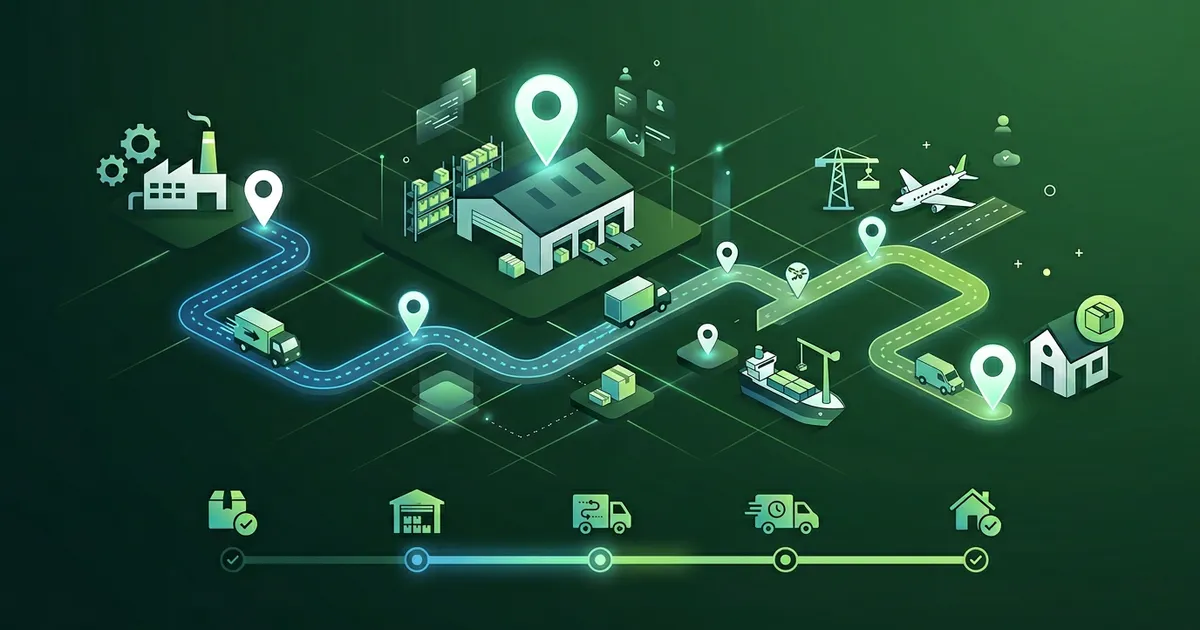
Visibility into the location and status of goods, vehicles, and shipments is crucial for logistics companies looking to optimise their operations and provide customers with a transparent experience. The logistics sector faces increasing pressure to operate faster, more efficiently, and more transparently, while supply chain complexity grows due to multiple carriers, various warehouses, and rising customer expectations around delivery times. Standard tracking solutions offer basic functionality such as a track-and-trace code, but fall short when you need to monitor specific KPIs, connect multiple systems from different providers, or proactively inform customers about delivery progress. Moreover, these standard solutions often lack the ability to combine data from GPS systems, warehouse management systems, and transport management systems into an integrated overview of your entire logistics operation. Custom logistics tracking systems make it possible to follow every link in the supply chain, from warehouse to final destination, with dashboards and alerts that show precisely the information your team and customers need. MG Software builds tracking solutions for transport companies, warehouses, and e-commerce businesses that need real-time visibility into their logistics chain. Below we share three concrete examples from our practice, each addressing a different logistics challenge with measurable improvements after implementation.
Real-time fleet management for a transport company
A transport company with 85 trucks and 120 drivers, operating across the Benelux and Germany, had no central overview of vehicle locations, driving times, and load status. Planners called drivers individually to check delivery status, which was time-consuming and regularly led to errors and miscommunication. Customers complained about the lack of transparency: they did not know when their delivery would arrive and had to call for status updates. We built a fleet management system that processes and visualises GPS data from all vehicles in real-time on an interactive map with traffic information. The system shows per vehicle the current location, planned route, estimated arrival time, and load status. When delays occur due to traffic or unforeseen circumstances, the system automatically calculates the impact on subsequent stops and informs both the planner and the customer via an automatic notification with an updated delivery window. Driving times are automatically recorded in compliance with European tachograph legislation and the system warns planners and drivers when driving and rest time limits are about to be exceeded, preventing fines. Planning efficiency increased by 28 percent and customer satisfaction with deliveries by 35 percent.
- Real-time GPS tracking of all vehicles with visualisation on an interactive map
- Automatic calculation of estimated arrival times with delay impact on subsequent stops
- Driving and rest time recording in compliance with tachograph legislation with automatic warnings
- Customer notifications with real-time tracking link and expected delivery time per shipment
- Result: planning efficiency increased by 28% and customer satisfaction with delivery by 35%
- Integration with TomTom Telematics for GPS data and the TMS for route planning
Warehouse management tracking system
A distribution centre with 8,000 square metres of floor space and 12,000 SKUs struggled to track the exact location of products within the warehouse. The company was growing rapidly and the manual processes that worked at a smaller scale were not keeping up. Staff spent an average of twenty minutes per order searching for items at locations that were not always up to date. Inventory discrepancies were only discovered during the monthly count, leading to backorders, delivery delays, and dissatisfied customers. We built a tracking system with barcode scanning that records every product movement: from inbound receipt and quality control through storage at the correct location to picking, packing, and shipping. The system optimises walking routes for pickers by calculating the most efficient sequence of locations based on the physical layout of the warehouse and the composition of the order. When discrepancies arise between registered and physical inventory, the system immediately generates a recount task prioritised by product turnover rate. Managers have real-time insight via a dashboard into picking speed, error rates, warehouse occupancy, and productivity per employee. Average search time per order dropped from 20 to 4 minutes and the error rate was reduced by 82 percent.
- Barcode scanning at every product movement for full traceability from inbound to dispatch
- Optimised walking routes for pickers based on location mapping and order clustering
- Automatic recount tasks when inventory discrepancies arise between system and physical counts
- Real-time dashboards with KPIs for picking speed, error rate, and warehouse occupancy
- Result: average search time per order dropped from 20 to 4 minutes, error rate reduced by 82%
- Integration with the WMS and ERP system for order data and inventory synchronisation
Last-mile delivery tracking for e-commerce
An e-commerce company shipping 600 parcels daily had no own delivery service and worked with three different carriers: PostNL for domestic shipments, DHL for international orders, and DPD for business customers. Customers received tracking information in three different formats via three different portals, causing confusion and a high volume of customer queries about delivery status. Nearly 30 percent of all customer service contacts concerned delivery questions the company could not efficiently answer because information was spread across three systems. We built a unified tracking solution that aggregates the tracking APIs of all three carriers into a single customer interface in the brand's corporate style. Customers receive a branded tracking page with real-time status updates, an expected delivery window that updates based on the latest scan, and the ability to change delivery address or time slot. The system automatically monitors anomalies such as delayed scans or unusual route changes and escalates to the customer service team before the customer contacts support. A management dashboard shows per carrier the performance on delivery time, damage rate, cost per parcel, and complaints, enabling the company to negotiate rates based on data. The result: 45 percent fewer customer queries about delivery status and a 12-point higher NPS score.
- Unified tracking interface aggregating APIs from multiple carriers into a branded customer experience
- Proactive customer notifications for status changes, delays, and delivery window confirmations
- Option for customers to change delivery address or time slot via the tracking page
- Automatic escalation to customer service for anomalous patterns such as delayed scans
- Result: 45% fewer customer queries about delivery status and 12-point higher NPS score
- Carrier performance dashboard with comparison on delivery time, damage rate, and costs
Key takeaways
- Real-time tracking of vehicles and shipments increases planning efficiency and reduces the number of phone-based status enquiries.
- Barcode scanning at every product movement in the warehouse drastically reduces search times and inventory discrepancies.
- A unified tracking experience for customers, regardless of the underlying carrier, improves brand perception.
- Proactive notifications about delays prevent customer queries and increase satisfaction.
- Dashboards with logistics KPIs give management the data to objectively evaluate carriers and processes.
- Integration with GPS, TMS, and WMS systems is essential for a complete view of the entire supply chain.
How MG Software can help
MG Software builds logistics tracking systems that provide real-time visibility into every link of your supply chain. We start every project with an analysis of your logistics processes, the systems you currently use, and the information needs of both your internal teams and your customers. From fleet management with GPS tracking and driving and rest time recording and warehouse tracking with barcode scanning and walking route optimisation to last-mile delivery monitoring with multi-carrier integration and proactive customer notifications: we build a solution that seamlessly integrates with your existing systems such as TMS, WMS, and ERP. Every tracking system is delivered with configurable dashboards showing the KPIs relevant to your operation, automatic alerts for anomalies, and customer-facing tracking interfaces in your brand style. The timeline for a logistics tracking project ranges from eight to fourteen weeks, depending on the number of integrations and the complexity of your operation. After delivery, we offer monitoring, maintenance, and continued development so the system can grow alongside your logistics needs.
Frequently asked questions
What does a custom logistics tracking system cost?
A basic tracking system with GPS visualisation and status updates starts from approximately 12,000 euros. More extensive systems with warehouse tracking, multi-carrier integration, route optimisation, and customer-facing portals range between 20,000 and 50,000 euros. The exact investment depends on the number of integrations, the complexity of your logistics operation, and the number of users. We always provide a no-obligation quote after an intake.
Can you integrate with our current GPS provider?
Yes, we build integrations with common GPS and telematics providers such as TomTom, Webfleet, Fleetboard, and Geotab. When your provider offers an API, we can process the data in real-time within the tracking system. For providers without an API, we develop alternative integration methods.
How does integration with multiple carriers work?
We connect the tracking APIs of your carriers to a unified data layer that normalises statuses into a standard format. This means your customer always sees the same tracking experience, regardless of which carrier delivers the parcel. We support PostNL, DHL, DPD, UPS, GLS, and others.
Can the system work offline in the warehouse?
Yes, we can equip the barcode scanning application with offline functionality so scans are stored locally when there is no WiFi connection. Once the connection is restored, all scans are automatically synchronised with the central system. This is particularly important in large warehouses with dead zones.
How are customers kept informed about their delivery?
Customers receive automatic notifications via email and optionally SMS at key status changes: shipped, in transit, delivery scheduled, and delivered. Each notification contains a link to a branded tracking page with real-time information and expected delivery time. The notifications are fully configurable in text, timing, and channel, and can be styled in your brand identity to ensure a consistent customer experience.
Do you also offer route optimisation?
Yes, we can integrate route optimisation based on addresses, time windows, and vehicle capacity. The system calculates the most efficient sequence of stops and takes real-time traffic information and road closures into account. This saves fuel, reduces CO2 emissions, and increases the number of deliveries per route. Routes are automatically recalculated when the delivery schedule changes.
How long does it take to build a tracking system?
A basic tracking system with GPS visualisation and a customer portal is operational in eight to ten weeks. More complex systems with warehouse tracking, multi-carrier integration, route optimisation, and extensive management dashboards take twelve to sixteen weeks. We work in sprints and deliver working versions along the way so you can test early and provide feedback that is directly incorporated.
Want to build something like this?
From concept to launch. We deliver custom software that works for your customers and team.
 Discuss your project