
CRM with Intelligent Lead Scoring That Prioritizes Revenue
Stop treating all leads equally. Build a CRM with automated lead scoring that ranks prospects based on behavior, demographics, and engagement so sales focuses on the hottest opportunities.
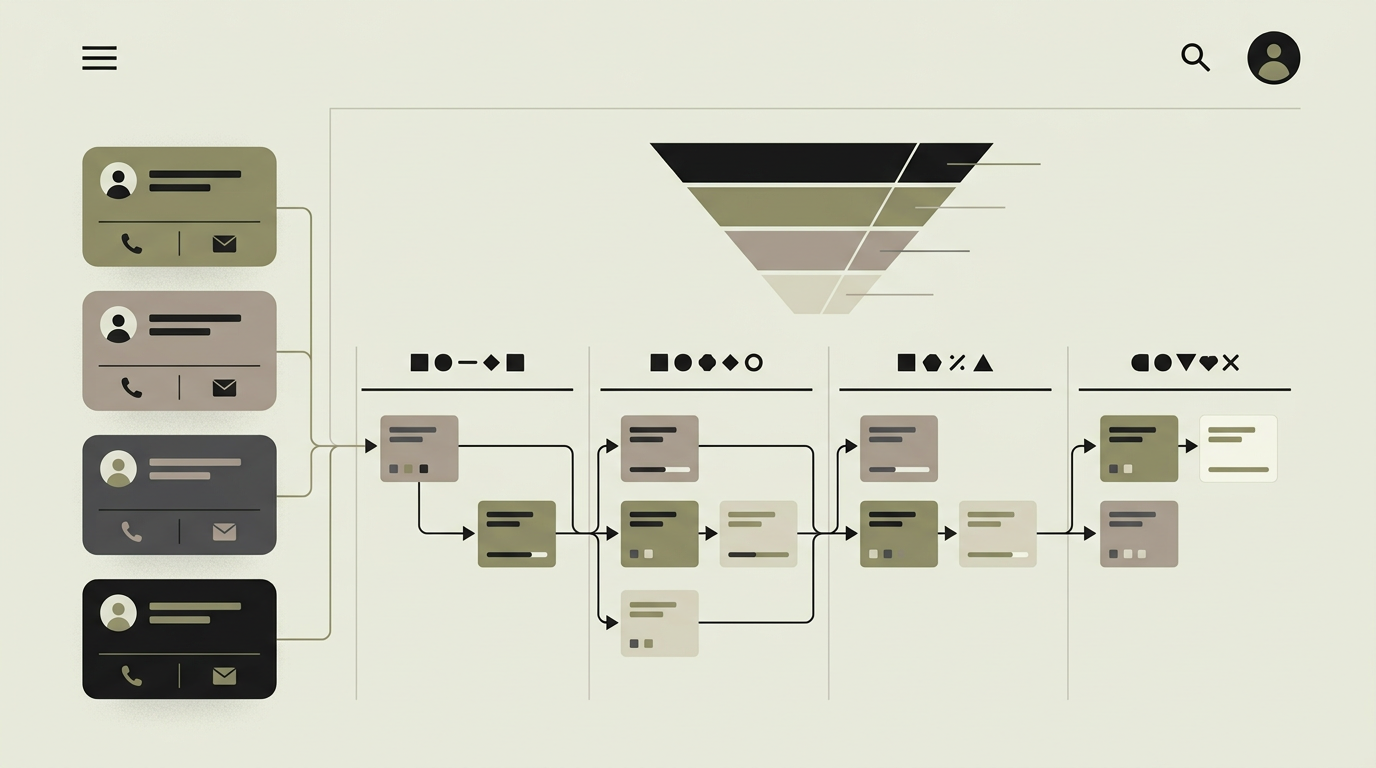
Sales teams waste enormous amounts of time pursuing leads that will never convert. Without a systematic way to prioritize, every inquiry gets the same follow-up energy, spreading the team thin across low-potential and high-potential prospects alike. Lead scoring solves this by assigning a numerical value to each lead based on how closely they match your ideal customer profile and how engaged they are with your brand. A marketing manager who visits your pricing page three times, downloads a case study, and works at a company in your target industry scores much higher than someone who opened a single newsletter. The sales team sees a ranked list and focuses their limited time on the prospects most likely to close. For B2B companies with longer sales cycles, this prioritization can meaningfully improve win rates and reduce the time from lead to revenue.
How does it work?
Lead scoring operates on two axes: fit score and engagement score. The fit score evaluates demographic and firmographic attributes such as job title, company size, industry, and location against your ideal customer profile. Each attribute match adds points. The engagement score tracks behavioral signals: website visits (especially high-intent pages like pricing and case studies), email opens and clicks, content downloads, webinar attendance, and form submissions. Each action is assigned a weighted score that decays over time (a pricing page visit today is worth more than one from three months ago). The two scores combine into a composite lead score that updates in real time as new data arrives. Leads crossing configurable thresholds trigger workflow actions: high-score leads are automatically routed to the appropriate sales rep with a priority flag; medium-score leads enter a nurture sequence; low-score leads remain in the marketing funnel. The scoring model is transparent and adjustable. Sales and marketing can review which factors contribute most to conversions and recalibrate weights accordingly. A feedback loop from closed-won and closed-lost deals continuously validates and refines the model. Historical data analysis during setup calibrates the initial weights, and A/B testing of different scoring models measures impact on conversion rates.
Capabilities
Dual-axis scoring (fit + engagement)
Separate scores for demographic fit and behavioral engagement combine into a composite lead rank that reflects both quality and intent.
Time-decay weighting
Recent interactions carry more weight than old ones, ensuring the score reflects current interest rather than historical activity.
Automated lead routing
Leads that cross score thresholds are automatically assigned to sales reps based on territory, industry, or round-robin rules.
Transparent scoring breakdown
Sales reps see exactly which factors contributed to a lead score, enabling informed and personalized outreach.
Model validation feedback loop
Closed-deal outcomes feed back into the scoring model to continuously improve prediction accuracy.
Integration options
Website analytics (GA4, Plausible)
Page visit data feeds into the engagement score, with extra weight for high-intent pages.
Email marketing (Mailchimp, ActiveCampaign)
Email engagement metrics (opens, clicks, replies) contribute behavioral signals to the lead score.
LinkedIn / enrichment APIs
Firmographic enrichment from LinkedIn or Clearbit fills in company size, industry, and role data for the fit score.
Implementation steps
- 1
Ideal customer profile definition
We work with sales and marketing to define the attributes and behaviors that characterize your best customers.
- 2
Scoring model design
Fit and engagement factors are assigned initial weights based on historical conversion data and domain expertise.
- 3
Data pipeline setup
Website tracking, email engagement, and enrichment sources are connected to feed real-time data into the scoring engine.
- 4
CRM integration and routing
Scores are surfaced in the CRM interface and automated routing rules are configured based on score thresholds.
- 5
Calibration and go-live
The model is validated against recent deals, weights are adjusted, and the system goes live with monitoring.
User experience
The CRM lead list defaults to score-descending order. Each lead card shows the composite score, a sparkline of recent engagement, and the top contributing factors. Color-coded badges (hot, warm, cold) make prioritization instant at a glance.
Technical stack
Security
Lead data is stored with access controls so sales reps only see leads assigned to them. Behavioral tracking respects cookie consent and GDPR requirements. Enrichment data is sourced from privacy-compliant providers.
Maintenance
Quarterly model recalibration based on deal outcomes, enrichment API maintenance, and scoring weight adjustments. Expect 3 to 6 hours monthly.
Frequently asked questions
Need this functionality in your product?
We build it the way your business actually needs, without unnecessary complexity.
Request a quoteRelated articles
Visual Pipeline Management for Your Custom CRM
See every deal at a glance. A visual pipeline with drag-and-drop stages, weighted forecasting, and activity tracking turns your CRM into a revenue operations center.
CRM with Email Automation for Smarter Nurturing
Nurture leads and retain customers with automated email sequences triggered by CRM events. Personalized, timely, and measurable without manual effort.
Deep Customer Analytics Powered by Your CRM Data
Go beyond basic contact records. Analyze customer behavior, lifetime value, churn risk, and engagement patterns with analytics built directly into your CRM.
Pipeline Tools That Match How Your Team Actually Sells
Your CRM should fit your sales process, not the other way around. We compare 6 CRM tools on pipeline management, automation, and reporting depth.