
Batch and Lot Tracking for Custom Inventory Solutions
Maintain full traceability from supplier to customer with batch-level tracking. Essential for food, pharma, and manufacturing businesses that must comply with recall regulations.
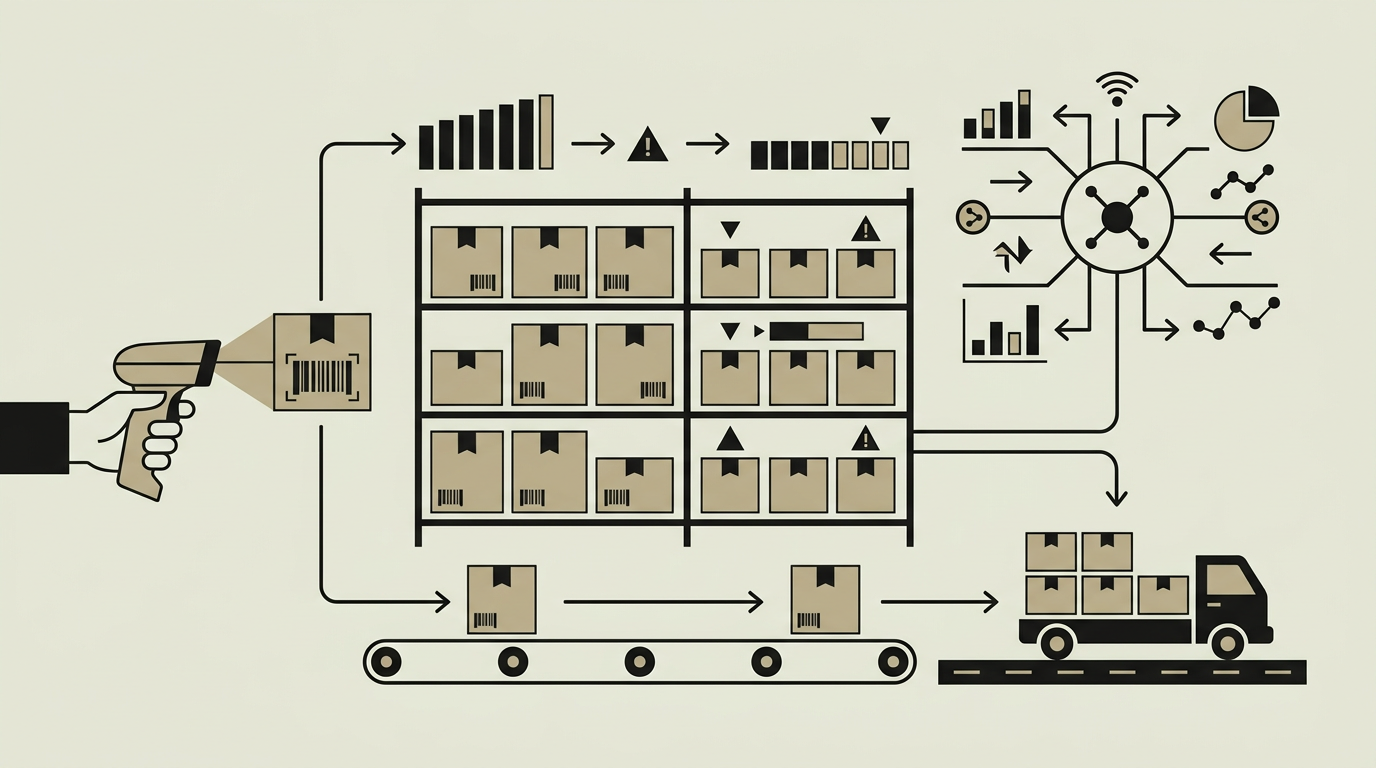
For companies dealing in perishable goods, pharmaceuticals, chemicals, or regulated manufactured products, knowing exactly which batch ended up where is not optional. Recall regulations require businesses to trace a defective lot all the way from the raw material supplier through production to the end customer, often within hours. Without proper batch tracking baked into the inventory system, this exercise devolves into a frantic manual search through paper records and spreadsheets. A custom batch-tracking module assigns a unique lot identifier to every inbound shipment, follows that identifier through storage, production, and distribution, and lets you pull a complete forward or reverse trace report with a single query. Beyond compliance, batch tracking enables FIFO and FEFO picking strategies that reduce waste and ensure customers always receive the freshest product.
How does it work?
During goods receipt, the operator assigns or scans a batch number for each incoming pallet or container. The system records the batch against the purchase order, supplier, production date, and expiry date (if applicable). From that point forward, every stock movement, whether a warehouse transfer, production consumption, or customer shipment, carries the batch identifier alongside the SKU and quantity. The picking engine can enforce FIFO (first in, first out) or FEFO (first expired, first out) strategies at the batch level, directing operators to the correct pallet automatically. If a quality issue arises, a forward-trace report shows every customer order that received items from the affected batch, while a reverse-trace report identifies every raw material batch that went into a finished product lot. The system stores batch genealogy data in a directed acyclic graph structure, making multi-level tracing efficient even for complex production environments where batches are split, merged, or transformed. Expiry management alerts notify warehouse staff when batches approach their best-before date, enabling timely markdowns or disposal.
Capabilities
Batch Assignment at Receipt
Automatically generates or accepts supplier-provided batch numbers during goods receipt, linking each lot to its origin, dates, and quality certificates.
FIFO / FEFO Picking
Directs warehouse operators to pick the oldest or nearest-to-expiry batch first, reducing waste and ensuring compliance with shelf-life requirements.
Forward & Reverse Tracing
Generates trace reports in seconds, showing every downstream recipient of a batch or every upstream ingredient in a finished product.
Expiry Alerting
Configurable notifications warn staff when batches are approaching their best-before or use-by dates, with escalation rules for critical items.
Batch Genealogy
Tracks split, merge, and transformation events so that multi-level production processes maintain unbroken traceability chains.
Integration options
Quality Management System
Links batch records to quality inspection results, certificates of analysis, and non-conformance reports from your QMS platform.
Regulatory Reporting
Exports batch trace data in formats required by NVWA, FDA, or EU food safety authorities, streamlining audit responses.
Production MES
Receives batch consumption events from manufacturing execution systems to maintain real-time genealogy as products move through production lines.
Implementation steps
- 1
Batch Policy Definition
Determine which product categories require batch tracking, what data must be captured per lot, and which picking strategy applies.
- 2
Receiving Workflow Update
Modify the goods receipt process to capture batch numbers, production dates, and expiry dates for every inbound shipment.
- 3
Genealogy Model Design
Design the directed acyclic graph schema that links raw material batches to intermediate and finished product lots.
- 4
Picking Engine Configuration
Configure the warehouse picking module to enforce FIFO or FEFO at the batch level and generate operator instructions accordingly.
- 5
Trace Reporting
Build forward-trace and reverse-trace report templates that meet your regulatory requirements and can be generated on demand.
- 6
Validation & Mock Recall
Conduct a simulated recall exercise to validate that the system can identify all affected customers within your target response time.
User experience
Operators see batch information surfaced contextually during every warehouse task. During picking, the handheld device highlights which pallet to pick and why (FIFO or FEFO). The trace report interface uses a visual timeline view that makes complex genealogy trees easy to understand even for non-technical quality staff.
Technical stack
Security
Batch records are immutable once confirmed. Any correction creates an auditable adjustment entry rather than overwriting the original. Access to trace reports can be restricted to quality and compliance roles to protect sensitive supply-chain data.
Maintenance
Regulatory requirements evolve, so trace report formats should be reviewed annually. Expiry alert thresholds need adjustment as product ranges change. Budget around 40 hours per year for ongoing maintenance.
Frequently asked questions
Need this functionality in your product?
We build it the way your business actually needs, without unnecessary complexity.
Request a quoteRelated articles
Built for retail inventory software with barcode scanning
Streamline warehouse operations with a tailor-made inventory system featuring real-time barcode scanning. Fast lookups, fewer errors, and seamless stock updates.
Automatic Reorder Points in Your Custom Inventory Platform
Never run out of critical stock again. Automated reorder triggers use demand forecasting and configurable thresholds to place purchase orders before it is too late.
Multi-Location Inventory Management Built to Your Specifications
Track stock across warehouses, stores, and transit points in a single custom-built system. Real-time visibility, inter-location transfers, and unified reporting.
Custom Software vs SaaS: What Is the Best Choice for Your Business?
Every growing organization faces this choice: custom software or SaaS? An honest analysis of cost, flexibility, ownership, and long-term scalability.