
Manufacturing Dashboards: From Shop Floor Data to Decisions
Monitor production output, machine uptime, and quality metrics in a single manufacturing dashboard connected to your OT and ERP systems.
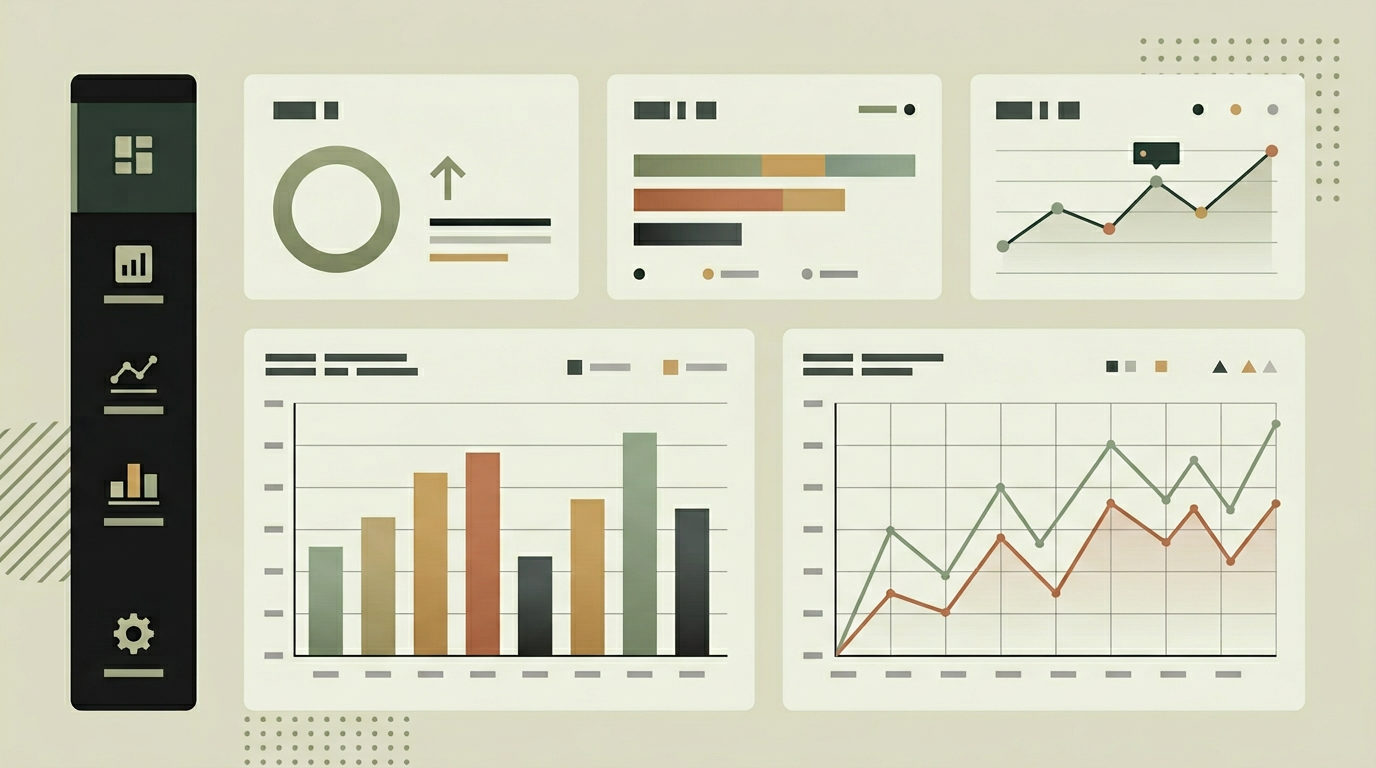
Manufacturing companies sit on a wealth of operational data generated by PLCs, SCADA systems, MES platforms, and ERP software. Yet bridging the gap between shop floor data and management visibility remains a challenge for most factories. Production managers walk the floor to gauge output, maintenance teams respond to breakdowns reactively, and quality issues are often caught too late in the process. The data exists, scattered across operational technology systems that were never designed for executive reporting, HMI screens that only operators see, and ERP modules that update in batches rather than real time. Connecting these disparate sources into a unified dashboard transforms how a manufacturing operation is managed, enabling proactive decisions based on actual machine performance, yield data, and process parameters rather than gut feeling and delayed reports.
Industry challenges
OEE measured manually on whiteboards or spreadsheets, creating inaccurate and outdated figures
Machine downtime causes identified only after the fact, preventing proactive maintenance
Quality defects caught at end-of-line inspection instead of at the source
Production planners lacking real-time output data to adjust schedules to actual throughput
Management dependent on weekly reports that reflect last week's reality, not today's
Our solution
Our manufacturing dashboards bridge the IT-OT gap by connecting directly to your PLCs, SCADA, and MES systems alongside your ERP and quality management software. Real-time production counters show actual output against planned targets, broken down by production line, shift, and product. OEE is calculated automatically from availability, performance, and quality data, displayed on large-format screens on the shop floor as well as in the management office. Machine status indicators show running, idle, changeover, and breakdown states with duration tracking, giving maintenance teams the data they need for targeted predictive maintenance. Quality panels track defect rates by product, line, and shift, with drill-down capability to identify whether issues correlate with specific material batches, operators, or machine settings. Energy consumption per unit produced helps identify wasteful processes. Alert rules notify the right person when a metric crosses a threshold: a maintenance engineer gets an SMS when a machine exceeds its vibration baseline, a quality lead gets an in-app notification when reject rates spike. Historical data supports root cause analysis and continuous improvement initiatives, with exportable reports for ISO audit preparation.
Key features
Automated OEE Calculation
Real-time OEE broken down into availability, performance, and quality components by line, shift, and product.
Machine Status Overview
Live status indicators for every machine showing running, idle, changeover, and fault states with timestamped event logs.
Quality Trend Analysis
Defect rates over time with drill-down by product, line, shift, and material batch to identify root causes quickly.
Production vs. Plan Comparison
Real-time output counters compared against planned production schedules, highlighting variance as it develops.
Energy Consumption per Unit
Per-product energy tracking to identify inefficient processes and support sustainability reporting.
Maintenance Alert Engine
Threshold-based alerts on machine parameters like vibration, temperature, and cycle time to enable condition-based maintenance.
Benefits
Higher Overall Equipment Effectiveness
Visibility into the specific losses dragging down OEE enables targeted improvement actions that deliver measurable results.
Reduced Unplanned Downtime
Condition-based monitoring catches emerging machine issues before they cause breakdowns, shifting from reactive to proactive maintenance.
Faster Quality Issue Resolution
Real-time defect tracking pinpoints when and where quality deviations started, cutting the time to identify root causes.
Better Production Planning
Actual throughput data feeds back into planning, so schedules reflect what the factory can realistically produce.
Approach & timeline
We conduct an OT assessment to catalog data sources (PLCs, sensors, SCADA, MES) and evaluate connectivity options. A phased approach starts with machine status and basic production counters on a single line, then expands to full OEE, quality integration, and predictive analytics across the factory.
Integrations
Practical scenario
A packaging manufacturer operating three production lines calculated OEE manually each morning using paper logs from the previous shift. After deploying their custom dashboard connected directly to machine PLCs, OEE was available in real time. The operations manager discovered that one line consistently lost 40 minutes per shift to changeover delays that nobody had quantified before. A focused SMED initiative reduced changeover time by 35%, directly increasing output capacity.
Compliance & regulations
Manufacturing dashboards collecting machine and operator data must comply with GDPR when personal data is involved. For regulated industries like food and pharma, we support traceability requirements aligned with IFS, BRC, and GMP standards.
Success metrics
- OEE improvement across monitored production lines
- Mean Time Between Failures (MTBF) trend
- First-pass yield improvement
- Time to detect and resolve quality deviations
Frequently asked questions
Want this solution built for you?
We develop custom software tailored to your industry, processes, and growth plans.
Request a price estimateRelated articles
Inventory Management Software Built for Manufacturing
Track raw materials, work-in-progress, and finished goods in one system designed around production workflows. Prevent line stoppages and reduce waste.
Keeping Manufacturing on Track with Custom Project Management
Manufacturing projects span engineering, procurement, production, and delivery. A custom PM platform coordinates every phase and keeps stakeholders aligned.
Real-Time Logistics Dashboards for Smarter Operations
Gain instant visibility into fleet performance, delivery status, and warehouse throughput with a custom logistics dashboard built around your KPIs.
Real-Time Data Dashboards Built for Decision Makers
Stop relying on yesterday's numbers. Build a custom dashboard that streams live data from your systems so every decision is backed by the latest metrics.