
Keeping Manufacturing on Track with Custom Project Management
Manufacturing projects span engineering, procurement, production, and delivery. A custom PM platform coordinates every phase and keeps stakeholders aligned.
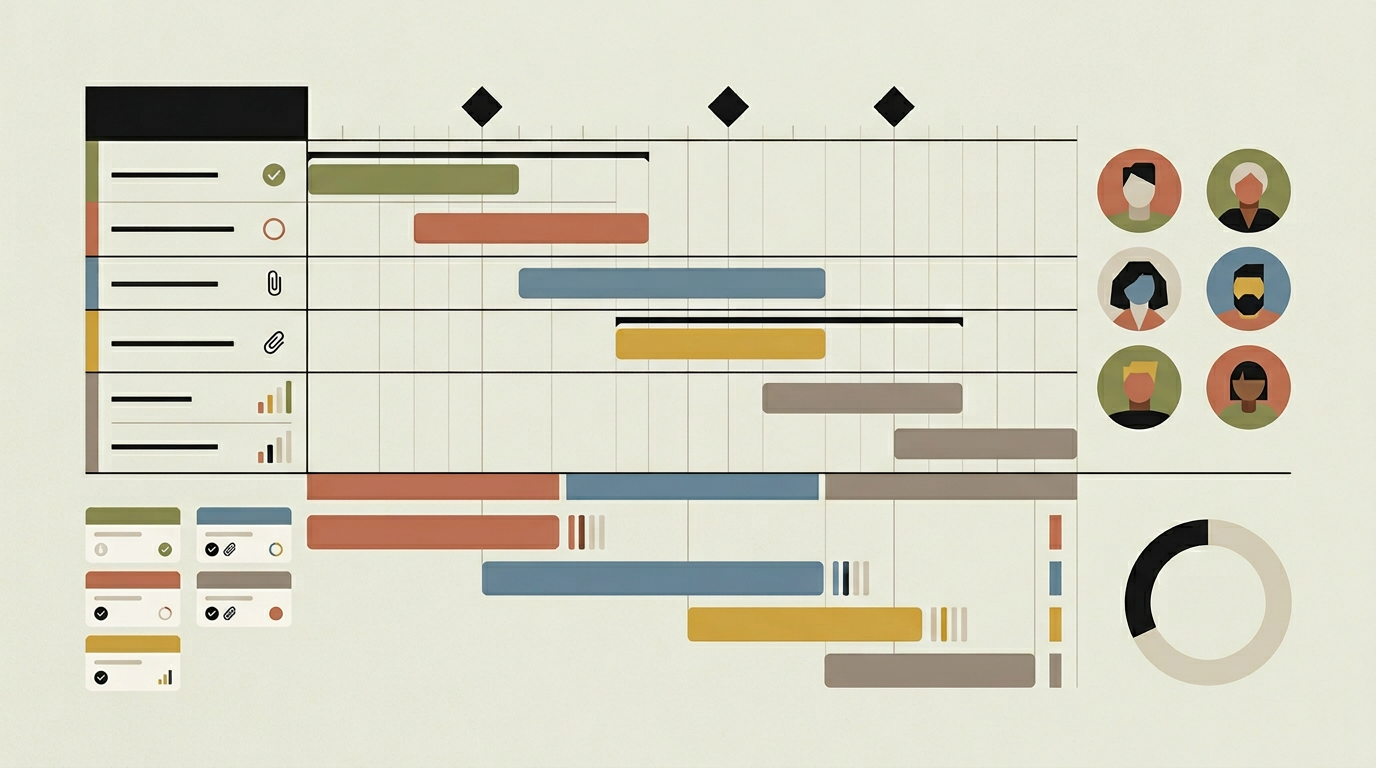
Manufacturing project management spans a broader scope than production planning alone. It encompasses the entire lifecycle from customer order through engineering, procurement, production scheduling, quality control, and delivery. Make-to-order and engineer-to-order manufacturers face particular complexity because each project may involve custom engineering, sourcing of specialized components with long lead times, and production runs that must be scheduled around existing commitments. Project costs are tracked against estimates, and deviations must be caught early before they compound. Communication between the engineering office, the shop floor, procurement, and the customer often breaks down because each department uses different tools and speaks a different operational language. Many manufacturing firms attempt to manage projects through a combination of ERP production modules and generic PM tools, but neither fully captures the cross-functional workflow that defines manufacturing project execution. When things go wrong, it is usually because information did not reach the right person at the right time, not because the work itself was beyond capability.
Industry challenges
Engineering changes not communicated to the shop floor before production starts on the old specification
Procurement lead times not factored into the project schedule, causing production delays
No real-time visibility into project cost versus estimate across engineering, materials, and labor
Customer status requests requiring manual data gathering from multiple departments
Quality issues discovered late in production with no traceability back to the responsible project phase
Our solution
Our custom manufacturing project management platform connects engineering, procurement, production, quality, and delivery into a unified workflow that tracks every project from order confirmation to shipment. Project schedules are structured around manufacturing phases with dependencies that link engineering approvals to procurement actions and procurement delivery dates to production start windows. Engineering change management ensures that specification updates are communicated to all affected downstream activities before production begins. Procurement tasks are generated from the bill of materials and tracked against supplier lead time commitments, with automatic alerts when delivery dates slip. Shop floor progress is captured in real time through operator check-ins at production workstations, feeding actual hours and completion percentages back into the project plan. Cost tracking aggregates engineering hours, material costs, subcontracting expenses, and production labor against the original estimate, with variance analysis available at any moment. Quality checkpoints are embedded in the project phases, requiring sign-off before the project advances to the next stage. Customer-facing status views give your clients real-time project visibility without requiring your team to compile manual updates. For firms managing a portfolio of simultaneous manufacturing projects, capacity planning tools show machine and labor loading across all projects to prevent resource conflicts.
Key features
Phase-Linked Scheduling
Project phases from engineering to delivery with dependencies that automatically adjust downstream dates when earlier phases shift.
Engineering Change Propagation
Specification changes flagged and communicated to procurement and production before work begins on outdated designs.
Procurement Lead Time Tracking
Supplier delivery dates monitored against the project schedule with automatic alerts when delays threaten production start.
Real-Time Cost vs. Estimate
Aggregated view of engineering hours, materials, labor, and subcontracting against the original project budget.
Quality Gate Sign-Off
Mandatory checkpoints at phase transitions requiring quality approval before the project progresses.
Capacity Planning View
Machine and labor loading across all active projects to identify resource conflicts and optimize scheduling.
Benefits
Fewer Communication Breakdowns
Engineering changes, procurement delays, and quality holds propagate automatically, ensuring everyone works from current information.
Better Cost Control
Real-time cost versus estimate tracking catches budget deviations during the project, not after delivery when it is too late to act.
Improved On-Time Delivery
Dependency-aware scheduling and supplier monitoring keep the project timeline realistic and achievable.
Proactive Customer Communication
Client-facing status views eliminate the manual effort of preparing updates while giving customers the transparency they expect.
Approach & timeline
We start with a cross-functional workshop mapping your project lifecycle from order intake through delivery. The first release covers scheduling, cost tracking, and shop floor progress capture. Engineering change management, quality gates, and customer views follow in subsequent iterations.
Integrations
Practical scenario
A manufacturer of custom industrial machinery managed projects through spreadsheets and weekly status meetings. Engineering changes were communicated verbally to the shop floor, and procurement lead times were not linked to the project schedule. After deploying the custom PM platform, engineering change notifications reached the shop floor digitally before production started. The firm saw a measurable reduction in rework caused by outdated specifications, and project cost transparency improved significantly.
Compliance & regulations
The platform supports ISO 9001 project documentation requirements and can generate traceability reports required by customers in regulated industries such as aerospace and medical devices.
Success metrics
- Project cost variance at completion versus estimate
- Rework incidents caused by engineering change miscommunication
- On-time delivery rate for customer projects
- Average time to respond to a customer status inquiry
Frequently asked questions
Want this solution built for you?
We develop custom software tailored to your industry, processes, and growth plans.
Request a price estimateRelated articles
Manufacturing Dashboards: From Shop Floor Data to Decisions
Monitor production output, machine uptime, and quality metrics in a single manufacturing dashboard connected to your OT and ERP systems.
Inventory Management Software Built for Manufacturing
Track raw materials, work-in-progress, and finished goods in one system designed around production workflows. Prevent line stoppages and reduce waste.
Manufacturing Employee Portals for the Modern Factory Floor
Digitize shift handovers, training records, and HR self-service for factory teams with a portal designed for production environments.
Interactive Gantt Chart Planning for Custom Project Tools
Visualise project timelines, dependencies, and milestones on an interactive Gantt chart built into your custom project management platform.