
B2B Pricing Tiers and Volume Discounts for E-commerce
Serve wholesale and retail customers from a single storefront. Customer-specific price lists, volume breaks, and negotiated rates built into your custom shop.
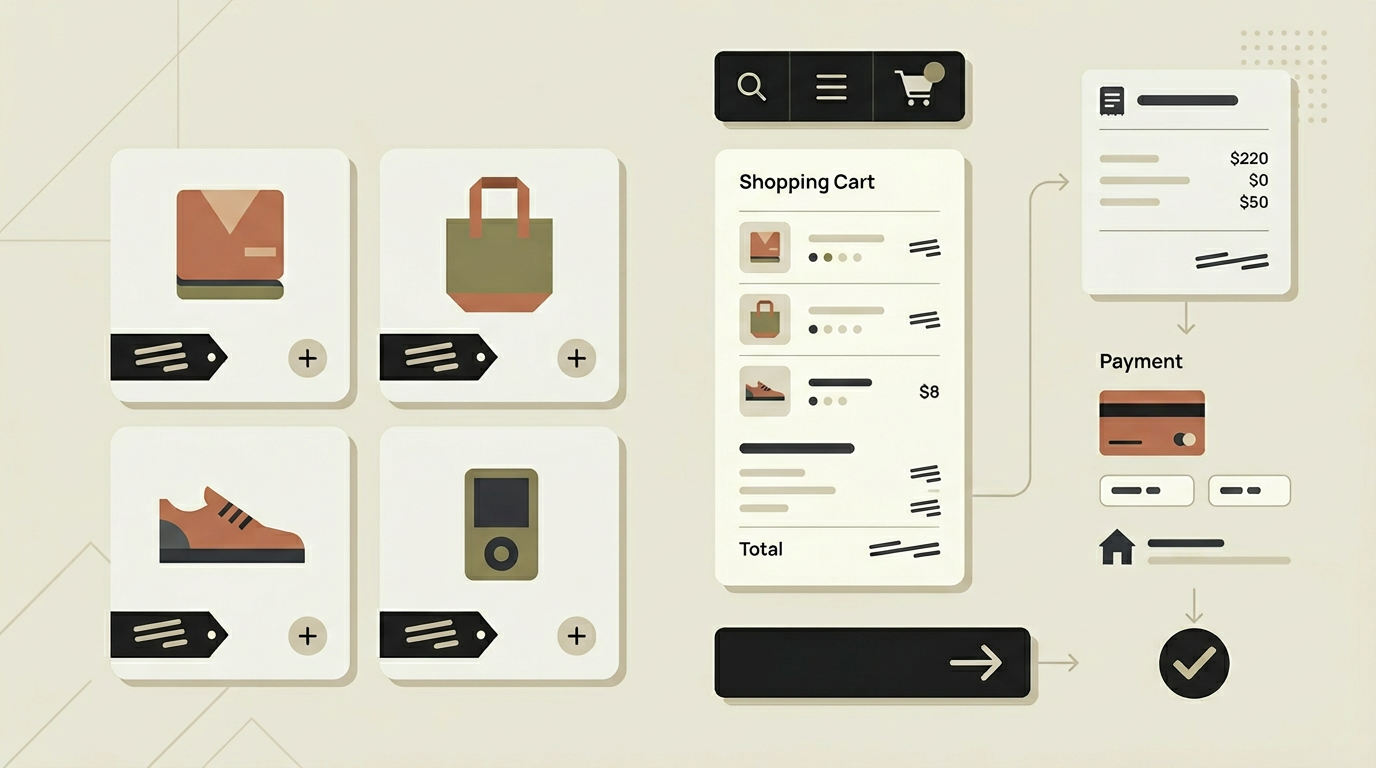
B2B commerce operates on fundamentally different pricing rules than consumer retail. Wholesale buyers expect volume discounts, negotiated rates, and customer-specific price lists that reflect their contractual agreements. Running separate storefronts for B2C and B2B customers doubles your maintenance burden and fragments your product catalogue. A B2B pricing module built into a single e-commerce platform lets you serve both audiences from one system. When a wholesale customer logs in, they see their negotiated prices instead of the retail rates. Volume breaks apply automatically at checkout based on the quantity ordered. Account managers can set up custom price lists for individual clients and update them without touching the main catalogue. This approach keeps your product data in one place while delivering a personalised buying experience to each customer segment.
How does it work?
The pricing engine introduces a layer of abstraction between the product catalogue and the displayed price. Every product has a base retail price, but one or more price lists can override that base for specific customer groups or individual accounts. When a visitor browses the store without logging in, they see the retail price. When a B2B customer authenticates, the system resolves their customer group and any account-level overrides, then displays the most specific price available. Volume discounts are defined as quantity break tables: order 10 units and the unit price drops by 5 percent, order 50 and it drops by 12 percent, and so on. These breaks can be global, group-specific, or account-specific. The cart totals update dynamically as the customer adjusts quantities. For negotiated pricing, account managers create a custom price list tied to a specific company account, setting fixed prices per product that take precedence over all other rules. The module also supports tiered pricing that changes based on cumulative spending within a defined period, rewarding loyal buyers automatically. All pricing calculations are server-side to prevent client-side manipulation, and the checkout flow validates the final prices before creating the order.
Capabilities
Customer Group Pricing
Assign customers to groups like "Wholesale", "Distributor", or "VIP Retail", each with its own price list that overrides the standard retail rate.
Quantity Break Discounts
Define volume discount tables per product or category, with the unit price decreasing as the order quantity increases.
Account-Level Overrides
Set negotiated fixed prices for individual B2B accounts that take precedence over group pricing and volume breaks.
Cumulative Spend Tiers
Reward loyal buyers with automatic tier upgrades when their cumulative spending exceeds defined thresholds within a period.
Integration options
ERP Price Sync
Imports price lists from SAP, Exact Online, or other ERP systems, ensuring that the webshop always reflects the latest contractual rates.
CRM Account Linking
Maps e-commerce customer accounts to CRM records in HubSpot or Salesforce, so account managers can manage pricing from their familiar tool.
Invoice Generation
Generates B2B invoices with the correct pricing, payment terms, and VAT treatment, ready for download or automatic delivery.
Implementation steps
- 1
Pricing Architecture
Design the price resolution hierarchy: base price, group overrides, volume breaks, account-level overrides, and cumulative tiers.
- 2
Customer Group Setup
Define the customer segments, create corresponding price lists, and assign existing B2B accounts to the appropriate groups.
- 3
Volume Discount Tables
Configure quantity break schedules per product or category, and test that cart totals recalculate correctly at each threshold.
- 4
Account Manager Tools
Build the admin interface for creating and managing account-specific price overrides, including a price preview feature.
- 5
ERP Synchronisation
Implement bidirectional sync between the e-commerce price engine and your ERP system to keep contractual rates current.
User experience
B2B customers see a clean, familiar shopping experience with their prices pre-applied. There are no awkward "request a quote" barriers for standard products. The cart clearly shows the applied discount tier and how much more they need to order to reach the next break. Account managers have a dedicated pricing panel where they can preview prices as any customer would see them.
Technical stack
Security
Pricing calculations are performed exclusively server-side. Customer group assignments are managed by administrators only. Sensitive price list data is not exposed through public API endpoints. B2B login sessions enforce stricter timeout policies.
Maintenance
Price lists require updates when contracts are renegotiated. Volume break thresholds should be reviewed quarterly based on sales data. Budget around 40 hours per year for pricing maintenance.
Frequently asked questions
Need this functionality in your product?
We build it the way your business actually needs, without unnecessary complexity.
Request a quoteRelated articles
Payment Integration for Web Applications That Convert
Embed payments directly into your web app. From one-time purchases to recurring subscriptions, we integrate the checkout flow that maximizes conversions.
Visual Product Configurator for Custom E-commerce Platforms
Let customers design their product online with a step-by-step configurator. Real-time previews, dynamic pricing, and smooth checkout integration.
Returns and Exchange Module for Custom E-commerce
Handle product returns professionally with a self-service portal, automated refund processing, and return analytics that help reduce future returns.
Magento Alternatives That Scale Without the Maintenance Burden
High hosting costs and complex upgrades slow your store down. Five e-commerce platforms that deliver scalability without Magento overhead.