

Product updates17 Nov 20257 min read
Client Portals: Giving Your Clients Self-Service
How custom client portals reduce support volume, improve client satisfaction, and free your team to focus on high-value work.

Co-founder

Introduction
How much time does your team spend answering the same client questions? Where is my invoice? What is the status of my project? Can you resend that document? These requests are legitimate, but they should not require a human to handle.
A client portal gives your customers a single place to find answers, track progress, and manage their relationship with your business, all without sending an email or making a phone call. For service businesses around Haarlem and the Randstad, it is often the fastest way to free capacity for billable work.
Research on self-service consistently shows that customers prefer solving simple tasks themselves when the interface is clear. A portal is not a cost center; it is how you scale service without scaling headcount linearly.
What a Modern Client Portal Looks Like
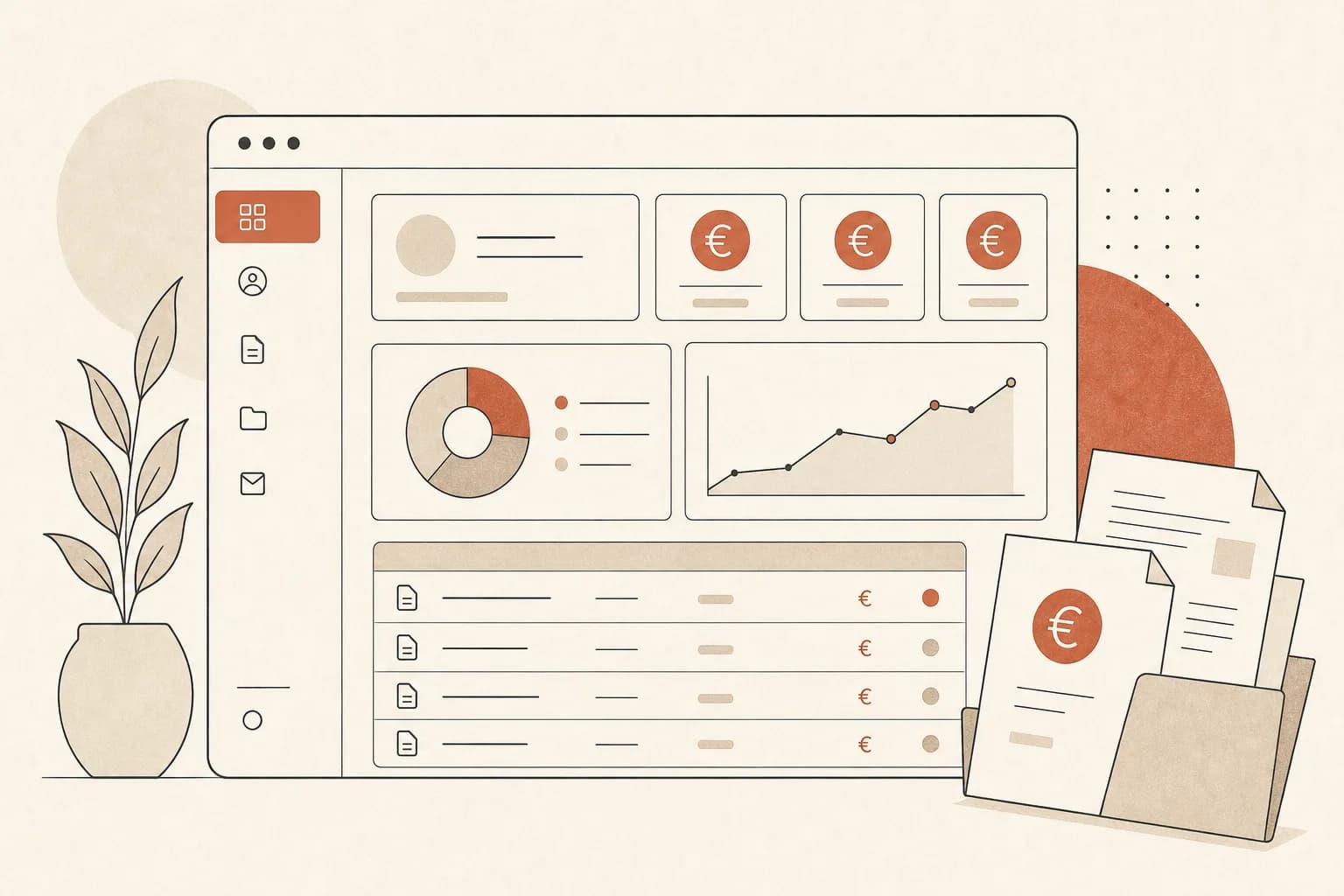
A well-designed client portal is not just a login page with some PDFs. It is a dynamic dashboard where clients see project status in real time, download invoices and documents, view communication history, and submit requests through structured forms.
The best portals are custom-built and personalized. Each client sees only their own data, presented in the context that matters to them. A construction company might see project timelines and photo updates. An accounting firm client might see document requests and tax preparation status.
Think in journeys, not feature lists. A client logging in after a weekend wants one answer: what changed since Friday? Good portals surface deltas first, archives second. That design choice drives adoption more than adding another menu item. Our UX knowledge base covers patterns we reuse across portal projects.
Reducing Support Volume
Based on data from our client projects, businesses typically see a 40 to 60 percent reduction in routine support requests after launching a self-service portal. When customers can check their invoice status at midnight on a Sunday, they do not send a Monday morning email asking about it.
This is not about reducing service quality. It is about redirecting human attention to where it matters. Your team spends less time on status lookups and more time on complex issues that actually require expertise and personal attention.
NIST digital identity guidelines and modern OAuth flows make secure login achievable without forcing clients through painful password policies. Lower friction at login directly affects adoption, which determines whether the portal actually cuts tickets.
Building Trust Through Transparency
Clients who can see what is happening feel more confident. A project management portal that shows task completion percentages, upcoming milestones, and recent activity logs eliminates the anxiety of wondering whether things are on track.
This transparency builds trust, and trust builds retention. We have seen clients report improved customer satisfaction scores and longer client relationships after deploying portals. Informed clients are happier clients.
Transparency also reduces scope disputes. When deliverables, approvals, and timestamps are visible in the portal, "we never agreed to that" conversations shorten. Forrester's customer obsession research consistently links self-service clarity with higher renewal rates in B2B services.
Key Features to Include
Start with the essentials: secure authentication, a dashboard with key metrics, document management, and a communication channel. Then layer on features based on your industry: appointment scheduling for service businesses, order tracking for e-commerce, or project timelines for agencies.
Do not forget mobile responsiveness. Many clients will access the portal from their phone. And include notification preferences so clients can choose how they want to be alerted about updates.
Security and Compliance in 2026
A portal holds exactly the data attackers want: invoices, documents, customer records. In 2026 that makes security a feature, not an afterthought. The baseline is multi-factor authentication, role-based access so each client sees only their own data, encryption and structured logging of who accessed what. If your clients are essential or important entities, your portal also enters their supply chain under the upcoming Dutch Cybersecurity Act.
In other words, a self-service portal can become part of your clients' compliance obligations. We build that demonstrability in from the start, the same approach we describe in our piece on NIS2 for software suppliers. A portal that is secure and can prove it is easier to sell to larger clients.
After incidents like the July 2026 WordPress wp2shell core flaw, more buyers ask whether client-facing tools share a CMS admin surface with marketing sites. A dedicated portal on a separate stack reduces that coupling. We explain the CMS angle in our wp2shell article; portals are often the cleaner long-term answer when sensitive documents are involved.
Why Most Portals Fail (and How to Avoid It)
Generic client portal software often fails not because clients dislike self-service, but because the portal does not match how your relationships actually work. Gartner reports that 43 percent of self-service attempts fail when customers cannot find relevant content, and 45 percent when the system does not understand their intent. A portal copied from a template without your workflows baked in repeats those mistakes.
Successful portals we build start from the top 20 support tickets in the last 90 days, not from a feature checklist. They show live status from your CRM or project tool, not a static PDF upload area. They send proactive notifications when something changes, so clients check the portal before they email you.
That is why we treat portals as custom web applications, not skinned SaaS. If your clients have unique roles, approval flows or document types, a tailored portal pays back faster than forcing everyone into a generic login. Tell us about your support volume and we will map whether a portal is your highest-ROI next step.
What a Portal Costs and When It Pays Off
A realistic budget for a custom client portal starts around 15,000 to 25,000 euros for a focused first version: secure login, a status dashboard, document access, and one or two integrations with your existing systems. Rich portals with payment flows, e-signing, or complex role structures land higher. The project calculator gives you a first range within minutes based on your specific feature list.
The payback calculation is straightforward. Count the hours your team spends weekly on status questions, document requests, and invoice lookups, then multiply by your loaded hourly cost. A team that spends 10 hours per week on these requests burns roughly 25,000 euros per year on work a portal handles automatically. Most portals we build as web applications therefore reach break-even within 8 to 14 months, and everything after that is margin.
Add softer gains: fewer interruptions for your team and a more professional impression on every client. Connect the portal to CRM or ERP through integrations so status stays accurate without manual updates. That is where portals stop being a FAQ replacement and become part of your operational backbone.
Haarlem Agency: From Inbox Chaos to One Client Dashboard
A marketing agency near Haarlem served thirty retainer clients but shared project updates through scattered email threads and shared drives. Account managers spent Monday mornings reconstructing status from Slack, Asana, and finance exports. Clients with multiple active campaigns never had one login.
We built a portal that pulled open tasks, delivered assets, and outstanding invoices per client organization. Phase one went live in ten weeks with read-only status; phase two added structured change requests and e-sign for statements of work. Routine "any news?" emails dropped by roughly half within the first quarter.
The agency kept Asana internally; clients never needed another tool. That is the pattern we repeat: your stack stays, the client sees a curated layer on top. Similar scope is described on our web application development pillar. If disconnected systems are the blocker, start with integration discovery before debating portal features.
Conclusion
A client portal is one of the highest-ROI investments a service business can make. It improves client satisfaction, reduces operational overhead, and positions your business as professional and modern.
Talk to us about building a portal tailored to your client relationships, or explore custom web application development if you need dashboards and self-service in one product.
Frequently asked questions
What should a client portal include?
At minimum: secure login, a dashboard with project or order status, document management, invoice access, and a structured communication channel.
How much can a portal reduce support requests?
Based on data from our client projects, businesses typically see a 40 to 60 percent reduction in routine support requests after launching a self-service portal. A <a href="https://www.gartner.com/en/newsroom/press-releases/2024-08-19-gartner-survey-finds-only-14-percent-of-customer-service-issues-are-fully-resolved-in-self-service" rel="noopener noreferrer">2024 Gartner survey</a> found that 73 percent of customers use self-service, but only 14 percent fully resolve issues there. Portals that surface the right data at the right moment close that gap.
Is a custom portal better than off-the-shelf software?
For businesses with unique client relationships, a custom portal delivers a tailored experience that generic software cannot match, improving adoption and satisfaction.
How long does it take to launch a first portal version?
A focused first version with login, status dashboard, documents, and one or two integrations typically takes eight to fourteen weeks, depending on authentication requirements and legacy API quality.
Co-founder
Related posts
 Product updatesWhat does a client portal cost in 2026? Honest price bandsRead article
 Product updatesCustom Software vs SaaS in 2026: When to Build, When to BuyRead article
 Product updatesYear in Review: Lessons from Our ProjectsRead article
 Product updatesMandatory E-Invoicing Is Coming: What SMEs Need to Know About ViDA NowRead article